Smart Bed Market Size, Share, Growth & Industry Analysis, By Technology (Sleep Tracking, Health Monitoring, AI Integration, IoT Integration, Adjustable Firmness and Positioning, Others), By Application (Residential, Healthcare, Hospitality, Others), By Distribution Channel (Online, Offline (Retail Stores, Healthcare Facilities)), and Regional Analysis, 2024-2031
Smart Bed Market: Global Share and Growth Trajectory
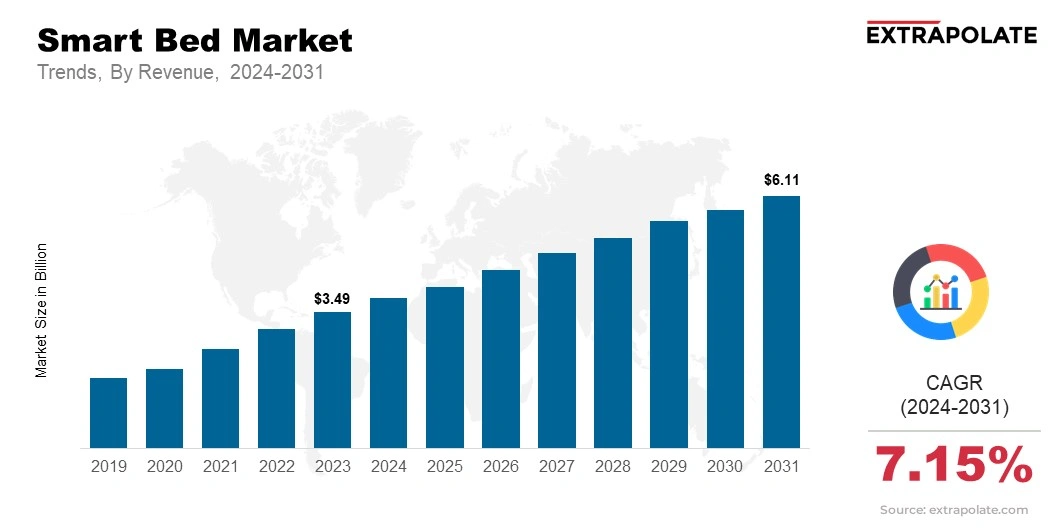
The global Smart Bed Market size was valued at USD 3.49 billion in 2023 and is projected to grow from USD 3.77 billion in 2024 to USD 6.11 billion by 2031, exhibiting a CAGR of 7.15% during the forecast period.
The global smart bed market is experiencing significant growth, driven by the increasing demand for advanced sleep technology, rising health awareness, and the desire for improved sleep quality.
This market encompasses a variety of products, including adjustable beds, sleep-tracking mattresses, temperature-controlled beds, and beds with integrated smart technologies like voice control, automated movement, and health monitoring.
As smart beds become more innovative and accessible, they are transforming the way consumers approach sleep, offering personalized comfort, enhanced wellness, and convenience.
Technological advancements are a key driver behind the market. Integration with artificial intelligence (AI), the Internet of Things (IoT), and mobile apps has enabled consumers to monitor and optimize their sleep patterns, providing real-time data on sleep quality, posture, and health metrics.
Smart beds are equipped with features such as automatic adjustments for pressure relief, temperature control, and individualized support based on user preferences. These innovations not only enhance comfort but also contribute to better sleep hygiene and overall well-being.
The growing emphasis on health and wellness is another major factor contributing to the market's expansion. As more people recognize the importance of sleep in maintaining good physical and mental health, the demand for products that offer personalized sleep solutions is on the rise.
Smart beds offer solutions for people with sleep disorders, back pain, or specific comfort needs, making them highly attractive to a broad range of consumers.
Geographically, North America and Europe are leading the market, driven by higher disposable incomes, advanced technology adoption, and growing awareness of sleep health. Meanwhile, the Asia-Pacific region is also showing rapid growth due to rising consumer interest in health-conscious lifestyles and increased access to modern technology.
As the market for smart beds continues to expand, future developments in sleep technology are expected to further enhance the features of these products, integrating them into broader smart home ecosystems. The continuous evolution of sleep science, combined with consumer demand for improved health solutions, will likely fuel sustained growth in the market globally.

Key Market Trends Driving Product Adoption
Several factors are driving the adoption of smart beds, including:
- Health Monitoring Features: Smart beds with sensors tracking sleep, heart rate, and body movements are getting more popular. Health-focused buyers want data to improve sleep quality.
- Integration with Smart Home Ecosystems: As smart home tech expands, smart beds are more often linked with voice assistants, smart thermostats, and other devices. This boosts ease and user experience.
- Adjustable Firmness and Positioning: Smart beds provide adjustable firmness and customizable positions for tailored comfort. This trend is growing in healthcare, especially for patients with unique needs or mobility problems.
- Sustainability and Eco-Friendly Materials: Eco-consciousness pushes green smart bed making. Makers use sustainable materials and energy-saving tech.
- Sleep Optimization Technology: Sleep improvement features are common in high-end smart beds. Things like white noise, environment control, and custom advice are important.
Major Players and their Competitive Positioning
The smart bed market is highly competitive, with several established players and new entrants focusing on innovation, partnerships, and product diversification. Leading companies such as Sleep Number, Tempur-Pedic, and Reverie dominate the market, offering high-quality smart beds with a wide range of features.
Startups and smaller players are innovating with AI-driven sleep coaching, customizable patterns, and wearable device integration. The market is seeing smart bed makers team up with tech companies to widen their reach in the growing IoT and smart home markets.
Consumer Behavior Analysis
Consumers are increasingly opting for smart beds due to the following reasons:
- Health and Wellness Focus: More people are realizing how important sleep is for health. This is pushing them to buy smart beds that track sleep, monitor health, and offer custom sleep solutions.
- Personalization: Smart beds offer features like adjustable firmness, position, and temperature. These custom options make sleep personal, which grabs consumers' attention.
- Convenience and Automation: Smart beds link up with home automation. This lets users tweak the bed’s position or control room temperature through an app or voice command, all without hassle.
- Increased Comfort: Memory foam that melts pressure, mattresses that hug your body, and adjustable parts make sleeping easier. This draws consumers with sleep problems, backaches, or health issues.
Pricing Trends
Smart bed prices depend on features, brand, and tech. Basic models with simple sleep tracking cost less, while high-end ones with custom options, AI, sleep optimization, and IoT tech are pricier. As more people get interested and competition rises, cheaper choices may come. Still, premium models are expected to stay expensive due to their advanced features. Recent forecasts show the smart bed market will grow by about 7.15% annually from 2024 to 2031, fueled by demand for personalized sleep solutions, new tech, and the rise of connected devices.
Growth Factors
Several factors are fueling the growth of the market, including:
- Technological Advancements: AI-driven sleep coaching, advanced tracking, and integration with wearables attract tech-savvy consumers. These innovations are reshaping smart bed appeal.
- Aging Population: The aging population, facing sleep issues, is fueling smart bed demand. They need adjustable and supportive sleep solutions.
- Increased Health Consciousness: As health awareness rises, people seek smart beds that monitor their well-being.
- E-commerce Growth: Online stores' growth makes finding smart beds easier. This boosts market expansion.
Regulatory Landscape
The smart bed market faces regulatory focus on safety standards and product certifications. Compliance with health regulations is crucial, especially for healthcare beds. Certain regions have strict regulations on medical-grade technology in smart beds. Manufacturers must adhere to these standards to ensure safety and quality.
Recent Developments
Key developments in the market include:
- AI and Machine Learning Integration: AI and machine learning help smart beds give custom sleep advice. They adjust settings automatically based on user data.
- Strategic Partnerships: Leading smart bed companies are teaming up with tech giants. This partnership boosts product features and improves connection with smart home devices.
- Expansion into Healthcare: Healthcare centers are using smart beds to monitor sleep patterns. They help optimize recovery and enhance comfort during hospitalization.
- Advancements in Material Technology: New ideas in mattress and bed frame materials improve strength, comfort, and support. These improvements boost the overall performance of smart beds.
Current and Potential Growth Implications
Demand-Supply Analysis
Smart bed demand is surging in developed markets. North America and Europe lead due to high health awareness and disposable income. Supply limits, high production costs, and part shortages might slow down growth. Complicated manufacturing also adds to the short-term hurdles.
Gap Analysis
The smart bed market faces several challenges:
- High Initial Costs: The high cost of advanced smart bed features limits affordability. This is particularly evident in evolving markets.
- Privacy and Data Security Concerns: Personal data collection through sleep tracking sparks privacy concerns. This could impact consumer adoption and trust.
- Limited Awareness: Awareness of smart bed benefits is still limited in some areas. This restricts market growth and penetration.
Top Companies in the Smart Bed Market
- Sleep Number Corporation
- Tempur-Pedic (Tempur Sealy International)
- Reverie
- Simmons Bedding Company (Serta)
- Eight Sleep
- Kingsdown
- iSense
- Saatva
- Leggett & Platt
- SleepScore Labs
Smart Bed Market: Report Snapshot
Segmentation | Details |
By Technology | Sleep Tracking, Health Monitoring, AI Integration, IoT Integration, Adjustable Firmness and Positioning, Others |
By Application | Residential, Healthcare, Hospitality, Others |
By Distribution Channel | Online, Offline (Retail Stores, Healthcare Facilities) |
By Region | North America, Europe, Asia-Pacific, Latin America, Middle East & Africa |
High Growth Segments
The following segments are expected to experience significant growth:
- AI-Integrated Smart Beds: AI-driven smart beds are becoming more popular. Personalized sleep coaching and automatic adjustments are key features.
- Health Monitoring Features: Health-conscious buyers seek smart beds with advanced tracking. Features like sleep apnea detection and heart rate monitoring drive demand.
- Healthcare Applications: Healthcare facilities are increasingly adopting smart beds. Hospitals and care homes benefit from health monitoring and enhanced patient comfort.
Major Innovations
Innovation plays a crucial role in the market, with advancements such as:
- AI-Driven Sleep Coaching: Smart beds can learn from sleep. They crunch data and give custom tips based on habits and health.
- Integration with Wearables: Smart beds now work together with gadgets like watches and fitness bands. This helps track sleep better and deeper.
- Improved Comfort Materials: Development of memory foams, chill gels, and airy fabrics make beds comfier. People want smarter beds because of this cozy boost.
Potential Growth Opportunities
The market presents significant opportunities for growth in many areas:
- Emerging Markets: Expanding middle class in emerging markets creates new prospects. Smart bed makers can reach untapped customer segments.
- Health and Wellness Focus: Rising focus on health and sleep optimization fuels smart bed demand. Advanced health tracking unlocks strong growth potential.
- Technological Advancements: AI, IoT, and machine learning will propel smart bed innovation. These advancements unlock fresh growth prospects for companies.
Extrapolate Research says:
The smart bed market is set for strong growth. Innovations, personalized sleep demand, and health awareness drive this surge. Companies using AI, boosting ease, and linking with smart homes will thrive in the quick-shifting market.
ARE YOU SEEKING COMPREHENSIVE INSIGHT ON VARIOUS
MARKETS?
CONTACT OUR EXPERTS TODAY
Smart Bed Market Size
- March-2025
- 148
- Global
- retail
Related Research
Activewear Market Size, Share, Growth & Industry Analysis, By Product Type (Athletic Shoes, Sports B
March-2025
Agrobacterium tumefaciens Competent Cells Market Insights 2022, Global Analysis and Forecast to 2030
July-2021
Aluminium Composite Panels (ACP) Market Insights 2022, Global Analysis and Forecast to 2030
July-2021