Minibars for Marine Market Size, Share, Growth & Industry Analysis, By Product Type (Compressor Minibars, Absorption Minibars, Thermoelectric Minibars), By Application (Cruise Ships, Yachts, Naval Vessels, Commercial Vessels, Ferries), By End-User (Luxury Cruise Lines, Private Yacht Owners, Commercial Marine Operators, Naval Defense), and Regional Analysis, 2024-2031
Minibars for Marine Market: Global Share and Growth Trajectory
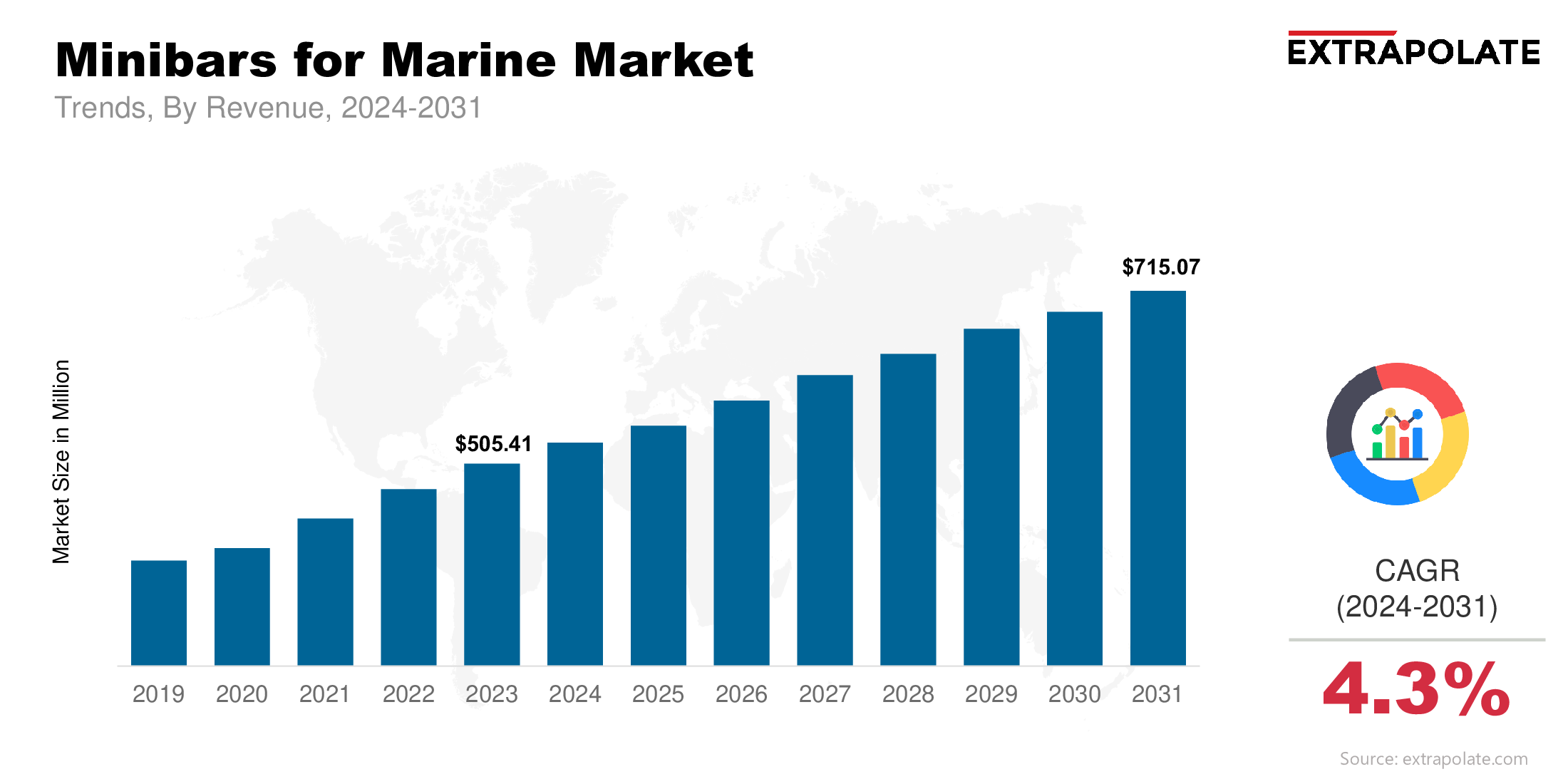
The global minibars for marine market size was valued at USD 505.41 million in 2023 and is projected to grow from USD 531.69 million in 2024 to USD 715.07 million by 2031, exhibiting a CAGR of 4.3% during the forecast period.
The global market is experiencing consistent growth, fueled by increasing demand for luxury, comfort, and convenience in maritime hospitality. As cruise lines, yachts, and commercial vessels prioritize premium onboard experiences, the adoption of compact refrigeration systems like minibars has surged. These small yet efficient units offer guests access to chilled beverages, snacks, and other perishable items, contributing significantly to customer satisfaction and perceived value.
Driven by rising disposable incomes, growing cruise tourism, and the expansion of maritime leisure travel, the demand for advanced, energy-efficient marine minibars is rising globally. These systems are designed to withstand harsh sea environments while meeting the space-saving requirements of marine interiors. As environmental concerns grow, manufacturers are also innovating with eco-friendly refrigerants, low-noise compressors, and smart energy-saving technologies.
The ongoing modernization of naval fleets, commercial vessels, and luxury liners is creating fresh opportunities for the marine minibar market. In tandem, smart automation features, integration with in-room entertainment systems, and touchless technology are enhancing product appeal. As the hospitality sector within the marine industry evolves, the minibar segment is emerging as a vital component in defining customer experience and brand differentiation.

Key Market Trends Driving Product Adoption
Several trends are contributing to the growing adoption of marine minibars:
- Premiumization in Cruise Tourism: As travelers increasingly opt for luxury cruises, cruise liners are enhancing onboard offerings. Minibars are becoming a standard amenity in premium cabins and suites. The integration of customized minibars tailored to passenger preferences—featuring alcoholic and non-alcoholic drinks, local delicacies, or dietary-specific items—is shaping a new era of personalization.
- Rising Demand for Energy-Efficient Solutions: Ship operators and cruise companies are increasingly conscious of their environmental footprint. As such, they demand energy-efficient minibars that reduce electricity usage without compromising performance. Advanced compressor technology, thermoelectric systems, and absorption refrigeration are gaining traction.
- Compact and Modular Designs: Given the spatial constraints on marine vessels, there is a growing need for minibars with compact, modular, and versatile designs. This trend is particularly notable in yachts and small cruise ships, where space is at a premium and design aesthetics are critical.
- Integration with Smart Cabins: Next-generation marine minibars are being integrated with smart cabin systems. Features like remote control access, automatic restocking alerts, and data analytics for usage tracking are enhancing operational efficiency and improving the guest experience.
- Eco-Friendly Refrigerants and Materials: Regulatory and consumer pressures are pushing manufacturers toward eco-conscious solutions. The use of non-HFC refrigerants like R600a, recyclable components, and low-emission insulation materials is becoming standard across premium product lines.
Major Players and their Competitive Positioning
The marine minibar market features a mix of global refrigeration brands, marine equipment specialists, and hospitality solution providers. These players are actively investing in R&D to create innovative, compact, and durable minibar solutions suited for the marine environment. Key players include Indel B S.p.A., Dometic Group AB, Vitrifrigo S.r.l., FRIGOBAR®, Thermo King Corporation, Webasto Group, Isotherm (by Indel Webasto Marine), Waeco International (Dometic), TFI Marine, Frigonautica Srl and others.
These companies are focusing on developing minibars with superior energy ratings, marine-grade materials, and advanced automation capabilities. Strategic partnerships with shipbuilders, fleet operators, and cruise lines are helping these brands to strengthen their global presence and customer base.
Consumer Behavior Analysis
Consumer preferences in the marine minibar market are shaped by several factors:
- Focus on Comfort and Luxury: Guests on cruise ships and private yachts prioritize comfort and convenience. Minibars cater to this expectation by offering readily available refreshments, helping to elevate the overall experience. As competition among cruise lines intensifies, small amenities like minibars have become important in winning customer loyalty.
- Preference for In-Cabin Services: The shift toward in-cabin personalization—especially post-pandemic—has made private, in-room amenities more desirable. Travelers prefer minimal external contact, prompting cruise operators to upgrade in-room conveniences, including intelligent minibars.
- Demand for Customization: Guests increasingly prefer minibars tailored to their preferences. This trend includes wellness-focused offerings, alcohol-free setups, dietary-compliant snacks, and regional delicacies. The customization potential of minibars supports guest satisfaction and enables upselling strategies.
- Sustainability Awareness: Environmentally conscious travelers favor cruise lines that use energy-efficient and sustainable onboard technologies. Minibars designed with green refrigerants, recyclable materials, and optimized power consumption are more likely to resonate with this audience.
Pricing Trends
Pricing in the marine minibar market is influenced by size, capacity, cooling technology, energy efficiency, and value-added features. Entry-level models using basic thermoelectric technology are relatively affordable, targeting small vessels or budget operators. On the other hand, premium units with smart automation, silent compressors, and environmental certifications come at a higher cost.
- Initial Investment vs. Operational Cost: While upfront prices can range from $200 to over $1000 per unit, marine operators assess minibars based on total cost of ownership. Energy-efficient units with longer lifespans and lower maintenance needs are increasingly favored.
- Customization and Bulk Orders: Customized models for specific fleets or brands often come with a premium price tag. However, large orders from cruise operators typically receive volume discounts and bundled service packages.
- Technological Upgrades Drive Prices Upward: Units featuring IoT connectivity, smart sensors, and remote diagnostics are priced higher. However, the long-term savings in energy and maintenance justify the premium for many buyers.
Growth Factors
Several key drivers are propelling the growth of the marine minibars market:
- Boom in Maritime Tourism: The resurgence of cruise travel and yachting post-pandemic has reinvigorated the demand for onboard amenities. As tourism infrastructure expands, so does the demand for luxury onboard solutions like minibars.
- Rise of Private Yachting and Charters: Increased ownership of private yachts and charter services is contributing to demand for high-end minibars. Yacht owners and charter guests expect hotel-level conveniences onboard, and minibars fulfill a critical part of that expectation.
- Smart Cabin Innovations: The development of smart cabin ecosystems on marine vessels is supporting the integration of connected minibars. These systems enable automation, analytics, and better inventory control, providing added value to both guests and operators.
- Eco-Conscious Design Evolution: Environmental regulations and consumer expectations are driving innovation in sustainable minibar technology. Products with green certifications, quiet operation, and lower energy usage are seeing rising demand.
- Expansion of Fleet Refurbishments: Cruise and shipping firms are upgrading old vessels. These refurbishments often include the installation or replacement of minibars. This is done to meet guest expectations and energy standards.
Regulatory Landscape
Compliance with safety, environmental, and energy regulations is essential in the marine minibar market. These regulations ensure product performance, passenger safety, and environmental sustainability:
- Marine Equipment Directive (MED) in the European Union mandates that refrigeration equipment used in ships meets stringent safety and environmental requirements.
- IMO MARPOL Annex VI and related energy-efficiency regulations influence the selection of low-power equipment onboard ships.
- RoHS and WEEE compliance governs the use of hazardous substances and proper disposal practices in electronic and electrical appliances.
- ISO 9001 and ISO 14001 certifications demonstrate adherence to quality management and environmental responsibility.
Manufacturers are increasingly developing solutions that comply with both marine safety protocols and broader environmental frameworks, helping cruise operators meet their ESG goals.
Recent Developments
Several recent developments in the marine minibar space underscore its growing dynamism:
- Dometic Introduces Smart Bar Series: Dometic launched a line of smart minibars with adaptive cooling, occupancy sensors, and app-based inventory alerts aimed at luxury cruise ships and yachts.
- Indel B’s Green Refrigerant Push: Indel B has shifted its marine product line to use R600a refrigerant, reducing the carbon footprint of their marine refrigeration systems.
- Frigonautica’s Custom Yachting Solutions: Frigonautica is developing bespoke minibars integrated into luxury yacht cabinetry with silent compressor technology and customizable finishes.
- Expansion of After-Sales Service Networks: Companies like Webasto and Vitrifrigo are expanding global support centers to cater to service and maintenance requirements, enhancing long-term customer satisfaction.
Current and Potential Growth Implications
a. Demand-Supply Analysis: An increased demand for marine minibars is observed in the developed markets having strong cruise tourism and yacht ownership. However, supply chain constraints, in terms of component unavailability, price increases in raw materials have affected production timelines and pricing.
b. Gap Analysis Even with a stable demand, affordability and access to advanced minibar systems continue to challenge emerging markets. There is a need for cost-effective solutions tailored for small or mid-range vessels. Manufacturers also need to address gaps in after-sales support, especially in remote maritime regions.
Top Companies in the Minibars for Marine Market
The top companies operating in the global marine minibar market include:
- Indel B S.p.A.
- Dometic Group AB
- Vitrifrigo S.r.l.
- Webasto Group
- Frigonautica Srl
- Isotherm (Indel Webasto Marine)
- Waeco International (Dometic)
- FRIGOBAR
- TFI Marine
- Thermo King Corporation
These players are expected to remain influential through continued product development, sustainability initiatives, and global expansion strategies.
Minibars for Marine Market: Report Snapshot
Segmentation | Details |
By Product Type | Compressor Minibars, Absorption Minibars, Thermoelectric Minibars |
By Application | Cruise Ships, Yachts, Naval Vessels, Commercial Vessels, Ferries |
By End-User | Luxury Cruise Lines, Private Yacht Owners, Commercial Marine Operators, Naval Defense |
By Region | North America, Europe, Asia-Pacific, Latin America, Middle East & Africa |
High Growth Segments
- Compressor Minibars: With rising energy efficiency and silent operation, compressor-based models are increasingly preferred across cruise liners and private yachts.
- Cruise Ships Segment: This segment is projected to dominate due to the growing volume of travelers seeking luxury experiences, especially on large ocean liners.
- Asia-Pacific Region: The booming maritime tourism industry, especially in Southeast Asia and Australia, is expected to drive strong regional growth.
Major Innovations
Innovative developments shaping the market include:
- Smart Energy Management: Integration of occupancy sensors and automated shut-off systems to conserve energy.
- IoT-Enabled Minibars: Enabling real-time inventory tracking and remote monitoring.
- Modular Customization: Allowing easy installation in diverse marine environments with tailored aesthetics and dimensions.
Potential Growth Opportunities
- Penetration in Mid-Range Cruise Segment: Mid-range cruises are growing fast. This opens doors for affordable, smart minibar options.
- Expansion into Emerging Coastal Markets: Maritime growth in Africa, Southeast Asia, and Latin America is strong. These regions hold new chances for minibar sellers.
- Sustainability-Driven Product Lines: More eco-aware buyers want green refrigerants options. This boosts demand for eco-friendly minibar tech.
Extrapolate Research says:
The global minibar for marine market is poised for sustained growth, driven by rising maritime tourism, luxury expectations, and environmental mandates. As cruise lines and yacht operators compete on passenger experience, the minibar becomes a key differentiator. With the advancement of efficiency, smart automation, and customized design, these products are setting themselves apart-from being mere cooling devices-to becoming intelligent, value-added hospitality products.
In the coming years, the market will be governed by regulations, market penetration, and technology integration. Companies which innovate cost-efficient and sustainable products would lead this emerging industry.
ARE YOU SEEKING COMPREHENSIVE INSIGHT ON VARIOUS
MARKETS?
CONTACT OUR EXPERTS TODAY
Minibars for Marine Market Size
- June-2025
- 148
- Global
- retail
Related Research
Activewear Market Size, Share, Growth & Industry Analysis, By Product Type (Athletic Shoes, Sports B
March-2025
Agrobacterium tumefaciens Competent Cells Market Insights 2022, Global Analysis and Forecast to 2030
July-2021
Aluminium Composite Panels (ACP) Market Insights 2022, Global Analysis and Forecast to 2030
July-2021