Interactive Children Book Market Size, Share, Growth & Industry Analysis, By Product Type (AR-Enabled Books, App-Based Interactive Books, Physical-Digital Hybrids, Voice-Interactive Books) By Age Group (0–3 Years, 4–7 Years, 8–12 Years) By Application (Education, Entertainment, Language Learning, Cognitive Development) By Distribution Channel (Online Retail, Offline Bookstores, Educational Institutions), and Regional Analysis, 2024-2031
Interactive Children Book Market: Global Share and Growth Trajectory
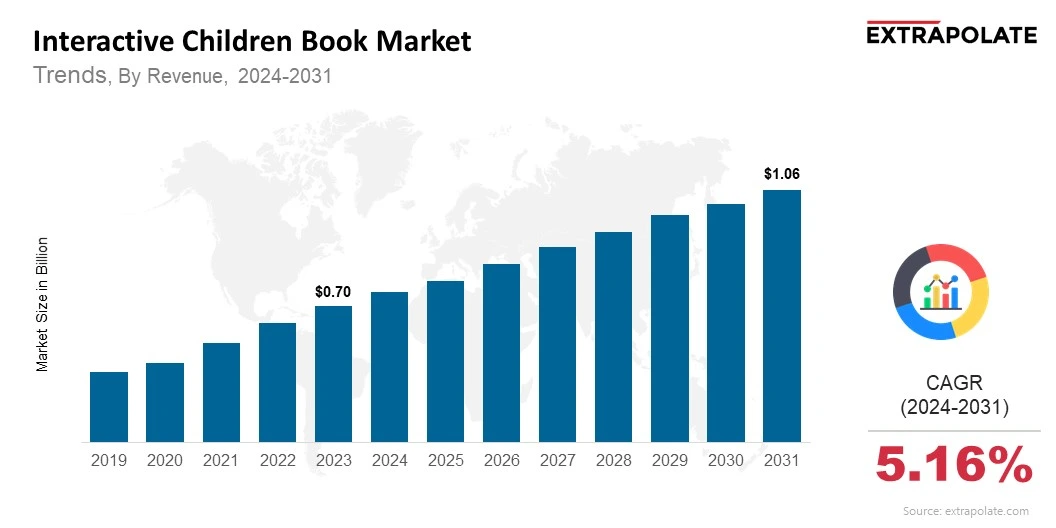
The global Interactive Children Book Market size was valued at USD 0.70 billion in 2023 and is projected to grow from USD 0.74 billion in 2024 to USD 1.06 billion by 2031, exhibiting a CAGR of 5.16% during the forecast period.
The global market is experiencing a significant upward trajectory, driven by rapid advancements in digital technology and a growing emphasis on early childhood education. Parents, educators, and publishers are increasingly turning to interactive books as a powerful medium to enhance literacy, comprehension, and engagement among children.
These books go beyond traditional storytelling, incorporating multimedia elements such as sounds, animations, touch responses, and augmented reality (AR) to create a highly immersive and educational experience. The adoption of interactive books is being fueled by the increasing penetration of smart devices and e-readers, particularly in households with young children.
With educational content becoming more gamified and accessible, interactive children books are capturing the attention of both the educational sector and the consumer market. This surge is further supported by the rising importance of personalized learning, early cognitive development, and parental involvement in home-based education.
Interactive children book not only promote reading habits but also foster active learning, critical thinking, and motor skill development. As publishers leverage augmented reality, artificial intelligence, and gamification techniques, the market is poised for dynamic and sustained growth.
Key Market Trends Driving Product Adoption
Several significant trends are contributing to the increasing adoption of interactive children books:
Integration of Augmented Reality and Multimedia:
The integration of AR and multimedia content is the most transformative innovation in children books. Publishers are creating books that use smartphone apps for animations, voiceovers, and sound effects. Smartphone apps are bringing books to life with animations, voiceovers, and sound effects.
Rising Demand for Personalized Learning:
Parents and educators are increasingly seeking tailored educational experiences for children. Interactive books with adaptive learning features—such as difficulty levels that adjust to a child’s performance—offer customized content that aligns with individual learning paces, styles, and interests. This focus on personalization is reshaping content development and book design.
Increased Screen Time Awareness and Educational Focus:
While concerns around excessive screen time persist, there is a clear shift towards educational screen time. Interactive books serve as a middle ground by transforming digital interaction into a learning opportunity. Parents prefer content that balances entertainment with educational value, fueling demand for interactive formats.
Growing Adoption in Schools and Educational Institutions:
Interactive books are increasingly being integrated into the foundational structures of school curriculums and the dynamic environments of digital classrooms, a trend particularly prominent in developed nations. This widespread adoption stems from the recognized pedagogical advantages these innovative resources offer. A significant number of educational institutions are actively deploying interactive e-books across a diverse range of subjects, including core areas like language arts, science, and mathematics. The primary objective behind this strategic integration is to significantly enhance both student engagement and overall comprehension of complex academic material.
Major Players and their Competitive Positioning
The interactive children book industry is becoming increasingly competitive, with key players leveraging innovative technologies, storytelling techniques, and strategic collaborations to differentiate their offerings. Leading companies include- LeapFrog Enterprises, Scholastic Corporation, Pearson plc, Highlights for Children, Houghton Mifflin Harcourt, Capstone Publishers, Nosy Crow, Wonderbly, VTech Holdings, Smartivity Labs
These key players are diversifying their products. They are also expanding their digital platforms. Plus, they are entering new global markets. Their market position is getting stronger through smart partnerships with education tech firms. They also have licensing deals with popular entertainment brands. And they're investing in AR/VR development.
Consumer Behavior Analysis
Consumer behavior in the interactive children book market is influenced by a blend of educational goals, digital habits, and purchasing power. Key insights include:
Parental Involvement and Educational Preferences:
Modern parents are highly involved in their children's development. They prefer tools that combine learning with entertainment. Interactive books fulfil this with engaging and gamified content. Parents often see these books as supplements to traditional education or as homeschooling tools.
Preference for Digital and Hybrid Formats:
There is growing interest in hybrid books that combine physical components with digital interactivity. For instance, a printed book might contain QR codes or app triggers that unlock interactive content. Consumers appreciate this tactile-digital blend, which retains the traditional reading experience while offering digital enhancement.
Rising E-Commerce Influence:
Online platforms are major distribution channels now. Amazon, Apple Books, and Google Play Books offers online reviews and digital previews before purchase. This makes e-commerce essential for sales growth.
Cultural and Language Sensitivity:
Parents and educators increasingly seek culturally diverse and linguistically inclusive content. As a result, demand is rising for multilingual interactive books that reflect varied backgrounds, ethnicities, and experiences. This preference is influencing content creation strategies across regions.
Pricing Trends
Pricing in the interactive children book industry varies depending on the platform, content complexity, multimedia elements, and brand reputation. Key pricing patterns include:
- Physical-digital hybrids tend to be priced higher. This is due to printing, packaging, and tech integration costs.
- App-based interactive books often use a "freemium" or subscription model. This means a basic version of the book is free to use. However, users pay for premium features through in-app purchases.
- Parents increasingly favor educational kits that bundle books with physical learning tools or toys. These popular sets often come at a higher price point.
Despite higher production costs, interactive books offer long-term value through reusability, higher retention, and multi-child usability, making them attractive purchases for education-focused households.
Growth Factors
Several core factors are fueling the growth of the interactive children book market:
Expanding Early Childhood Education Sector:
Increasing focus on early childhood learning is driving the demand for engaging teaching tools. Interactive books are increasingly seen as crucial tools. They effectively supplement teaching in both classrooms and homes.
Technology-Driven Innovation:
AR, AI, natural language processing, and interactive design are making children's books more engaging and educational. These innovations make content more immersive, intuitive, and tailored, boosting the appeal of interactive formats.
Increasing Smartphone and Tablet Usage:
Mobile device growth among families makes interactive books on tablets and smartphones more accessible. Affordable, widespread smart devices offer a strong platform for interactive learning.
Rising Demand from Emerging Markets:
Economic growth and education reform in emerging economies like India, China, and Brazil are boosting interactive educational content. Parents in these areas want to invest in digital learning solutions that offer long-term cognitive benefits for their children.
Regulatory Landscape
The interactive children book market must adhere to regulations and standards that ensure safety, data privacy, and educational quality:
- COPPA (Children’s Online Privacy Protection Act) in the U.S. mandates how children's data is collected, stored, and shared.
- GDPR compliance is necessary for European publishers offering interactive books within the EU, particularly those that include personalized content or collect user data.
- Age-appropriate content standards ensure that language, visuals, and interactive features are safe and suitable for young readers.
- Digital accessibility standards, such as WCAG (Web Content Accessibility Guidelines), are also gaining relevance as publishers strive to make content inclusive for children with disabilities.
Compliance with these regulations is critical for maintaining trust among consumers and educators and ensuring the safe use of interactive books in both home and school settings.
Recent Developments
Several recent developments are shaping the future of the interactive children book market:
- AR Book Integration with Smart Devices: Publishers like Wonderscope and Popar are introducing AR-based storybooks that interact with iOS and Android devices to create lifelike, animated scenes for children.
- Voice Interaction and AI Chat Features: Some new titles now incorporate AI-powered voice features, allowing children to ask questions and interact with characters, enriching comprehension and communication skills.
- Educational Partnerships: Collaborations between publishers and edtech firms are resulting in curriculum-aligned interactive books tailored for K–5 learners.
- Environmental Themes and STEAM Focus: Content focusing on sustainability, space exploration, and robotics is increasingly popular, aligning with STEAM (Science, Technology, Engineering, Arts, and Math) education goals.
Current and Potential Growth Implications
Demand-Supply Analysis:
As demand for interactive content rises, publishers are expanding digital production capabilities and investing in multimedia content creation. However, smaller publishers face barriers in adopting high-cost AR and AI technologies, leading to disparities in content availability across markets.
Gap Analysis:
There is a clear gap in the availability of high-quality, localized content in non-English languages. Many regions lack culturally relevant interactive titles. Bridging this gap presents a significant opportunity for publishers focused on regional storytelling and vernacular education.
Top Companies in the Interactive Children Book Market
- LeapFrog Enterprises
- Pearson plc
- Scholastic Corporation
- VTech Holdings
- Capstone Publishers
- Highlights for Children
- Houghton Mifflin Harcourt
- Wonderbly
- Smartivity Labs
- Nosy Crow
These companies are known for their strong brand recognition, digital innovation, and educational relevance. They continue to expand their interactive offerings through strategic acquisitions, cross-media adaptations, and investments in proprietary platforms.
Interactive Children Book Market: Report Snapshot
Segmentation | Details |
By Product Type | AR-Enabled Books, App-Based Interactive Books, Physical-Digital Hybrids, Voice-Interactive Books |
By Age Group | 0–3 Years, 4–7 Years, 8–12 Years |
By Application | Education, Entertainment, Language Learning, Cognitive Development |
By Distribution Channel | Online Retail, Offline Bookstores, Educational Institutions |
By Region | North America, Europe, Asia-Pacific, Latin America, Middle East & Africa |
Interactive Children Book Market: High Growth Segments
The following segments are expected to witness significant growth:
- AR-Enabled Books: These books captivate young readers through visual storytelling and animation, making them a favorite for tech-savvy families.
- 4–7 Years Age Group: Children in this age group benefit the most from story-based, interactive learning methods that aid language and social skill development.
- Educational Institutions: Schools and preschools are increasingly adopting interactive books to complement traditional teaching tools and improve student engagement.
Major Innovations
Recent innovations in the interactive children book market include:
- Gamified Learning Interfaces: Books that incorporate points, challenges, and rewards to enhance engagement.
- AI Reading Companions: Virtual assistants that help children read aloud, correcting pronunciation and providing feedback.
- Multilingual Voice Narration: Offering native-language storytelling for global learners.
Interactive Children Book Market: Potential Growth Opportunities
There are numerous opportunities for growth in this market:
- Expansion into Underrepresented Markets: Publishers aim to expand into underrepresented markets. They're targeting Africa, Southeast Asia, and rural Latin America with affordable, localized content.
- Integration with Learning Management Systems (LMS): Publishers are making interactive books compatible with LMS. This helps schools adopt them more widely.
- Subscription-Based Models: Introducing curated subscription services for interactive books, similar to Netflix-style content delivery.
Extrapolate Research says
The interactive children book market is poised for sustained growth as it aligns with evolving educational paradigms and digital consumption behaviors. Rising parental emphasis on holistic early childhood learning, coupled with technological innovations in AR, AI, and voice interactivity, is reshaping the publishing landscape. Market players that invest in personalized, adaptive, and multilingual content are likely to gain a competitive edge.
Moreover, strategic partnerships between traditional publishers and edtech firms are unlocking new revenue models and global outreach. As educational institutions increasingly adopt digital resources to enhance classroom learning, the demand for interactive children's content will continue to surge. Kings Research advises stakeholders to focus on content localization, regulatory compliance, and platform accessibility to tap into emerging markets and ensure long-term success in this evolving ecosystem.
ARE YOU SEEKING COMPREHENSIVE INSIGHT ON VARIOUS
MARKETS?
CONTACT OUR EXPERTS TODAY
Interactive Children Book Market Size
- June-2025
- 148
- Global
- retail
Related Research
Activewear Market Size, Share, Growth & Industry Analysis, By Product Type (Athletic Shoes, Sports B
March-2025
Agrobacterium tumefaciens Competent Cells Market Insights 2022, Global Analysis and Forecast to 2030
July-2021
Aluminium Composite Panels (ACP) Market Insights 2022, Global Analysis and Forecast to 2030
July-2021