Hair Care Market Size, Share, Growth & Industry Analysis, By Product Type (Shampoo, Conditioner, Hair Oil, Hair Color, Hair Mask, Styling Products) By Application (Dandruff Care, Hair Loss Prevention, Hair Repair, Styling, Coloring) By End User (Men, Women, Unisex) By Distribution Channel (Supermarkets/Hypermarkets, Online Retail, Specialty Stores, Pharmacies), and Regional Analysis, 2024-2031
Hair Care Market: Global Share and Growth Trajectory
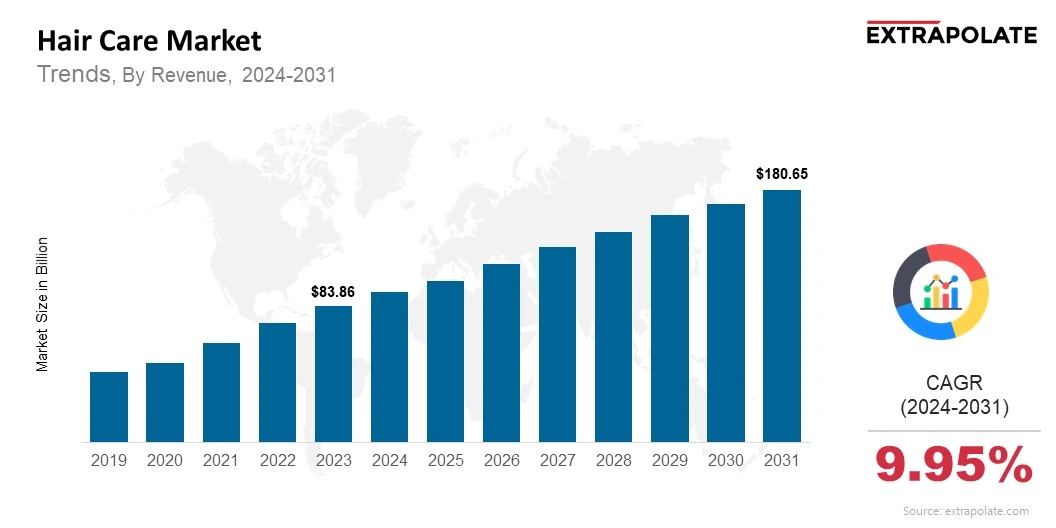
The global Hair Care Market size was valued at USD 83.86 Billion in 2023 and is projected to grow from USD 92.98 Billion in 2024 to USD 180.65 Billion by 2031, exhibiting a CAGR of 9.95% during the forecast period.
The global market is witnessing robust growth, propelled by rising consumer awareness about personal grooming, an increasing demand for natural and organic products, and evolving fashion and lifestyle trends. This market spans a wide array of products including shampoos, conditioners, hair oils, hair colors, serums, and styling products.
As consumers become more informed and selective about their hair care routines, brands are responding with innovative solutions tailored to diverse hair types and concerns. Technological advancements in product formulations, along with expanding distribution channels, particularly e-commerce are key drivers of the market's upward trajectory.
With digital platforms enabling brands to reach global audiences, consumers now have access to a broader spectrum of specialized products, from sulfate-free shampoos to botanical-infused hair masks. The demand for clean, sustainable, and cruelty-free products is also reshaping the market, encouraging companies to invest in environmentally responsible production practices and transparent labeling.
The influence of social media, celebrity endorsements, and beauty influencers is significantly shaping consumer preferences. Trends such as DIY hair care, scalp care, and hair wellness are gaining momentum, highlighting a shift toward holistic approaches to hair maintenance. Furthermore, the growing popularity of multicultural and textured hair products underscores the market’s increasing inclusivity and customization.
Emerging economies, particularly in Asia-Pacific and Latin America, are contributing significantly to market growth, driven by rising disposable incomes, urbanization, and a growing middle class. In developed regions like North America and Europe, innovation and premium product offerings remain central to maintaining competitive advantage.
As the hair care market continues to evolve, companies are leveraging AI and data analytics to understand consumer behavior and offer personalized product recommendations. Subscription-based models and direct-to-consumer strategies are also gaining traction, offering convenience and fostering brand loyalty.
Overall, the global market is poised for sustained expansion, supported by dynamic consumer demand, ongoing product innovation, and a heightened focus on sustainability and personalization. Whether addressing hair health, styling, or color treatment, the industry is evolving to meet the diverse and sophisticated needs of today's consumers, positioning itself as a vital segment within the broader beauty and personal care landscape.
Key Market Trends Driving Product Adoption
The hair care market is evolving rapidly due to consumer preferences, innovation, and global beauty standards. Several key trends are driving market growth:
• Natural and Organic Formulations: Consumers are increasingly choosing products with herbal, sulfate-free, and paraben-free formulas. This reflects a growing preference for cleaner beauty options. As a result, demand for clean beauty alternatives is rising. Brands are responding by expanding these product lines.
• Customized Solutions: Personalization is a major trend in the hair care industry. Brands are providing customized products tailored to hair type, texture, and concerns. These include dandruff, hair loss, and frizz. Customized solutions help meet diverse consumer needs effectively.
• Sustainable Packaging: Eco-friendly packaging and cruelty-free claims are influencing purchase decisions, especially among Gen Z and millennial consumers.
• Men’s Grooming: The male grooming segment is growing rapidly, with more men seeking tailored hair care products for styling and maintenance.
• Digital Engagement: Online consultations, virtual try-ons, and influencer marketing are playing a pivotal role in product discovery and consumer engagement.
Major Players and their Competitive Positioning
The hair care market is dominated by major players like L'Oréal, Procter & Gamble, Unilever, and Henkel. These companies invest heavily in R&D, branding, and global expansion strategies. Emerging brands are gaining traction through niche offerings and sustainable product lines.
Consumer Behavior Analysis
Consumers are adopting hair care products for a variety of reasons:
• Hair Health: Prevention and treatment of common issues such as dryness, breakage, and dandruff are key concerns. Consumers seek effective solutions for healthy hair. Brands focus on developing products that address these problems.
• Styling Needs: Gels, serums, sprays, and waxes are widely used for styling hair. They help achieve specific looks and finishes. These products offer versatility and hold. Consumers choose them to meet various hair care needs.
• Self-Care Rituals: Hair care is increasingly integrated into holistic wellness routines. Consumers view it as part of overall health and self-care. This approach drives demand for natural and nourishing products.
• Aesthetic Preferences: Consumer choices are influenced by beauty trends and celebrity endorsements. These factors shape public perception and demand. Brands leverage such influences to boost product appeal. Marketing strategies often focus on popular figures.
• Cultural Practices: Ethnic and regional preferences greatly impact product choices. Consumers’ needs differ by culture and location. Companies must recognize these variations.
Pricing Trends
Pricing in the hair care market varies depending on the brand, formulation, and region. Premium products with natural ingredients and salon-grade formulas are priced premium, while local brands cater to price-sensitive consumers. E-commerce and direct-to-consumer models are also offering competitive pricing and bundling options.
Growth Factors
Several key drivers are influencing the upward trajectory of the hair care market:
• Rising Beauty Consciousness: Increasing importance is being placed on personal appearance and grooming. Individuals are prioritizing their presentation. This emphasis fuels demand for grooming products. Consequently, the market for such items is experiencing significant growth.
• Expanding Middle Class: Higher disposable income encourages greater expenditure on quality products. Consumers are willing to invest more in premium options. This trend supports market growth and innovation. Brands benefit from increased demand for superior goods.
• Digital and Social Media Influence: Beauty influencers and tutorials significantly influence consumer preferences. Their content shapes buying decisions and trends. Social media platforms amplify this impact. Brands increasingly collaborate with influencers to reach target audiences.
• Innovation in Ingredients: The introduction of ingredients such as keratin, biotin, charcoal, and ayurvedic herbs is reshaping the market. These components offer specific hair care benefits. Consumers are increasingly seeking products with these natural and effective ingredients. This trend drives product innovation and diversification.
• Availability of E-commerce: There is wider access to products across various online platforms. Consumers can now find a greater variety of options easily. This increased availability enhances customer convenience. It also encourages competitive pricing and innovation.
Regulatory Landscape
Regulatory frameworks differ on basis of region, focusing on product safety, ingredient transparency, and claims verification. Growing scrutiny over chemical components is pushing companies to comply with cleaner, safer formulations and clearer labeling.
Recent Developments
The hair care market continues to witness dynamic shifts and innovations. Notable developments include:
• Scalp-Focused Products: Growth in products targeting scalp health and microbiome balance.
• Gender-Neutral Offerings: Inclusive branding to appeal to broader demographics.
• AI-Powered Customization: Brands using AI tools to recommend personalized product regimens.
• Salon-at-Home Kits: DIY treatments gaining popularity post-COVID.
Current and Potential Growth Implications
Demand Supply Analysis
The demand for hair care products remains robust and resilient. Consumer purchasing persists despite market challenges. Enhancing supply chain efficiencies and collaborating with local distributors are essential. These factors are particularly important in emerging markets.
Gap Analysis
While the market is robust, there are areas for improvement:
• Product Education: Many consumers lack knowledge about proper hair care routines.
• Sustainability Gaps: More ideas are needed for eco-friendly packs. Many still harm the planet. Ethical sourcing must improve. Brands should use fair and safe materials.
• Scalp Health Awareness: Learning and product work in this field are rising. More people see its value now. But this niche still lacks enough focus. It needs more support and action.
• Availability of Affordable Premiums: Mid-range offerings that balance quality and price are in demand.
Top Companies in the Hair Care Market
• L'Oréal
• Unilever
• Procter & Gamble
• Henkel
• Johnson & Johnson
• Amway
• Coty Inc.
• Shiseido
• Revlon
• Oriflame
Hair Care Market: Report Snapshot
Segmentation | Details |
By Product Type | Shampoo, Conditioner, Hair Oil, Hair Color, Hair Mask, Styling Products |
By Application | Dandruff Care, Hair Loss Prevention, Hair Repair, Styling, Coloring |
By End User | Men, Women, Unisex |
By Distribution Channel | Supermarkets/Hypermarkets, Online Retail, Specialty Stores, Pharmacies |
By Region | North America, Europe, Asia-Pacific, Middle East & Africa, South America |
Hair Care Market: High-Growth Segments
• Natural and Organic Products: The market is growing due to clean beauty trends. Consumers want natural and safe products. This shift pushes brands to focus on purity. Clean ingredients are now in high demand.
• Hair Treatments: Many products focus on repair, nourishment, and regrowth. These needs are key for consumers. Brands develop solutions to meet these goals.
• Men’s Grooming Products: Demand for male-focused shampoos and styling gels is rising. Brands are creating products just for men. This segment shows strong growth potential
Major Innovations
• Micellar and pH-Balanced Formulas: Gentler cleansing for daily use.
• Plant-Based Actives: Ingredients like aloe vera, argan oil, and hibiscus gaining popularity.
• Biotech Hair Care: Lab-grown actives and peptides for targeted results.
• Smart Packaging: App-integrated bottles providing usage tips and tracking.
Hair Care Market: Potential Growth Opportunities
Despite its growth, the market faces several challenges:
• Counterfeit Products: In many developing regions, regulations remain weak. Enforcement is often limited. This hinders progress and product safety. Stronger policies are essential.
• Product Sensitivities: Allergies remain a key concern for many users. Skin reactions are also common. These issues limit product adoption.
• Cultural Barriers: Global brands must adjust their products to local tastes. Preferences vary by region. Understanding these differences is crucial.
• Distribution Bottlenecks: Inconsistent product availability in rural or Tier-2/3 cities.
• Environmental Impact: Pressure to reduce carbon footprint and plastic waste.
Kings Research says:
The global hair care market will rapidly grow in the coming years. This is due to new trends, clean products, and more buyers worldwide. Firms that use digital tools and focus on green goals will do well.
ARE YOU SEEKING COMPREHENSIVE INSIGHT ON VARIOUS
MARKETS?
CONTACT OUR EXPERTS TODAY
Hair Care Market Size
- May-2025
- 148
- Global
- retail
Related Research
Activewear Market Size, Share, Growth & Industry Analysis, By Product Type (Athletic Shoes, Sports B
March-2025
Agrobacterium tumefaciens Competent Cells Market Insights 2022, Global Analysis and Forecast to 2030
July-2021
Aluminium Composite Panels (ACP) Market Insights 2022, Global Analysis and Forecast to 2030
July-2021