Extrapolate Extrapolate
  • 888-328-2189
  • ABOUT US
  • CONTACT US
  • SIGN IN
  • INDUSTRIES
  • BLOGS
  • Home
  • Retail
  • Fast fashion market

Global Fast Fashion Market Size, Share, Growth & Industry Analysis, By Product Type (Clothing, Footwear, Accessories), By Gender (Male, Female, Unisex), By Age Group (Children, Adults, Teenagers), By End User (Commercial, Residential), By Distribution Channel (Online, Offline), and Regional Analysis, 2024-2031

  • Description
  • Table Of Content
  • Sample Request

Fast Fashion Market: Global Share and Growth Trajectory

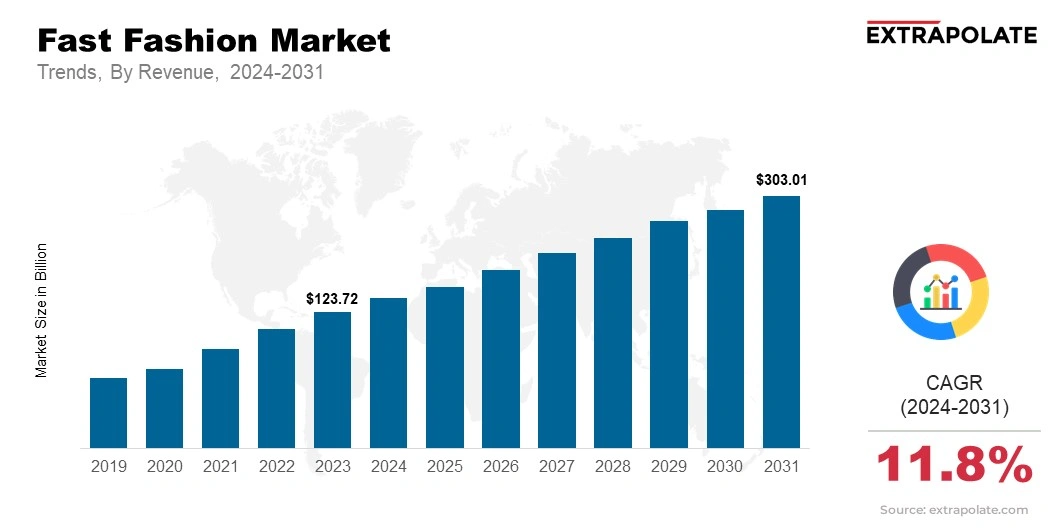
The global fast fashion market size was valued at USD 123.72 billion in 2023 and is projected to grow from USD 138.68 billion in 2024 to USD 303.01 billion by 2031, exhibiting a CAGR of 11.8% during the forecast period.

The global market is growing rapidly. This is due to changing consumer tastes, new technology, and social media's influence on fashion trends. Fast fashion is the rapid, low-cost production of trendy clothes. It lets consumers quickly adopt the latest styles.

E-commerce, new lifestyles, and a demand for speed and low prices have made fast fashion a dominant force in global apparel industry.

Fast fashion brands can quickly bring the latest runway trends to the mass market at a fraction of the cost. This makes fashion accessible to a wide audience. This model, which focuses on quick design-to-retail times, lets retailers rapidly respond to consumer demands and fashion trends.

Fast fashion companies use advanced supply chain techniques. They include just-in-time inventory and automated production systems. This lets them produce and distribute new collections at an unmatched speed.

Tech advancements in e-commerce and digital marketing are driving fast fashion's growth. Online shopping has made it easy for consumers to buy the latest fashion. This has led to the rise of digital-first fast fashion brands.

Social media, like Instagram, TikTok, and Pinterest, has boosted fast fashion. It lets influencers and brands show new styles to a global audience, often within hours of their debut.

The market's rapid growth is fueled by changing consumer behavior. Younger generations, in particular, want affordable, varied options and to quickly refresh their wardrobes.

With more consumers wanting the latest styles at low prices, fast fashion brands can meet the demand for trendy, affordable clothing. Fast fashion is growing because of "see now, buy now" shopping. This lets consumers buy items right after they see them online or in stores.

The market is growing fast. But, it faces challenges. They relate to sustainability, labor practices, and environmental impact. As consumers grow more aware, demand rises for eco-friendly products, ethical manufacturing, and transparent supply chains.

Many fast fashion companies are adding sustainable practices to meet these demands. They are also offering eco-friendly product lines.

The market will keep growing in the next few years. There is great potential in emerging markets, especially in Asia-Pacific and Latin America. Smartphones, a growing middle class, and online shopping will drive demand for fast fashion products.

Fast Fashion Market Size & Share, By Revenue, 2024-2031

Key Market Trends Driving Product Adoption

The fast fashion market is marked by several evolving trends:

  • Quick Production and Distribution: Fast fashion brands use quick design-to-retail cycles. They aim to minimize the time between spotting a trend and having products in stores and online.
  • E-Commerce Surge: Online shopping's rise has changed the landscape. It is now easier for consumers to access the latest fashion trends.
  • Social Media Influence: Platforms like Instagram, TikTok, and Pinterest shape what consumers like. They quickly drive the adoption of new fashion trends.
  • Sustainability Focus: Fast fashion brands are using more sustainable materials and ethical processes. This is due to a rise in consumer concern for the environment.
  • Personalized Shopping Experience: Brands are using AI for tailored shopping and product recommendations.

Major Players and Their Competitive Positioning

The market is dominated by major players like Zara (Inditex), H&M, Uniqlo, and Forever 21. They have strong market shares due to their large production networks, efficient supply chains, and e-commerce integration.

Emerging brands like Shein and Boohoo are gaining traction. They do this by using online-only collections and targeting niche markets. The competitive landscape is dynamic. There is constant innovation and quick responses to changing consumer demands.

Consumer Behavior Analysis

Consumer demand for fast fashion is largely driven by the following factors:

  • Affordability and Trendiness: Shoppers want low prices and the latest trends.
  • Convenience: Fast fashion is available online and offline. It makes it easy for consumers to shop for stylish clothes at their convenience.
  • Impulsive Purchases: Frequent product drops and limited-time offers drive impulsive buying, especially among younger consumers.
  • Social Media Influence: Online platforms and influencers spread trends quickly. This fuels consumer interest in new products.

Pricing Trends

Fast fashion brands use low prices to attract budget-conscious shoppers. Entry-level products are low-cost to attract budget buyers. Premium options are for those wanting high-quality, trendy items.

Brands often use price cuts, flash sales, and special offers to boost demand. E-commerce platforms allow dynamic pricing. They offer real-time discounts and promotions to boost sales.

Growth Factors

The fast fashion market is propelled by the following growth drivers:

  • Consumer Demand for Trendy Apparel: Shoppers want the latest fashion. This drives market growth.
  • E-Commerce Growth: Online shopping and mobile commerce are changing how consumers shop for fast fashion. They are opening new sales channels.
  • Global Supply Chain Innovations: Brands are optimizing their supply chains to meet the high demand of fashion-forward consumers. They want faster production and delivery.
  • Social Media and Influencers: Social media and fashion influencers shape buying habits. Their impact boosts market growth.

Regulatory Landscape

With growing concerns about fast fashion's environmental impact, governments are tightening regulations on textile waste, labor practices, and sustainable materials. Brands that embrace eco-friendly practices and meet new regulations will gain an edge in the market.

Recent Developments

The fast fashion industry has seen several notable shifts, including:

  • Sustainability Efforts: Brands are prioritizing sustainability. They are using eco-friendly fabrics, recycling, and applying ethical labor standards.
  • Digital Transformation: Fast fashion firms are boosting their digital presence. They are offering online-only collections, using AI to improve customer experiences, and providing faster deliveries.
  • Consumer-Centric Strategies: Companies are working to enhance online shopping. They offer personalized services, advanced sizing tools, and user-generated content.

Current and Potential Growth Implications

a. Demand-Supply Analysis

Fast fashion demand is rising. But, production delays, material shortages, and sustainability concerns pose risks to growth. However, advances in supply chain and logistics tech are helping, and reducing these challenges.

b. Gap Analysis

Fast fashion is growing. But, some areas need more progress.

  • Sustainability: Brands must create a sustainable model to address environmental concerns and meet demand for eco-friendly fashion.
  • Supply Chain Flexibility: Key players must improve supply chains to handle disruptions. This is key to meeting demand efficiently.
  • Consumer Education: Fast fashion brands must educate consumers on sustainability and its environmental impact.

Top Companies in the Fast Fashion Market

  • Zara (Inditex)
  • H&M Group
  • Uniqlo (Fast Retailing)
  • Forever 21
  • Mango
  • Primark
  • ASOS
  • Boohoo Group
  • Shein
  • Urban Outfitters

Fast Fashion Market: Report Snapshot

Segmentation

Details

By Product Type

Clothing, Footwear, Accessories

By Gender

Male, Female, Unisex

By Age Group

Children, Adults, Teenagers

By End User

Commercial, Residential

By Distribution Channel

Online, Offline

By Region

North America, Europe, Asia-Pacific, Middle East & Africa, South America

High Growth Segments

The following segments are expected to experience significant growth:

  • Online Retail: E-commerce will grow rapidly and more consumers will shop online for its convenience and better deals.
  • Sustainable Fashion: Consumer demand for eco-friendly fashion is rising. It is expected to boost the market for sustainable fast fashion.
  • Footwear: The footwear market is growing. Trendy and affordable shoes are popular with fast fashion shoppers.

Major Innovations

The fast fashion industry is witnessing several innovations:

  • Artificial Intelligence (AI): AI is being used to personalize shopping, optimize inventory, and predict fashion trends.
  • Sustainable Materials: To meet the demand for sustainable fashion, more companies are using recycled and organic fabrics.
  • Speed to Market: Advances in production and supply chains are helping brands to launch new collections faster.

Potential Growth Opportunities

Despite its impressive growth, the fast fashion market faces several challenges:

  • Environmental Impact: The industry needs to tackle its environmental footprint. It should find sustainable ways to cut waste and pollution.
  • Intense Competition: The market is very competitive. Many global and regional players are vying for market share.
  • Supply Chain Challenges: Manufacturers must optimize the global supply chain. Disruptions could affect product availability and delivery times.

Extrapolate Research says:

The fast fashion industry is primed for substantial growth. Demand for trendy, affordable apparel fuels this expansion, alongside the meteoric rise of e-commerce. Yet, brands that embrace sustainability and innovation will thrive the most. They are poised to capture market share while deftly navigating environmental challenges and supply chain disruptions. In this rapidly changing landscape, adaptability is expected to aid key players in gaining a sizeable market share.

FAQ

The global market is projected to reach USD 303.01 billion by 2031, growing at a CAGR of 11.8% from 2024 to 2031.
The global market was valued at USD 138.68 billion in 2024.
Shoppers want the latest fashion. This drives market growth.
Key players in the market are Zara (Inditex), H&M Group, Uniqlo (Fast Retailing), Forever 21, Mango, Primark, ASOS, Boohoo Group, Shein, Urban Outfitters & Others.

ARE YOU SEEKING COMPREHENSIVE INSIGHT ON VARIOUS MARKETS?
CONTACT OUR EXPERTS TODAY

Speak to an Expert
Fast fashion market

Global Fast Fashion Market Size

  • January-2025
  • 148
  • Global
  • retail
3499

SELECT AN OPTION

  • 1 User Access
  • PDF Report View
  • Non-Printable
  • 32 Man-hours Analyst Support
  • Post-Sale Support 48 Hours
  • Access upto 5 users
  • PDF Report View
  • Print Available
  • Access to Data Sheet
  • Up to 10% Customization
  • 40 Man-hours Analyst Support
  • Post-Sale Support 72 Hours
  • Annual Update
  • Unlimited User Access
  • Downloadable PDF Report. Data Sheet, Power Point Presentation
  • Print Available
  • Up to 20% Customization
  • 72 Man-hours Analyst Support
  • Post-Sale Support 120 Hours
  • Bi-Annual Update

ENQUIRE NOW REQUEST SAMPLE
Dale Byrne

HAVE A QUESTION?
Samuel will help you find what you are looking for.


Call: 888-328-2189


Related Research

Access Floor Market Insights 2021, Global Analysis and Forecast to 2027

July-2021


Activewear Market Size, Share, Growth & Industry Analysis, By Product Type (Athletic Shoes, Sports B

March-2025


Agrobacterium tumefaciens Competent Cells Market Insights 2022, Global Analysis and Forecast to 2030

July-2021


Alto Cornamuse Market Insights 2022, Global Analysis and Forecast to 2030

July-2021


Aluminium Composite Panels (ACP) Market Insights 2022, Global Analysis and Forecast to 2030

July-2021


Aluminum Alloy Frame Structure Market Insights 2022, Global Analysis and Forecast to 2030

July-2021


Anoscopes Market Insights 2022, Global Analysis and Forecast to 2030

July-2021


Anti-Aging Cosmetics Market Insights 2022, Global Analysis and Forecast to 2030

July-2021


Artifical Yarns Market Insights 2022, Global Analysis and Forecast to 2030

July-2021


Athletic Tape Market Insights 2022, Global Analysis and Forecast to 2030

July-2021


Sample Request

Global Fast Fashion Market Size, Share, Growth & Industry Analysis, By Product Type (Clothing, Footwear, Accessories), By Gender (Male, Female, Unisex), By Age Group (Children, Adults, Teenagers), By End User (Commercial, Residential), By Distribution Channel (Online, Offline), and Regional Analysis, 2024-2031

Publisher: Kings Research   |   Date: 2025-01-30   |   No. Of Pages: 148

Send Your Query

Global Fast Fashion Market Size, Share, Growth & Industry Analysis, By Product Type (Clothing, Footwear, Accessories), By Gender (Male, Female, Unisex), By Age Group (Children, Adults, Teenagers), By End User (Commercial, Residential), By Distribution Channel (Online, Offline), and Regional Analysis, 2024-2031

Publisher: Kings Research   |   Date: 2025-01-30   |   No. Of Pages: 148
Extrapolate

Extrapolate has a refined network of top publishers across the globe covering markets and micro markets who bring in the power of decision making. Our network of publishers is ranked based on the quality of reports produced along with customer feedback Indexing.

 talk@extrapolate.com

888-328-2189


Connect With Us

twitter logo

Industry

Quick Links

  • About Us
  • Contact Us
  • FAQ
  • Privacy Policy
  • Disclaimer
  • Refund Policy
  • Sitemap


Payment Gateway
Sign up for newsletter and updates


Powered By

Kings Research
© 2025 Kingsresearch. All Rights Reserved.