Urine Bags Market Size, Share, Growth & Industry Analysis, By Product Type (Leg Bags, Bedside Bags, Night Bags, Others) By Usage (Disposable, Reusable) By Capacity (0–500 ml, 500–1000 ml, 1000–2000 ml, Others) By End-User (Hospitals, Clinics, Home Healthcare, Others), and Regional Analysis, 2024-2031
Urine Bags Market: Global Share and Growth Trajectory
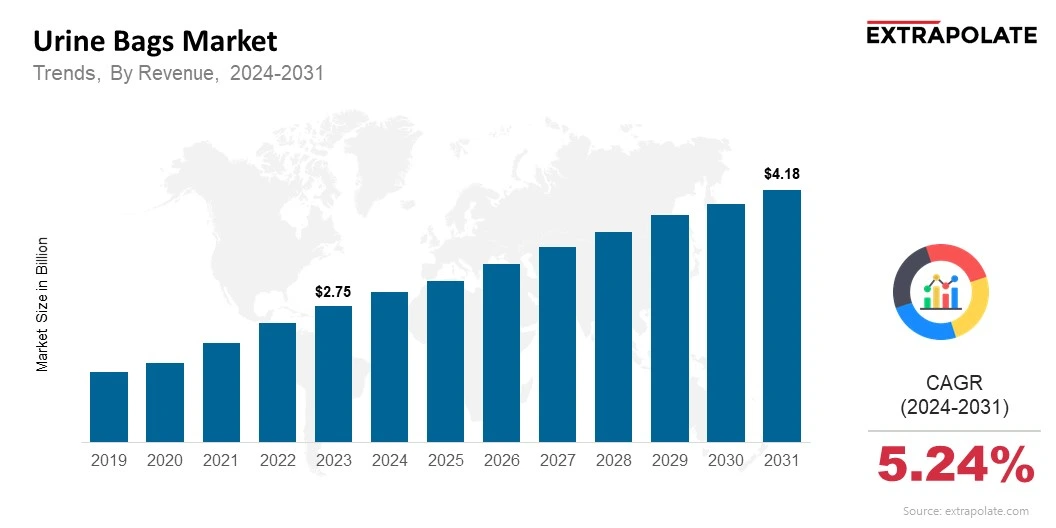
Global Urine Bags Market size was recorded at USD 2.75 billion in 2023, which is estimated to be valued at USD 2.92 billion in 2024 and reach USD 4.18 billion by 2031, growing at a CAGR of 5.24% during the forecast period.
The global urine bags market is experiencing a steady upward trajectory, driven by increasing cases of chronic illnesses, the growing elderly population, and a rising number of surgeries that require postoperative urinary drainage. These medical devices—designed to collect and temporarily store urine—are used extensively in hospitals, nursing homes, and homecare settings. They are indispensable for patients with urinary incontinence, immobility, or severe health conditions that impair bladder control.
The rise in urological diseases, coupled with increased awareness about personal hygiene and advanced healthcare infrastructure, has significantly bolstered the demand for urine bags. Technological innovations, such as anti-reflux valves, tear-resistant materials, and improved odor control, are also enhancing product functionality. With ongoing R&D and heightened attention to patient comfort and infection control, the market is poised for sustainable growth in the coming years.
Urine bags are no longer seen as simple utility products. Instead, they are becoming essential components of comprehensive care strategies across clinical and non-clinical settings. Their adoption is rising globally, underpinned by aging demographics and the increasing burden of chronic kidney disease, spinal cord injuries, and prostate-related conditions.
Key Market Trends Driving Product Adoption
Several transformative trends are fueling the adoption of urine bags:
Growing Incidence of Urinary Incontinence and Urological Disorders: One of the major factors driving the market is the growing number of people suffering from urinary incontinence. Conditions such as bladder dysfunction, multiple sclerosis, diabetes, and post-operative retention are increasing the demand for urinary catheters and urine bags. As awareness and diagnosis of these conditions improve, so does the uptake of these products.
Expanding Geriatric Population: The elderly is more prone to mobility issues, urinary retention, and incontinence, making them key end-users of urine collection bags. With a rising aging population worldwide—especially in countries like Japan, Italy, and Germany—the need for effective urinary management solutions has intensified. Long-term care centers and geriatric hospitals are contributing heavily to market growth.
Technological Advancements in Product Design: Innovations such as anti-kink tubing, bacteriostatic materials, improved bag venting, and leak-proof features are improving patient comfort and reducing the risk of infections. The integration of features like volume markings, drainage ports, and anti-reflux valves has made urine bags more reliable and user-friendly.
Shift Toward Home Healthcare: The growing preference for home-based treatments and long-term care outside hospital settings is creating opportunities for compact and easy-to-use urine bags. Patients undergoing palliative care or recovering post-surgery increasingly require urine management solutions that can be managed independently or with caregiver support.
Major Players and their Competitive Positioning
The urine bags market is moderately competitive, with a mix of global and regional players competing on the basis of quality, product innovation, and pricing. Some of the prominent companies dominating the market landscape include: B. Braun Melsungen AG, Teleflex Incorporated, Coloplast A/S, ConvaTec Group PLC, Medline Industries, LP, Cardinal Health, Inc., Flexicare Medical Limited, Hollister Incorporated, Amsino International, Inc., Manfred Sauer GmbH. These companies are continuously innovating and expanding their product lines to meet the increasing demand for high-performance urine bags. Many are also focusing on geographical expansion, partnerships with healthcare providers, and regulatory approvals to strengthen their global footprint.
Consumer Behavior Analysis
Consumer preferences in the urine bags market are shaped by a combination of medical needs, comfort, and awareness of hygiene. Several behavioral patterns are evident:
Hygiene and Infection Control: End-users, especially healthcare institutions, place a premium on infection prevention. Features like antimicrobial linings and one-time-use bags have become increasingly popular, reflecting a heightened sensitivity to hospital-acquired infections (HAIs).
Comfort and Convenience: Patients prefer products that are discreet, odor-resistant, and easy to attach and remove. Leg bags with adjustable straps and night bags with easy-drain features are increasingly sought after in homecare settings.
Product Familiarity: As patients become more educated about self-care tools, they show increased willingness to use urine bags independently, especially those that offer ease of use. Educational efforts from healthcare professionals and product training programs play a key role here.
Brand Preference and Price Sensitivity: While hospitals often follow procurement contracts, individual consumers show loyalty to brands that offer comfort and quality. However, pricing remains a strong influence, especially in developing markets, where affordability dictates buying behavior.
Pricing Trends
Cost depends on design, purpose, and add-ons. Some bags are made for special care needs. Disposable bags cost less and are easy to use. Hospitals often buy them in bulk. Reusable bags cost more at first. But they save money in the long run, especially at home.
Premium bags are popular in wealthier markets. People there look for better design and extra functions. Developing regions choose low-cost urine bags. Their health systems face tight budgets. To tackle cost issues, companies use value-based plans. They also offer options at varied price points.
Large orders from health groups cut costs. It leads to fair and stable prices. Companies now give rental options for reuse models. This cuts costs for short-term users.
Growth Factors
Several dynamic elements are fueling the growth of the urine bags market:
Increasing Surgical Procedures and Hospital Admissions: Urology, oncology, and gynecology surgeries often need short-term drainage. The number of such cases is rising. This leads to more use of catheters and collection bags. They help manage urine during healing.
Homecare and Ambulatory Services Expansion: More people now heal at home. This raises demand for easy and portable urine bags. Reducing hospital use saves money for health systems. It also boosts patient comfort and control.
Government Healthcare Investments: Public plans aid long-term and urology care. As a result, more bags are used in nursing homes and public clinics. Health plans in developed regions pay for these tools. That boosts their adoption and access.
In July 2025, the Rajasthan health department launched a home-based medical care program in Sikar district for bedridden elderly and chronically ill patients, including those with cancer. The initiative features mobile palliative care units that visit patients’ homes fortnightly, offering medical and nursing support while also training family members in caregiving.
Chronic Conditions on the Rise: Health problems like diabetes and kidney disease are growing fast. Spine injuries and cancer cases are also rising. They often rely on proper urine tools. This boosts the need for safe, clean bag systems.
Regulatory Landscape
Tight rules guide urine bag design and use. They focus on hygiene and user comfort. Regulatory bodies mandate stringent guidelines for materials used, sterility, and labeling. Key requirements include:
- FDA Approval (U.S.): Urine bags in the U.S. must meet FDA rules. These cover safety, body-friendly materials, and infection control.
- CE Marking (Europe): CE marking is a must for selling in Europe. It shows the product meets EU medical rules.
- ISO Standards: Following ISO 13485 keeps design and production on track. This is key for urine collection tools and other devices.
Makers must show that devices perform well in real care settings. They also need post-sale checks to spot risks.
Recent Developments
Several key developments are shaping the landscape of the urine bags market:
- Smart Urine Collection Systems: Smart bags now include sensors. They help watch urine output and warmth. They work well in serious care units. Fluid checks become quicker and more exact.
- Sustainable Materials: Sustainability is shaping product design. Makers now explore cleaner materials for disposable bags.
- Strategic Partnerships: Partnerships with hospitals are rising. These deals boost access and cut supply delays.
- Product Launches with Enhanced Features: Firms now offer new urine bags with smart features. These include anti-odor tech, self-sealing drains, and comfortable straps.
Current and Potential Growth Implications
Demand-Supply Analysis: More users now want these products. So, makers are boosting output to match demand. Small firms face rising material costs. Shipping and supply delays add to the strain.
Gap Analysis: High-income regions lead in adoption. Others fall behind due to cost and poor access. Firms need to shape products for these markets. Focus should be on low cost and long life.
Top Companies in the Urine Bags Market
- B. Braun Melsungen AG
- Teleflex Incorporated
- Coloplast A/S
- ConvaTec Group PLC
- Medline Industries, LP
- Cardinal Health, Inc.
- Hollister Incorporated
- Flexicare Medical Limited
- Manfred Sauer GmbH
- Amsino International, Inc.
Urine Bags Market: Report Snapshot
Segmentation | Details |
By Product Type | Leg Bags, Bedside Bags, Night Bags, Others |
By Usage | Disposable, Reusable |
By Capacity | 0–500 ml, 500–1000 ml, 1000–2000 ml, Others |
By End-User | Hospitals, Clinics, Home Healthcare, Others |
By Region | North America, Europe, Asia-Pacific, Latin America, Middle East & Africa |
Urine Bags Market: High-Growth Segments
- Leg Bags: People like them for their light weight and ease. They suit those healing at home or staying active.
- Home Healthcare Segment: More people now choose care at home. This pushes demand for easy and private products.
- Reusable Bags: These bags are low-cost and built to last. They are now widely used in long-term care.
Major Innovations
- Anti-Reflux Valves: These features stop urine from flowing back into the body. This lowers the chance of germs causing UTIs.
- Smart Monitoring Systems: Real-time tracking is done through digital setup. It helps doctors in high-risk care units.
- Eco-Friendly Designs: Eco-friendly urine bags use biodegradable materials. They are made to cut down plastic waste.
Urine Bags Market: Potential Growth Opportunities
- Penetration in Emerging Economies: Asia, Africa, and Latin America are seeing better healthcare access .Awareness about bladder health is also rising.
- Product Personalization: Bags tailored for men, women, or patients after surgery are in demand. These options boost product variety and appeal.
- Integration with Remote Monitoring Devices: Digital platforms can connect with urine bags for smarter monitoring. They support long-term care and real-time patient updates.
Extrapolate says:
The urine bags market will see steady growth in the years ahead. More seniors and care needs raise demand. Patient-friendly designs boost comfort levels. They also raise safety and cleanliness standards. More investment is going into long-term care. That drives demand for better urine solutions. Low-cost and smart products help companies stand out. Home healthcare adds to their market gain.
ARE YOU SEEKING COMPREHENSIVE INSIGHT ON VARIOUS
MARKETS?
CONTACT OUR EXPERTS TODAY
Urine Bags Market Size
- August-2025
- 148
- Global
- healthcare-medical-devices-biotechnology
Related Research
2022-2030 Global and Regional B-Cell Non-Hodgkin`s Lymphoma (NHL) Treatment Industry Production, Sa
February-2021
2022-2030 Global and Regional Organ Transplant Diagnostics Industry Production, Sales and Consumpti
February-2021
2022-2030 Global and Regional Prostacyclin Drug Industry Production, Sales and Consumption Status a
February-2021
2022-2030 Global and Regional Spinal and Bulbar Muscular Atrophy Treatment Industry Production, Sal
February-2021
2% Chlorhexidine Gluconate (CHG) Cloths-Global Market Status & Trend Report 2022-2030 Top 20 Countri
April-2021
2021-2027 Global and RegioAnal Nasal Gels Industry Production, Sales and Consumption Status and Pros
February-2021
2021-2027 Global and Regional 2019-nCoV Detection Server Industry Production, Sales and Consumption
February-2021
2021-2027 Global and Regional ? Collagen Quantitative Determination Kit Industry Production, Sales a
February-2021
2021-2027 Global and Regional Anti-TNF Monoclonal Antibody Industry Production, Sales and Consumptio
February-2021