Diabetes Drugs Market Size, Share, Growth & Industry Analysis, By Drug Class (Insulin, GLP-1 Receptor Agonists, SGLT2 Inhibitors, DPP-4 Inhibitors, Sulfonylureas, Others), By Drug Type (Oral Drugs, Injectable Drugs), By End-User (Hospitals, Homecare, Clinics, Others), and Regional Analysis, 2024-2031
Diabetes Drugs Market: Global Share and Growth Trajectory
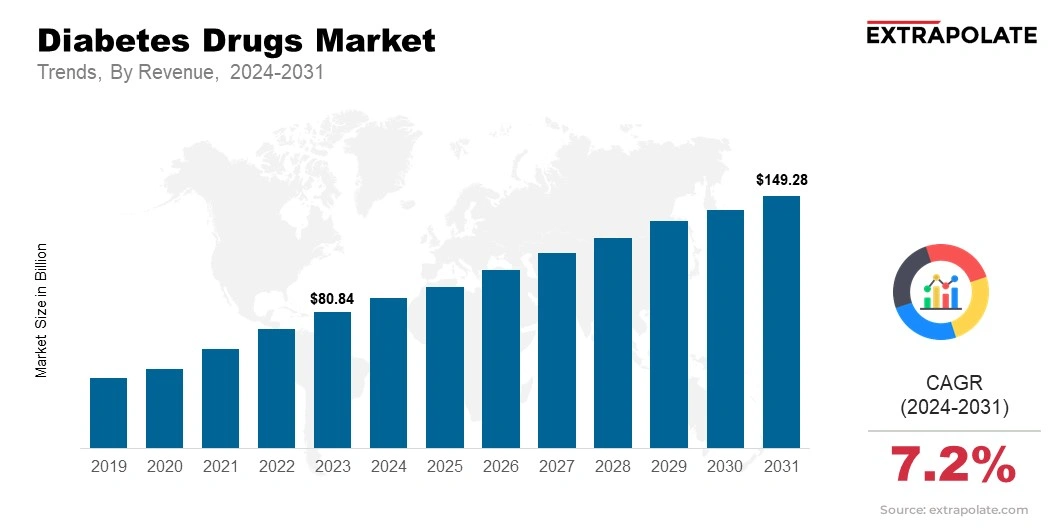
The global Diabetes Drugs Market size was valued at USD 80.84 billion in 2023 and is projected to grow from USD 92.07 billion in 2024 to USD 149.28 billion by 2031, exhibiting a CAGR of 7.2% during the forecast period.
The global market is thriving, fueled by rising rates and awareness. Type 2 diabetes, a leading chronic condition, impacts millions across the globe. This booming market features a variety of treatments: insulin, oral medications, GLP-1 receptor agonists, and SGLT-2 inhibitors. The growing elderly population and shifting lifestyles are key players in this surge. Unhealthy diets add fuel to the fire, driving demand like never before.
Additionally, developments in drug development and the emergence of novel therapies have amplified the handling and treatment of the condition, presenting patients with more alternatives and enhanced results. Insulin is still a critical component for treating or overcoming diabetes, however, therapies that do not comprise insulin, like GLP-1 receptor agonists and SGLT-2 inhibitors, are also being recognized on a large scale as a result of their ability to provide the correct amount of blood sugar control with fewer side effects to it.
Technological solutions in drug delivery, like insulin pumps and smart pens, are also significantly contributing to the overall growth of the market by offering more practical, accurate, and easy-to-use solutions for patients. In addition to this, the rising focus on customized medicine and precision therapies is likely to carve out new paths for facilitating a better presence in the market, as treatment regimens can now be customized according to the needs of patients.
North America holds a prominent place in the global market, and is fuelled by a widespread distribution of diabetes and better access to modern healthcare systems. Regardless, the Asia-Pacific region is projected to witness the most rapid growth, influenced by the growth in acceptance of diabetes treatments in developing economies like China and India, where diabetes cases are increasing at a fast pace.
As the diabetes drugs market is showing constant development, primary forces like the growth of the patient population, new innovations in drug development, and an escalating focus on enhancing the quality of life for patients that are diagnosed with diabetes will determine its growth with constant developments that are expected to play a significant role in the future of diabetes management.

Key Market Trends Driving Product Adoption
The diabetes drugs market is classified by ongoing advancements and the constantly changing needs of patients. Various key trends are fueling the expansion of the market:
- Advances in Drug Development: By innovating novel therapeutic agents, such as GLP-1 receptor agonists, SGLT2 inhibitors, and insulin biosimilars, treatment to diabetes is being revolutionized. These drugs ensure better regulation of individuals blood sugar levels, with a minimum amount of side in contrast to traditional methods of therapies.
- Personalized Medicine: With the emergence of precision medicine, diabetes treatments are becoming more patient-specific, considering genetic factors, comorbidities, and how an individual is responding to a specific drug.
- Combination Therapies: The use of combination therapies, where numerous drugs are used in combination to treat diabetes in a more effective way, is getting highly recognized. These combinations enhance patient’s cooperation to the treatment and achieve better regulation of sugar levels.
- Emerging Market Growth: Fast-paced economic advancements and a wider access to healthcare in developing markets, especially in Asia-Pacific and Latin America, are strengthening the access for diabetes drugs in the market.
- Biological Drugs: The use of biologics, inclusive of insulin analogs and biosimilars, is on the rise, fuelled by their potential to provide more stable and longer-lasting levels of blood sugar.
Major Players and their Competitive Positioning
The diabetes drugs market is characterized by intense rivalry and innovation. Leading contenders—Novo Nordisk, Sanofi, Eli Lilly, Merck & Co., and AstraZeneca—are competing by investing in research and development to unveil pioneering treatments.
Emerging biopharmaceutical companies are also making their mark, introducing targeted therapies and biosimilars that bring in a new wave of innovation. In a bid for greater market presence, established players actively pursue strategic partnerships and acquisitions, broadening their product portfolios and boosting visibility. In this fast-paced landscape, the race for supremacy never slows down.
Consumer Behavior Analysis
Consumers, especially those who are found to have diabetes, are progressively opting for more efficient, sustainable solutions for managing their condition. The key factors impacting the behavior of consumers include:
- Efficacy and Safety: Patients are showing interest in searching for treatments that offer better management over blood glucose levels with only limited side effects.
- Cost and Accessibility: As diabetes drugs can be priced at a premium, specifically in places that lack universal healthcare, affordability and accessibility are primary issues for patients.
- Convenience: Drug delivery systems that offer user-friendliness, for example insulin pens, continuous glucose monitors, and oral medications, are becoming more derived and widely known.
- Disease Awareness: Increased recognition about diabetes and its risks is leading people to look for early treatment and management solutions, which in turn, will increase the demand for diabetes drugs.
Pricing Trends
Pricing in the diabetes drugs market is dependent on multiple factors, like drug class, manufacturer, region, and regulatory environment. Biologic drugs and insulin analogs often come with a hefty price tag.
Their intricate manufacturing processes and significant development costs keep the rates high. Yet, with the dawn of biosimilars and generics, a shift is underway. Pricing pressure is climbing, clearing the path for more accessible diabetes treatments. This evolution means relief for countless individuals in the form of affordable treatment options.
Growth Factors
Factors influencing the growth of the diabetes drugs market:
- Rising Prevalence of Diabetes: The rise in diabetes cases all over the world, especially in advanced and evolving countries, is one of the main factors influencing market growth. Factors like the elderly population, unbalanced diets, and inactive living are significantly contributing to the rise in diabetes diagnoses all over the world.
- Technological Advancements in Drug Delivery: The emergence of cutting-edge drug delivery systems, like insulin pumps, smart pens, and continuous glucose monitors, is boosting compliance and promoting the implementation of diabetes drugs.
- Government Initiatives: Increased focus by the government on modifying the healthcare infrastructure and providing accessibility to diabetes treatment in developing markets is influencing the demand for diabetes drugs.
- Awareness Campaigns: Public health programs that focus on increasing the awareness about diabetes and threats are motivating diagnosis in early stages and treatment, further enhancing market demand.
Regulatory Landscape
Diabetes medications are under the microscope of multiple international and regional watchdogs, such as the U.S. Food and Drug Administration (FDA), the European Medicines Agency (EMA), and national authorities, who meticulously oversee the marketing process and introduction of new treatments.
The regulatory approval processes are notoriously lengthy and costly, but once a drug receives the green light, it gains a significant competitive advantage in the marketplace. This is exemplified by the FDA's rigorous approval process, which involves multiple clinical trials and reviews, taking an average of 10-15 years to complete.
Governments worldwide are cracking down on diabetes drug development, enforcing stricter rules to guarantee the safety and effectiveness of these medications and to alleviate the massive financial burden of diabetes care.
Recent Developments
Recent advancements in the diabetes drugs market include:
- Innovative Drug Approvals: New types of diabetes drugs, like GLP-1 receptor agonists and SGLT2 inhibitors, receiving approval in recent years, offer a large variety of substitutes for patients who are diagnosed with diabetes.
- Biosimilars: The increasing availability of insulin biosimilars is helping to reduce the cost of diabetes treatment, making insulin easier to access for a larger number of patients.
- Digital Health Integration: The incorporation of digital health technologies, comprising apps for keeping a track of glucose levels and remote monitoring devices, is enhancing patient engagement and conforming to diabetes therapies.
Current and Potential Growth Implications
Demand-Supply Analysis: The demand for diabetes drugs continues to exceeding supply in several regions, especially in low-income and middle-income countries where access to healthcare is not enough. This offers a great chance for pharmaceutical companies to expand their market footprint.
Gap Analysis: Even though the market for diabetes drugs is expanding, challenges still persist in providing effective treatments to patients with comorbidities and those who are not responding well to existing therapies. Moreover cutting the cost of diabetes medications remains a significant focus for healthcare systems on a global scale.
Top Companies in the Diabetes Drugs Market
- Novo Nordisk
- Sanofi
- Eli Lilly
- Merck & Co.
- AstraZeneca
- Boehringer Ingelheim
- Bristol-Myers Squibb
- Johnson & Johnson
- GlaxoSmithKline
- Novartis
Diabetes Drugs Market: Report Snapshot
Segmentation | Details |
By Drug Class | Insulin, GLP-1 Receptor Agonists, SGLT2 Inhibitors, DPP-4 Inhibitors, Sulfonylureas, Others |
By Drug Type | Oral Drugs, Injectable Drugs |
By End-User | Hospitals, Homecare, Clinics, Others |
By Region | North America, Europe, Asia-Pacific, Latin America, Middle East & Africa |
High Growth Segments
The following segments are expected to see significant growth in the market:
- GLP-1 Receptor Agonists: These drugs are being recognized due to their ability to manage blood sugar levels and promote weight loss, which offer double benefits for patients with type 2 diabetes.
- SGLT2 Inhibitors: Widely recognized for their capability to help in bringing down blood glucose levels by propelling glucose excretion via urine, SGLT2 inhibitors are witnessing rapid adoption in between healthcare providers.
Major Innovations
New innovations taking place in the market :
- Biosimilar Insulin: The emergence of insulin biosimilars in the market is making insulin therapy easy to access for patients.
- Combination Therapies: The innovation of fixed-dose combination therapies that include various drug classes is helping amplify patient adherence and diabetes management.
- Smart Insulin Delivery Devices: New advancements, like smart insulin pens and constant glucose monitoring systems, are facilitating patients to manage their diabetes efficiently.
Potential Growth Opportunities
Opportunities for growth in the market include:
- Access to Emerging Markets: Making a mark in the emerging markets, where the cases of diabetes are rising, offers a remarkable potential for growth for pharmaceutical companies.
- Personalized Diabetes Treatments: Developing drugs made according to the patients needs, comprising those with comorbidities, could help in maintaining a competitive edge for manufacturers.
- Affordable Diabetes Medications: Offering affordable solutions, like biosimilars and generic drugs, can assist in meeting the increasing demands for cost-effective diabetes treatments all over the world.
Kings Research says:
The global diabetes pharmaceuticals market will experience strong growth due to rising cases of diabetes in the world and continued innovation in the development processes. Pharmaceutical companies dedicated to development, affordability, and accessibility will be most well-positioned to reach beyond their grasp in this growing and vibrant marketplace .
ARE YOU SEEKING COMPREHENSIVE INSIGHT ON VARIOUS
MARKETS?
CONTACT OUR EXPERTS TODAY
Diabetes Drugs Market Size
- February-2025
- 148
- Global
- healthcare-medical-devices-biotechnology
Related Research
2022-2030 Global and Regional B-Cell Non-Hodgkin`s Lymphoma (NHL) Treatment Industry Production, Sa
February-2021
2022-2030 Global and Regional Organ Transplant Diagnostics Industry Production, Sales and Consumpti
February-2021
2022-2030 Global and Regional Prostacyclin Drug Industry Production, Sales and Consumption Status a
February-2021
2022-2030 Global and Regional Spinal and Bulbar Muscular Atrophy Treatment Industry Production, Sal
February-2021
2% Chlorhexidine Gluconate (CHG) Cloths-Global Market Status & Trend Report 2022-2030 Top 20 Countri
April-2021
2021-2027 Global and RegioAnal Nasal Gels Industry Production, Sales and Consumption Status and Pros
February-2021
2021-2027 Global and Regional 2019-nCoV Detection Server Industry Production, Sales and Consumption
February-2021
2021-2027 Global and Regional ? Collagen Quantitative Determination Kit Industry Production, Sales a
February-2021
2021-2027 Global and Regional Anti-TNF Monoclonal Antibody Industry Production, Sales and Consumptio
February-2021