Breast Cancer Therapeutics Market Size, Share, Growth & Industry Analysis, By Therapy Type (Hormone Therapy, Chemotherapy, Targeted Therapy, Immunotherapy, Surgical Treatment) By Cancer Type (HER2-Positive, Triple-Negative, Hormone Receptor-Positive, Others) By End User (Hospitals, Oncology Clinics, Research Institutes, Home Care), and Regional Analysis, 2024-2031
Breast Cancer Therapeutics Market: Global Share and Growth Trajectory
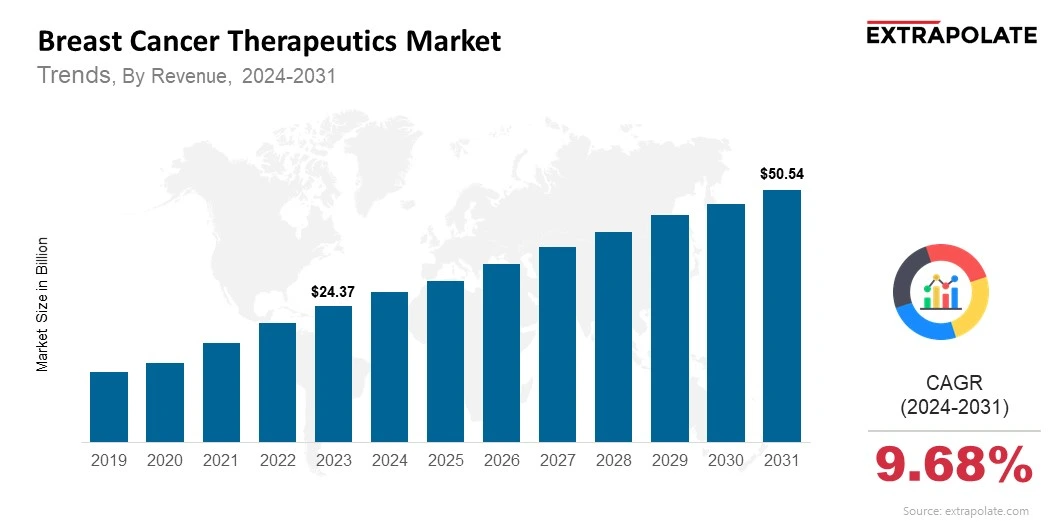
The global Breast Cancer Therapeutics Market size was valued at USD 24.37 billion in 2023 and is projected to grow from USD 26.46 billion in 2024 to USD 50.54 billion by 2031, exhibiting a CAGR of 9.68% during the forecast period.
The global therapeutics market is witnessing substantial growth, fueled by a combination of growing breast cancer incidence rates, technological innovations in treatment options, and growing awareness about the importance of early detection and personalized care. Breast cancer remains one of the most common cancers affecting women worldwide, and this alarming prevalence is prompting a rise in investments in research and development of more effective therapeutics.
The market comprises a diverse array of treatment modalities, which includes hormone therapies, chemotherapy, immunotherapy, targeted therapies, and surgical procedures. Each treatment type offers unique mechanisms of action and benefits, enabling healthcare providers to tailor approaches based on the specific characteristics of the tumor and patient needs.
The evolution of breast cancer therapeutics from traditional chemotherapy to more refined targeted and immunotherapeutic agents highlights the progress made in understanding cancer biology and patient heterogeneity. Hormone therapy remains a cornerstone in the treatment of hormone receptor-positive breast cancers.
Drugs like selective estrogen receptor modulators (SERMs), aromatase inhibitors, and estrogen receptor down regulators are widely prescribed to block hormone-driven tumor growth, significantly enhancing survival rates. Meanwhile, chemotherapy continues to play a necessary role, particularly in aggressive or advanced-stage breast cancers, by targeting rapidly dividing cancer cells and reducing tumor burden.
One of the most transformative developments in recent years has been the advent of targeted therapies. These agents accurately attack specific molecular targets implicated in breast cancer progression, such as HER2 receptors, CDK4/6 enzymes, and PARP enzymes. Drugs like trastuzumab, pertuzumab, palbociclib, and olaparib have demonstrated remarkable efficiency in improving patient outcomes and reducing side effects compared to conventional chemotherapy. The surge in FDA approvals for such targeted therapies is further propelling market growth.
Immunotherapy is another promising area within breast cancer therapeutics. By harnessing the patient’s immune system to recognize and destroy cancer cells, immune checkpoint inhibitors and other immunomodulatory agents are offering new hope for patients with difficult-to-treat subtypes like triple-negative breast cancer.
The ongoing clinical trials and rising adoption of immunotherapies are expected to create significant growth opportunities in the near future. Surgical intervention remains a vital component of breast cancer management, often complemented by adjuvant therapies. Advances in surgical techniques, including breast-conserving surgery and reconstructive procedures, have enhanced patient quality of life and cosmetic outcomes.
Minimally invasive surgeries and improved diagnostic imaging further support personalized surgical planning. The market’s growth is also supported by increasing awareness programs, early screening initiatives, and better diagnostic tools that facilitate timely treatment. Governments, non-profit organizations, and healthcare providers are actively promoting breast cancer education, resulting in higher rates of early-stage diagnosis and improved prognosis.
Geographically, North America and Europe currently dominate the breast cancer therapeutics market, owing to their advanced healthcare infrastructure, high adoption of innovative therapies, and substantial R&D investments. However, emerging economies in Asia-Pacific and Latin America are rapidly expanding their healthcare capabilities and patient access, presenting lucrative opportunities for market players.
Key Market Trends Driving Product Adoption
The breast cancer therapeutics market is defined by rapid scientific progress, expanding treatment options, and evolving patient care approaches. Key trends propelling market growth include:
• Targeted Therapies: New inhibitors for HER2, CDK4/6, and PARP are making a big difference. They work better and cause fewer side effects.
• Personalized Medicine: Genetic profiling and biomarkers are improving care. They guide tailored treatments.
• Immunotherapy Integration: Immunotherapy drugs are gaining ground. They fight advanced and aggressive breast cancer.
• Combination Treatments: Multimodal therapy mixes different treatments. It includes chemo, targeted, and immune drugs.
• Minimally Invasive Techniques: Advanced surgery and radiation aid recovery. They boost the patient’s quality of life.
Major Players and their Competitive Positioning
The market is dominated by pharmaceutical giants like Roche, Pfizer, Novartis, AstraZeneca, and Eli Lilly, which lead with innovative therapies and robust R&D pipelines. Emerging biotech firms are also contributing with novel drugs and biosimilars, intensifying competition.
Consumer Behavior Analysis
Patients and healthcare providers are increasingly focusing on:
• Efficacy and Safety: People prefer treatments that help them live longer. They want side effects to be manageable.
• Access to Treatment: Insurance covers many drugs. Government plans give more access.
• Awareness and Screening: Diagnosing early saves time. It allows prompt therapy.
• Supportive Care: Holistic methods cover mind and body. They offer support and symptom control.
Pricing Trends
Pricing in the breast cancer therapeutics market differs based on drug type, treatment duration, and geographic location. Biologics and novel targeted agents command premium prices, though biosimilars and generic options are expanding cost-effectiveness in specific regions
Market Growth Projections
According to recent industry forecasts, the breast cancer therapeutics market is expected to grow at a CAGR of around 8-10% from 2023 to 2028, fueled by growing incidence rates and expanding therapeutic options. North America and Europe currently lead the market, while Asia-Pacific is emerging rapidly due to improved healthcare infrastructure and increasing awareness.
Growth Factors
Key drivers include:
• Rising Breast Cancer Incidence: Cases are rising all over the world. They are increasing in developing countries.
• Technological Advancements: Breakthroughs in molecular diagnostics and targeted drug delivery.
• Government Initiatives: Screening programs and healthcare funding promoting early treatment.
• Patient Advocacy: Growing patient support networks and education campaigns.
• Aging Population: Higher cancer risk among elderly populations supporting sustained demand.
Regulatory Landscape
Regulatory frameworks across different regions are making progress to expedite approvals of innovative therapies while ensuring safety and efficiency. Strict rules for clinical trials and post-market surveillance are crucial factors.
Recent Developments
Notable recent trends include:
• FDA Approvals: New targeted and immune therapies are now approved. They aim at specific cells and boost immunity.
• Clinical Trials: Trials keep looking at better drug sets. They test new drug mixes and care plans.
• Biosimilars: Biosimilars are now in use. They help cut costs and reach more.
• Digital Health Integration: Use of AI and telemedicine to support treatment adherence and monitoring.
Current and Potential Growth Implications
Demand Supply Analysis
Demand for breast cancer therapeutics is increasing rapidly, supported by growing disease burden and improved diagnostics. Supply constraints occasionally increase due to complex manufacturing processes and patent expirations.
Gap Analysis
Despite progress, challenges remain:
• High Treatment Costs: It's hard to get things in poor areas. This slows down growth.
• Drug Resistance: Treatments face resistance. New ways to fight diseases are needed.
• Side Effect Management: Need for better supportive care solutions.
• Awareness Gaps: In certain groups, early detection is poor. Awareness about treatment is low.
Top Companies in the Breast Cancer Therapeutics Market
• Roche
• Pfizer
• Novartis
• AstraZeneca
• Eli Lilly
• Bristol-Myers Squibb
• Merck & Co.
• Amgen
• Biogen
• Sanofi
Breast Cancer Therapeutics Market: Report Snapshot
Segmentation | Details |
By Therapy Type | Hormone Therapy, Chemotherapy, Targeted Therapy, Immunotherapy, Surgical Treatment |
By Cancer Type | HER2-Positive, Triple-Negative, Hormone Receptor-Positive, Others |
By End User | Hospitals, Oncology Clinics, Research Institutes, Home Care |
By Region | North America, Europe, Asia-Pacific, Latin America, Middle East & Africa |
Breast Cancer Therapeutics Market: High-Growth Segments
• Targeted Therapy: Precision medicines tailored to tumor biology.
• Immunotherapy: New agents enhancing immune response against cancer.
• Biosimilars: Cost-effective alternatives to branded biologics.
Major Innovations
• Molecular Diagnostics: Advanced genetic tests for treatment guidance.
• Nanomedicine: Enhanced drug delivery systems targeting cancer cells.
• AI-Driven Drug Development: Accelerating discovery of novel compounds.
Breast Cancer Therapeutics Market: Potential Growth Opportunities
Market participants face:
• Regulatory Hurdles: Complex approval processes delaying product launches.
• High R&D Costs: Extensive investment needed for drug development.
• Market Access: Emerging economies face barriers. High prices and poor infrastructure block access.
• Patient Compliance: Improving adherence to long-term treatment regimens.
Extrapolate Research says:
The global breast cancer therapeutics market is well-positioned for rapid growth in the coming years, propelled by medical innovations, rise in patient awareness, and supportive regulatory frameworks. Companies that innovate and expand access while addressing market challenges will grasp substantial chances in this vital healthcare segment.
ARE YOU SEEKING COMPREHENSIVE INSIGHT ON VARIOUS
MARKETS?
CONTACT OUR EXPERTS TODAY
Breast Cancer Therapeutics Market Size
- June-2025
- 148
- Global
- healthcare-medical-devices-biotechnology
Related Research
2022-2030 Global and Regional B-Cell Non-Hodgkin`s Lymphoma (NHL) Treatment Industry Production, Sa
February-2021
2022-2030 Global and Regional Organ Transplant Diagnostics Industry Production, Sales and Consumpti
February-2021
2022-2030 Global and Regional Prostacyclin Drug Industry Production, Sales and Consumption Status a
February-2021
2022-2030 Global and Regional Spinal and Bulbar Muscular Atrophy Treatment Industry Production, Sal
February-2021
2% Chlorhexidine Gluconate (CHG) Cloths-Global Market Status & Trend Report 2022-2030 Top 20 Countri
April-2021
2021-2027 Global and RegioAnal Nasal Gels Industry Production, Sales and Consumption Status and Pros
February-2021
2021-2027 Global and Regional 2019-nCoV Detection Server Industry Production, Sales and Consumption
February-2021
2021-2027 Global and Regional ? Collagen Quantitative Determination Kit Industry Production, Sales a
February-2021
2021-2027 Global and Regional Anti-TNF Monoclonal Antibody Industry Production, Sales and Consumptio
February-2021