Acrylic Teeth Market Size, Share, Growth & Industry Analysis, By Product Type (Cross-Linked Acrylic Teeth, Non-Cross-Linked Acrylic Teeth), By Application (Complete Dentures, Partial Dentures, Overdentures, Implant-Supported Dentures), By End-User (Dental Clinics, Hospitals, Dental Laboratories, Academic Institutes), and Regional Analysis, 2024-2031
Acrylic Teeth Market: Global Share and Growth Trajectory
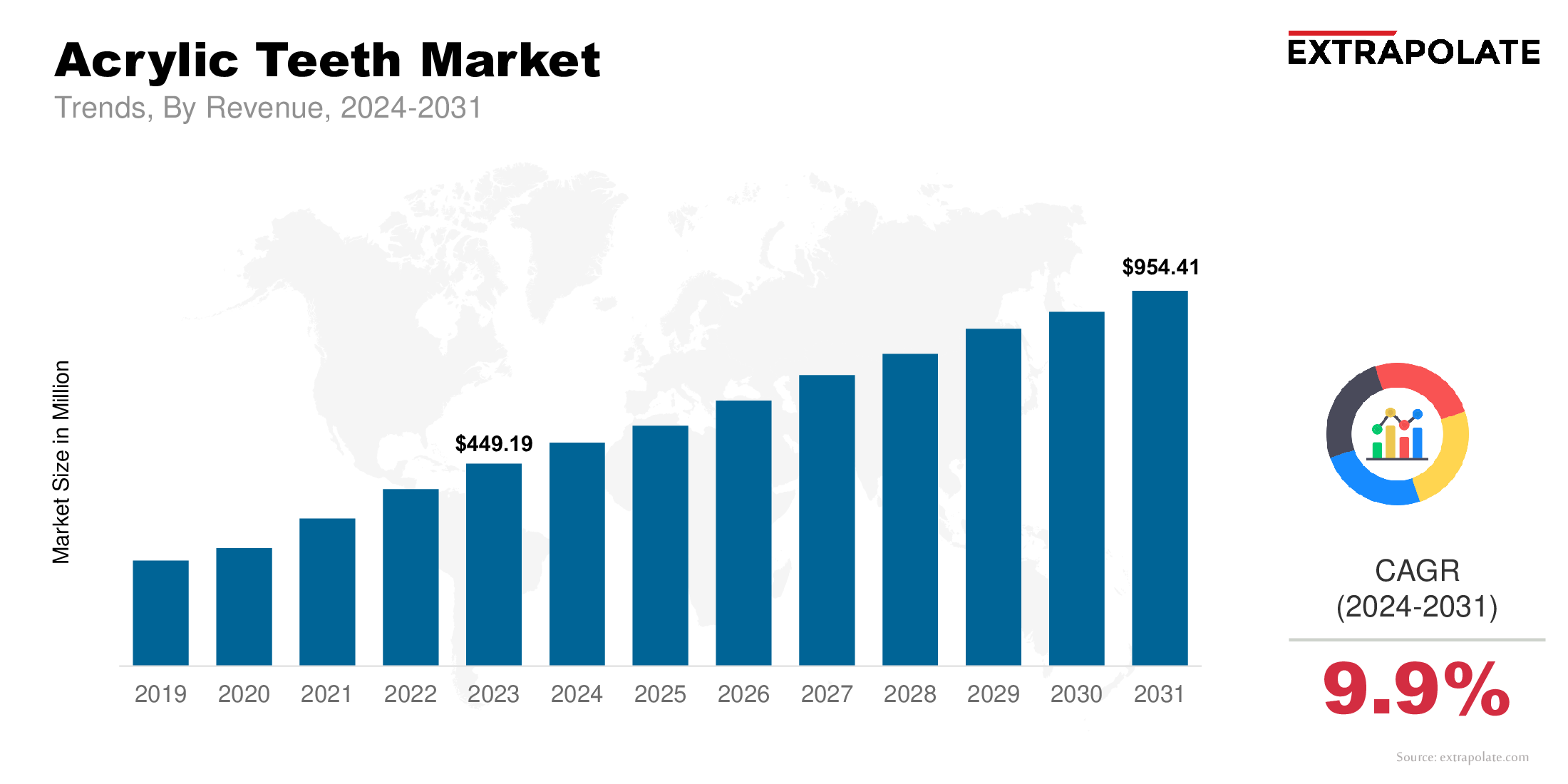
The global acrylic teeth market size was valued at USD 449.19 Million in 2023 and is projected to grow from USD 492.15 Million in 2024 to USD 954.41 Million by 2031, exhibiting a CAGR of 9.9% during the forecast period.
The global market is witnessing steady growth, driven by rising demand for affordable and aesthetic dental prosthetic solutions. Acrylic teeth, commonly used in full and partial dentures, offer a practical alternative to porcelain or ceramic options. They are favored for their ease of customization, lightweight properties, and lower cost, making them accessible to a wide patient base.
This upward trajectory is strongly supported by the growing geriatric population and increasing prevalence of edentulism (tooth loss). According to the World Health Organization, nearly 30% of individuals aged 65–74 years have no natural teeth, creating a large market for dentures and prosthetic solutions. Acrylic teeth are often the preferred material in such applications due to their flexibility in design, shade matching, and repairability.
Technological advancements in dental materials have further bolstered market growth. Innovations in cross-linked acrylic polymers and the integration of nano-fillers have significantly improved the strength, durability, and appearance of acrylic teeth. These developments allow for better patient outcomes and enhanced long-term performance of dentures.
Moreover, growing awareness about oral health, rising dental tourism in emerging economies, and the expansion of dental clinics globally have made prosthetic treatments more accessible and affordable. Many governments are also supporting low-cost oral healthcare programs, further increasing demand.
Digital dentistry and CAD/CAM technologies are adding to the market’s growth. These systems make denture fabrication more efficient and improve consistency. This makes acrylic teeth more attractive for modern dental practices.
As dental care shifts toward prevention and cosmetic treatments, the demand for acrylic teeth in restorations is rising. Increased healthcare spending and better patient awareness are also contributing to this trend. Together, these factors are driving strong global growth in the acrylic teeth industry.

Key Market Trends Driving Product Adoption
- Increasing Geriatric Population and Edentulism: One of the main drivers of market growth is the rising global aging population. As people age, they face a higher risk of tooth loss and oral diseases. Acrylic teeth offer a practical and affordable way to manage edentulism. According to the World Health Organization (WHO), nearly 3.5 billion people worldwide are affected by oral diseases. Tooth loss is especially common among older adults. This makes the elderly a key target group for acrylic denture applications.
- Advancements in Dental Prosthetic Materials: Recent developments in polymethyl methacrylate (PMMA) and the use of nano-fillers have significantly enhanced the performance of acrylic teeth. These advances improve durability, wear resistance, and overall appearance. Patients now experience better comfort and more natural-looking results. In addition, new hybrid materials that combine acrylic with other resins are giving manufacturers more design options. These materials also bond better with denture bases.
- Shift Toward Removable and Flexible Dentures: There’s a growing preference for removable dentures, especially among older adults and those wanting less invasive treatment. Acrylic teeth are commonly used in these solutions due to their simple fabrication and easy adjustments. Flexible dentures, which also rely on acrylic teeth for function and appearance, are becoming more popular. This is mainly because they are more comfortable and easier to wear.
- Growing Awareness and Accessibility of Dental Care:More people are now aware of the importance of dental hygiene and prosthodontic care. Educational efforts and better access to dental services are driving this change. Government programs and private initiatives are also helping by offering affordable dentures to underserved communities. As dental clinics continue to expand in emerging markets, the demand for acrylic teeth is growing rapidly.
Major Players and Their Competitive Positioning
The acrylic teeth indutry is moderately fragmented. It includes both multinational corporations and regional players. These companies compete based on product variety, customization options, and pricing. Key industry participants include:
- Dentsply Sirona Inc.
- SHOFU Inc.
- Yamahachi Dental Mfg., Co.
- Heraeus Kulzer GmbH (Mitsui Chemicals)
- GC Corporation
- Ivoclar Vivadent AG
- Kulzer GmbH
- Vita Zahnfabrik
- New Stetic S.A.
- Modern Dental Group Limited
These companies consistently invest in R&D. They focus on developing new material compositions and improving denture fabrication techniques. Strategic partnerships with dental laboratories and clinicians also play a key role. These collaborations help them maintain a competitive edge.
Consumer Behavior Analysis
- Demand for Aesthetic and Comfortable Solutions: Patients today increasingly value both aesthetics and comfort in their dental prosthetics. Acrylic teeth offer a natural appearance with customizable shapes and shades, which helps meet these expectations. They are also lighter than ceramic alternatives. This lighter weight improves comfort, especially for long-term denture wearers.
- Cost-Effectiveness Remains a Key Driver: Acrylic teeth are generally more affordable than ceramic or metal-based options. This cost advantage makes them accessible across various income groups. In regions where public healthcare systems subsidize dentures, acrylic teeth are often the preferred solution for cost-effective tooth replacement.
- Influence of Dental Practitioners: Dentists and prosthodontists significantly influence patient choices. Many prefer acrylic teeth because they are easier to modify and repair. Their adaptability allows for quicker, more tailored treatments. Training programs and product demonstrations provided by manufacturers also help shape practitioner preferences.
- Increasing Acceptance of Removable Dentures: Removable dentures are gaining popularity, especially among older patients and those who prefer to avoid surgical implants. Acrylic teeth are widely used in these dentures. Advances in fit and comfort are further supporting their increased acceptance and boosting overall market demand.
Pricing Trends
The cost of acrylic teeth varies based on several factors. These include the grade of material used, the brand’s reputation, the level of customization, and the location of purchase. On average, a single acrylic tooth can cost between $5 and $20. Full denture sets typically range from $200 to $1000, depending on the quality and the techniques used during fabrication.
Premium acrylic teeth tend to cost more. These often include cross-linked polymers or are designed for use in digital denture systems. While they are more expensive, they offer greater durability and improved aesthetics. In contrast, developing markets often prefer more affordable options. These are usually made from basic PMMA and focus more on function than appearance.
Many manufacturers now provide tiered product lines. Options such as economy, premium, and hybrid solutions cater to different budgets and clinical requirements. Dental labs that purchase in bulk often receive discounts. Some suppliers also offer additional services like after-sales support and fabrication training.
Growth Factors
- Surge in Dental Tourism: Dental tourism is booming in countries like India, Thailand, Hungary, and Mexico. This trend is pushing up the demand for affordable denture options, especially acrylic teeth. Patients from developed countries often travel abroad for prosthetic treatments to save money. This is helping boost exports and expand the market reach for top acrylic teeth manufacturers.
- Rapid Urbanization and Healthcare Development: Urban infrastructure is growing fast in Asia-Pacific, Latin America, and parts of Africa. At the same time, investment in healthcare is also increasing. These changes are opening up new opportunities for market growth. Local dental labs now have access to better tools and tech, which is raising the demand for high-quality acrylic teeth.
- Digital Denture Technology Integration: CAD/CAM and 3D printing are changing how dentures are made. These technologies make it possible to produce denture bases quickly and with high precision. Acrylic teeth fit easily into these custom bases. With this digital shift, denture makers can now offer personalized products at scale. It also means faster turnaround and lower costs, which is great for business growth.
- Training and Education Initiatives: Dental schools and training centers are now putting more focus on removable prosthodontics. Students are learning how to work with acrylic materials effectively. Also, partnerships between manufacturers and dental institutions help spread awareness. These efforts make dental professionals more comfortable using acrylic products in their practice.
Regulatory Landscape
The market is regulated under dental device and material safety guidelines. Key regulatory bodies include:
- S. FDA (Food and Drug Administration): Acrylic teeth used in dental prosthetics must follow FDA rules. These are treated as Class II medical devices. New formulations need a 510(k) premarket notification before they can be sold.
- European Medicines Agency (EMA): To sell acrylic teeth in Europe, they must have CE certification. This is required under the EU Medical Device Regulation (MDR).
- ISO Standards: ISO 22112 and ISO 20795 give clear guidelines. These cover the physical, biological, and mechanical features of denture base materials and artificial teeth. The goal is to ensure both safety and quality for patients.
Compliance with these standards ensures that manufacturers offer products that meet stringent safety and performance benchmarks.
Recent Developments
- Digital Denture Workflows:Dentsply Sirona and Ivoclar Vivadent are adding acrylic teeth to digital denture systems. This makes design and production faster.
- Hybrid Material Launches:GC Corporation and SHOFU have launched new acrylic teeth made with nanocomposite fillers. These materials offer better wear resistance and look more natural.
- Sustainable Materials R&D:Sustainability is now a key focus. Researchers are working on bio-based and recyclable acrylics to cut down on waste.
- Collaborative Ecosystems:Manufacturers are teaming up with dental labs and clinics. This helps customize products and speed up delivery. They’re also using digital portals and central hubs to improve service.
Current and Potential Growth Implications
a. Demand-Supply Analysis
Globally, the demand for acrylic teeth is rising. The primary reasons for this include the aging population, the ease of access to healthcare, and the low cost of acrylic dentures. Supply chains are changing quickly in order to stay current. Digital manufacturing is helping companies handle more orders quickly and smoothly. But there are still some challenges. Fluctuating prices of raw materials can cause problems. Also, many emerging regions don’t have enough skilled dental technicians, which can slow down production.
However, challenges such as raw material volatility and inadequate supply of skilled dental technicians in emerging regions may temporarily restrain production capabilities.
b. Gap Analysis
Despite significant growth, access to quality dental prosthetics remains limited in underserved rural and low-income communities. This represents a critical market gap. Companies investing in low-cost solutions, mobile dental clinics, and training programs can tap into these unexplored segments.
Top Companies in the Acrylic Teeth Market
- Dentsply Sirona Inc.
- Ivoclar Vivadent AG
- GC Corporation
- SHOFU Inc.
- Vita Zahnfabrik
- Yamahachi Dental Mfg., Co.
- Kulzer GmbH
- New Stetic S.A.
- Modern Dental Group Limited
Acrylic Teeth Market: Report Snapshot
Segmentation | Details |
By Product Type | Cross-Linked Acrylic Teeth, Non-Cross-Linked Acrylic Teeth |
By Application | Complete Dentures, Partial Dentures, Overdentures, Implant-Supported Dentures |
By End-User | Dental Clinics, Hospitals, Dental Laboratories, Academic Institutes |
By Region | North America, Europe, Asia-Pacific, Latin America, Middle East & Africa |
High Growth Segments
- Cross-Linked Acrylic Teeth: These teeth are strong and look great. They resist wear really well, which makes them perfect for premium dentures. They're also a great fit for implant-supported prosthetics.
- Implant-Supported Dentures: Dental implants are getting more popular. Because of that, more people need acrylic teeth that work well with implant frameworks. The demand is growing fast.
Major Innovations
- Nano-Filled Acrylics: These acrylics include tiny nano-fillers. They help make the material stronger and more resistant to scratches or wear.
- CAD/CAM Integration: With CAD/CAM tech, manufacturing becomes automated. This leads to better consistency and fewer mistakes.
- Shade Matching Algorithms: AI software now helps dental technicians. It picks the best tooth shade for a more natural look.
Potential Growth Opportunities
- Expansion into Rural Health Programs: Governments and NGOs are increasing efforts to deliver affordable oral care in underserved regions. Acrylic teeth manufacturers have an opportunity to supply cost-effective prosthetic solutions through public tenders or partnerships.
- Subscription-Based Supply Models: New models for supplying dental labs with recurring acrylic teeth kits can improve loyalty and inventory predictability.
- AI-Powered Design Tools: As artificial intelligence enters the dental lab space, AI-driven tools for occlusion planning and esthetic design will boost productivity and accuracy.
Extrapolate Research says:
The Acrylic Teeth Market is set to grow steadily in the coming years. The demand for dental prosthetics is rising across the globe. This is mainly due to the growing elderly population and better awareness about oral health. Plus, new denture materials and advances in digital dentistry are making treatments more effective. These factors are creating strong, long-term growth opportunities for the market.
As more people look for tooth replacements that are affordable, comfortable, and look good, acrylic teeth are still a top choice. Manufacturers who use new technologies, focus on sustainability, and grow their presence in different regions can gain a lot. The future of the market lies in balancing affordability with advanced customization—ensuring quality oral healthcare reaches all demographics.
ARE YOU SEEKING COMPREHENSIVE INSIGHT ON VARIOUS
MARKETS?
CONTACT OUR EXPERTS TODAY
Acrylic Teeth Market Size
- June-2025
- 148
- Global
- healthcare-medical-devices-biotechnology
Related Research
2022-2030 Global and Regional B-Cell Non-Hodgkin`s Lymphoma (NHL) Treatment Industry Production, Sa
February-2021
2022-2030 Global and Regional Organ Transplant Diagnostics Industry Production, Sales and Consumpti
February-2021
2022-2030 Global and Regional Prostacyclin Drug Industry Production, Sales and Consumption Status a
February-2021
2022-2030 Global and Regional Spinal and Bulbar Muscular Atrophy Treatment Industry Production, Sal
February-2021
2% Chlorhexidine Gluconate (CHG) Cloths-Global Market Status & Trend Report 2022-2030 Top 20 Countri
April-2021
2021-2027 Global and RegioAnal Nasal Gels Industry Production, Sales and Consumption Status and Pros
February-2021
2021-2027 Global and Regional 2019-nCoV Detection Server Industry Production, Sales and Consumption
February-2021
2021-2027 Global and Regional ? Collagen Quantitative Determination Kit Industry Production, Sales a
February-2021
2021-2027 Global and Regional Anti-TNF Monoclonal Antibody Industry Production, Sales and Consumptio
February-2021