Extrapolate Extrapolate
  • 888-328-2189
  • ABOUT US
  • CONTACT US
  • SIGN IN
  • INDUSTRIES
  • BLOGS
  • Home
  • Food & Beverage
  • Food service market

Food Service Market Size, Share, Growth & Industry Analysis, By Type (Full-Service Restaurants, Quick-Service Restaurants, Cafés & Bars, Cloud Kitchens, Catering Services) By Application (Commercial, Institutional, Industrial, Healthcare, Educational, Government) By End-User (Individuals, Enterprises, Organizations), and Regional Analysis, 2024-2031

  • Description
  • Table Of Content
  • Sample Request

Food Service Market: Global Share and Growth Trajectory

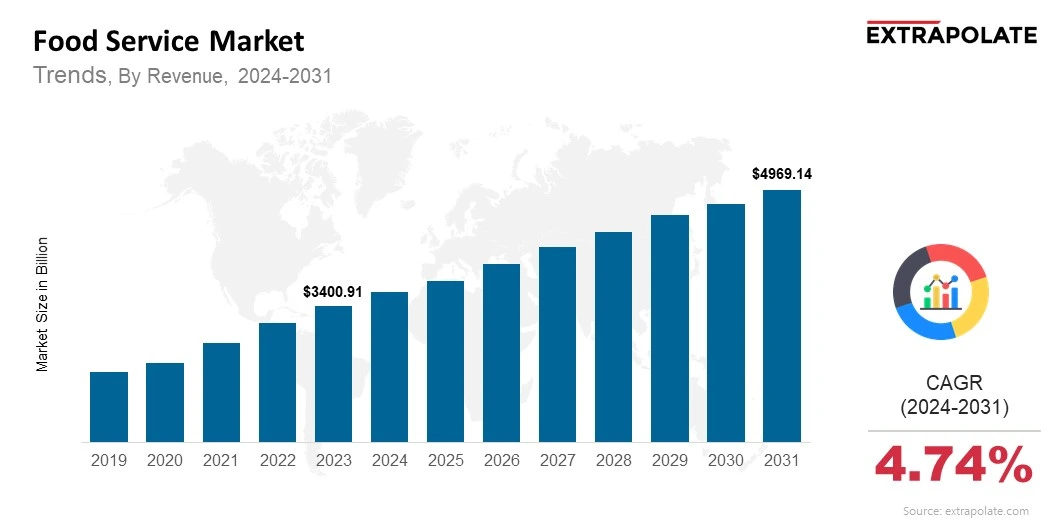
The global Food Service Market size was valued at USD 3400.91 billion in 2023 and is projected to grow from USD 3592.22 billion in 2024 to USD 4969.14 billion by 2031, exhibiting a CAGR of 4.74% during the forecast period.

The global food service market is witnessing robust growth, driven by dynamic shifts in consumer behavior, technological advancements, and expanding urban populations. This market includes a wide range of establishments, from quick-service restaurants (QSRs) and full-service dining to cafés, cloud kitchens, and institutional catering. The increasing demand for convenience, personalized dining experiences, and international cuisines is shaping the competitive landscape across developed and emerging economies alike.

The global food service market is currently valued in the trillions. It is expected to grow steadily over the next decade. This growth is driven by higher disposable incomes and greater digital access. Changing lifestyles are also playing a role, as more people now prefer eating out or ordering in instead of cooking at home. Urbanization is making this trend stronger. It's especially noticeable in regions like Asia-Pacific and Latin America, where a growing middle class is changing how people consume food.

The food service business is expanding due to technology.  Speed and service are being improved by features like smartphone ordering, AI menus, and smart kitchens.  Sustainability is another important area of concern.  Restaurants are employing eco-friendlier, locally sourced ingredients and cutting down on waste.

Though disruptive, the COVID-19 pandemic accelerated the use of digital technology.  The industry is still being shaped by contactless services and delivery apps.  The industry is expected to expand gradually in the future due to shifting customer preferences and technological advancements.  It is still among the most active industries in the world.

Size, Share & Forecast 2031Key Market Trends Driving Product Adoption

  • Digital Transformation and Online Ordering:

The food service industry is undergoing rapid digital transformation. Mobile apps, AI-based recommendations, and digital kiosks simplify ordering and enhance personalization. Platforms like Uber Eats, Zomato, and DoorDash have reshaped food delivery. With AI and data analytics, restaurants can offer dynamic pricing, tailored menus, and real-time feedback to improve operations and customer experience.

  • Rise of Cloud Kitchens and Delivery-Only Models:

Cloud or ghost kitchens are transforming food delivery. These delivery-only setups help brands expand without the costs of physical locations. Their scalable models and use of real-time data enable higher efficiency and better reach, especially among digitally engaged consumers.

  • Health and Wellness Focus:

Today, the consumer wants to eat healthier foods. This includes anything organic, plant-based, and, of course, allergen-free. In effect, the restaurants are stripping the menu for sustainable ingredients and nutrient-dense functional foods in both fast-service and full-service formats.

  • Sustainable Operations:

Sustainability has become a key priority. Restaurants are adopting eco-friendly practices like reducing plastic use, improving energy efficiency, and sourcing locally. Environmentally conscious operations not only reduce impact but also appeal to modern consumers who value transparency and responsibility.

Major Players and Their Competitive Positioning

The global food service market is quite fragmented and very competitive. Many key players compete by offering better prices, service quality, strong brand names, and new technology.
To stay ahead, top companies are focusing on digital transformation and automation. They are also expanding their menus to meet changing customer needs.

Prominent companies in the food service market include: McDonald’s Corporation, Yum! Brands Inc. (KFC, Taco Bell, Pizza Hut), Starbucks Corporation, Domino’s Pizza Inc., Restaurant Brands International (Burger King, Tim Hortons), Chipotle Mexican Grill Inc., Compass Group PLC, Sodexo SA, Aramark Corporation, Darden Restaurants Inc.

Leading companies are expanding fast through franchising, menu updates, and tech upgrades. Their focus is on better customer experience and smoother operations.

Consumer Behavior Analysis

  • Convenience and Customization:

Modern consumers place high value on speed, simplicity, and personalized offerings. This trend is driving the growth of quick-service restaurants, mobile ordering platforms, and ready-to-eat meal options.

  • Experience-Focused Dining:

Dining preferences are shifting toward experiences beyond the food itself. Ambience, quality of service, and the integration of interactive technologies are becoming key factors in attracting and retaining customers.

  • Transparency and Ethical Choices:

Demand for transparency in food sourcing, nutrition, and ethics is rising. Restaurants are responding with cleaner menus, clear labels, and responsible sourcing to build trust.

  • Digital Engagement and Loyalty:

Digitally savvy consumers expect seamless interaction across platforms. Mobile loyalty programs, personalized promotions, and social media engagement play a critical role in encouraging repeat business and fostering brand loyalty.

Pricing Trends

Pricing in the food service market is influenced by input costs, income levels, competition, and customer expectations. It also varies by format—quick service vs. fine dining—and by region.

Rising labor and raw material costs, especially for proteins and produce, have pushed restaurants to explore new models. Many now use dynamic pricing, bundling, and subscriptions to protect margins. Meal plans from Panera Bread and Sweetgreen, for example, are popular among urban professionals.

Digital platforms support targeted promotions based on location, time, and consumer behavior. Overall, sustainable pricing that balances value and profitability remains a key focus.

Growth Factors

  • Urbanization and Lifestyle Changes:

Rapid urbanization and evolving work-life patterns are contributing to the growth of the food service industry. With an increase in dual-income households and longer working hours, many individuals have less time to cook at home. As a result, there is a growing demand for ready-to-eat meals and food delivery services, supported by higher disposable incomes.

  • Technological Integration:

Advanced technologies such as AI, robotics, and IoT are reshaping operations in the food service sector. These innovations are streamlining kitchen management, inventory control, and order processing. Automated food preparation tools—like robotic arms for cooking or AI-powered kitchen assistants—are enhancing consistency while reducing reliance on manual labor.

  • Expanding Middle-Class Population:

In emerging economies such as India, Indonesia, and Brazil, rising income levels are expanding the middle-class demographic. This segment is increasingly seeking quality dining experiences and international cuisines. Their preferences are driving higher foot traffic in premium food service establishments.

  • Franchising and Global Expansion:

Franchising remains a key strategy for rapid brand expansion with lower capital investment. Global food chains are continuing to enter new markets with menus tailored to local tastes. At the same time, regional players are adopting franchise models to scale their operations and broaden their market reach.

Regulatory Landscape

The food service industry operates in a highly regulated environment. Various regulations help ensure food safety, hygiene, labor rights, and environmental responsibility. Key areas of regulation include the following:

  • Food Safety Standards:

Authorities such as the FDA (U.S.), FSSAI (India), and EFSA (EU) oversee food safety regulations. They set guidelines for ingredient quality, labeling, and hygiene practices. Businesses in this sector must undergo regular audits and maintain valid licenses to operate legally.

  • Labor Laws and Minimum Wages:

Governments enforce laws that protect employee rights and ensure fair wages. These regulations are particularly important for large restaurant chains and food service contractors, who must comply with minimum wage standards and fair labor practices.

  • Environmental Compliance:

Environmental regulations are becoming increasingly strict. Food service businesses are now required to manage waste properly and follow rules such as plastic bans. Additionally, there is a growing need to monitor carbon emissions and adopt sustainable sourcing practices.

Recent Developments

  • Growth of Plant-Based Menus:
    Big names like Burger King, Starbucks, and McDonald’s are adding more plant-based options. This is because more people want vegan and vegetarian choices. Brands like Beyond Meat and Impossible Foods are leading this movement. They're helping restaurants meet the rising demand for meat-free meals.
  • AI-Powered Personalization:
    Restaurants are starting to use AI to better understand their customers. They look at things like past orders and preferences. This helps them suggest the right items on the menu. AI also helps with managing inventory and adjusting prices based on demand. These smart tools make the customer experience more personal.
  • Rise of Subscription and Loyalty Platforms:
    Many fast-food chains are launching subscription meal plans and loyalty programs. These digital platforms help bring customers back more often. At the same time, they allow brands to gather useful customer data. This information can be used to improve service and boost sales.
  • Investments in Automation:
    Restaurants are putting money into robotics and kitchen automation. Some chains are testing robotic chefs to speed up food prep. For example, Domino’s has tested robot delivery in some areas. These tools can help reduce labor costs and improve efficiency.

Current and Potential Growth Implications

Demand-Supply Analysis

As demand keeps growing in both emerging and developed markets, food service providers are stepping up. They’re putting money into digital tools, training their staff better, and expanding their capacity to meet the rising needs. Cloud kitchens, mobile platforms, and international franchising help meet demand peaks efficiently.

Restaurants are facing some big supply challenges. These include not having enough workers, rising costs, and issues in the supply chain. To deal with this, they need to make their supply chains more efficient. They should also invest in better inventory tech and build strong partnerships with their vendors. This helps them keep costs down while still offering good service.

Gap Analysis

Urban areas have many dining options. Suburban and rural regions often do not. These areas lack access to high-quality food services. Affordable and healthy meals are also limited, especially in low-income communities. This gap creates a strong opportunity. Meal kit services and value dining formats can help fill it.

Small and independent restaurants face another challenge. They often lack the digital tools to compete with global chains. Supportive policies can help. So can technology partnerships and aggregator platforms.

Top Companies in the Food Service Market

  • McDonald’s Corporation
  • Yum! Brands Inc.
  • Starbucks Corporation
  • Domino’s Pizza Inc.
  • Restaurant Brands International
  • Chipotle Mexican Grill Inc.
  • Compass Group PLC
  • Sodexo SA
  • Aramark Corporation
  • Darden Restaurants Inc.

These companies lead through innovation, operational excellence, and strategic investments in technology, sustainability, and customer engagement.

Food Service Market: Report Snapshot

Segmentation

Details

By Type

Full-Service Restaurants, Quick-Service Restaurants, Cafés & Bars, Cloud Kitchens, Catering Services

By Application

Commercial, Institutional, Industrial, Healthcare, Educational, Government

By End-User

Individuals, Enterprises, Organizations

By Region

North America, Europe, Asia-Pacific, Latin America, Middle East & Africa

Food Service Market: High-Growth Segments

  • Cloud Kitchens: This segment is growing fast. These kitchens have low overhead costs. They can scale quickly. Their focus on delivery and digital operations fits today’s consumer habits. This makes them an important area for growth.
  • Quick-Service Restaurants (QSR): QSRs remain strong in the market. They offer speed, affordability, and convenience. Their menus keep evolving to meet changing tastes. Features like digital ordering and better drive-thru service add to their appeal. Longer opening hours also help boost demand.
  • Healthy Fast Casual: This segment combines fast food with healthy options. It attracts younger, health-aware consumers. People prefer clean labels and organic ingredients. Transparent sourcing also plays a key role. Brands offering these features are seeing strong growth.

Major Innovations

  • Smart Kitchens: Kitchen equipment now comes with IoT tech. It tracks things like cooking time, temperature, and energy use, making the whole process more efficient.
  • Voice and Chatbot Ordering: AI chatbots and voice assistants make ordering food easier. They also help personalize the service for each customer.
  • Automated Food Prep: Robotic chefs and AI cooking tools are speeding up meal preparation. They also keep things more hygienic and ensure meals are consistent every time.

Food Service Market: Potential Growth Opportunities

  • Expansion into Tier II and III Cities: As urban saturation grows, companies are expanding into smaller towns and semi-urban areas. These markets offer untapped potential, especially for QSR and delivery-centric models.
  • Integration with HealthTech: Restaurants are partnering with fitness and health tracking platforms to align menus with user dietary goals. This synergy fosters deeper engagement and brand loyalty.

Extrapolate Research Says

The market for food services is expected to increase rapidly on a global scale. Raising disposable incomes, urbanization, and a move toward digital-first dining are the main causes of this. Service providers must quickly adjust to address the increasing demands of consumers about sustainability, convenience, and health.

The future of food service will be shaped by technology, personalization, and experience-led offerings. Innovations like cloud kitchens, AI-driven menus, plant-based alternatives, and sustainable operations are reshaping the industry. The market is going through a significant transformation. Companies that respond with agility and clear insight will be well-positioned to lead the next wave of global food service growth.

FAQ

The global market is projected to reach USD 4969.14 billion by 2031, growing at a CAGR of 4.74% from 2024 to 2031.
The global market was valued at USD 3592.22 billion in 2024.
Key players in the market are McDonald’s Corporation, Yum! Brands Inc. (KFC, Taco Bell, Pizza Hut), Starbucks Corporation, Domino’s Pizza Inc., Restaurant Brands International (Burger King, Tim Hortons), Chipotle Mexican Grill Inc., Compass Group PLC, Sodexo SA, Aramark Corporation, Darden Restaurants Inc.
Key factors that are driving the Food Service Market growth include Advanced technologies such as AI, robotics, and IoT are reshaping operations in the food service sector. These innovations are streamlining kitchen management, inventory control, and order processing.

ARE YOU SEEKING COMPREHENSIVE INSIGHT ON VARIOUS MARKETS?
CONTACT OUR EXPERTS TODAY

Speak to an Expert
Food service market

Food Service Market Size

  • June-2025
  • 148
  • Global
  • food-beverage
3499

SELECT AN OPTION

  • 1 User Access
  • PDF Report View
  • Non-Printable
  • 32 Man-hours Analyst Support
  • Post-Sale Support 48 Hours
  • Access upto 5 users
  • PDF Report View
  • Print Available
  • Access to Data Sheet
  • Up to 10% Customization
  • 40 Man-hours Analyst Support
  • Post-Sale Support 72 Hours
  • Annual Update
  • Unlimited User Access
  • Downloadable PDF Report. Data Sheet, Power Point Presentation
  • Print Available
  • Up to 20% Customization
  • 72 Man-hours Analyst Support
  • Post-Sale Support 120 Hours
  • Bi-Annual Update

ENQUIRE NOW REQUEST SAMPLE
Dale Byrne

HAVE A QUESTION?
Samuel will help you find what you are looking for.


Call: 888-328-2189


Related Research

Adaptogens Market Size, Share, Growth & Industry Analysis, By Source (Ashwagandha, Ginseng, Rhodiola

May-2025


Alginate Market By Product (Potassium Alginate, Calcium Alginate, Propylene Glycol Alginate, Sodium

March-2023


Almond With Shell Snack Market Insights 2022, Global Analysis and Forecast to 2030

July-2021


Apricot Kernel Market Insights 2022, Global Analysis and Forecast to 2030

July-2021


Artificial Sweetener Market By Type (Aspartame, Acesulfame-K, Monosodium Glutamate, Saccharin, and S

March-2023


B2B Food Market Size, Share, Growth & Industry Analysis, By Product Type (Fresh Produce, Dairy Produ

July-2025


Baby Puffs Snacks Market Insights 2022, Global Analysis and Forecast to 2030

May-2021


Barbecue (BBQ) Sauce Market Insights Aircraft Air Brake Market Insights 2022, Global Analysis and Fo

July-2021


Beverage Cans Market Size, Share, Growth & Industry Analysis, By Material (Aluminium, Steel), By App

June-2025


Boba Market Insights 2022, Global Analysis and Forecast to 2030

July-2021


Sample Request

Food Service Market Size, Share, Growth & Industry Analysis, By Type (Full-Service Restaurants, Quick-Service Restaurants, Cafés & Bars, Cloud Kitchens, Catering Services) By Application (Commercial, Institutional, Industrial, Healthcare, Educational, Government) By End-User (Individuals, Enterprises, Organizations), and Regional Analysis, 2024-2031

Publisher: Kings Research   |   Date: 2025-06-12   |   No. Of Pages: 148

Send Your Query

Food Service Market Size, Share, Growth & Industry Analysis, By Type (Full-Service Restaurants, Quick-Service Restaurants, Cafés & Bars, Cloud Kitchens, Catering Services) By Application (Commercial, Institutional, Industrial, Healthcare, Educational, Government) By End-User (Individuals, Enterprises, Organizations), and Regional Analysis, 2024-2031

Publisher: Kings Research   |   Date: 2025-06-12   |   No. Of Pages: 148
Extrapolate

Extrapolate has a refined network of top publishers across the globe covering markets and micro markets who bring in the power of decision making. Our network of publishers is ranked based on the quality of reports produced along with customer feedback Indexing.

 talk@extrapolate.com

888-328-2189


Connect With Us

twitter logo

Industry

Quick Links

  • About Us
  • Contact Us
  • FAQ
  • Privacy Policy
  • Disclaimer
  • Refund Policy
  • Sitemap


Payment Gateway
Sign up for newsletter and updates


Powered By

Kings Research
© 2025 Kingsresearch. All Rights Reserved.