Collagen Market Size, Share, Growth & Industry Analysis, By Product Type (Gelatin, Hydrolyzed Collagen (Collagen Peptides), Native Collagen, Others) By Source (Bovine, Porcine, Marine, Poultry, Others) By Application (Nutraceuticals, Food & Beverages, Cosmetics, Pharmaceuticals, Medical Devices) By End-User (Consumers, Food Manufacturers, Pharmaceutical Companies, Cosmetic Brands, Healthcare Providers), and Regional Analysis, 2024-2031
Collagen Market: Global Share and Growth Trajectory
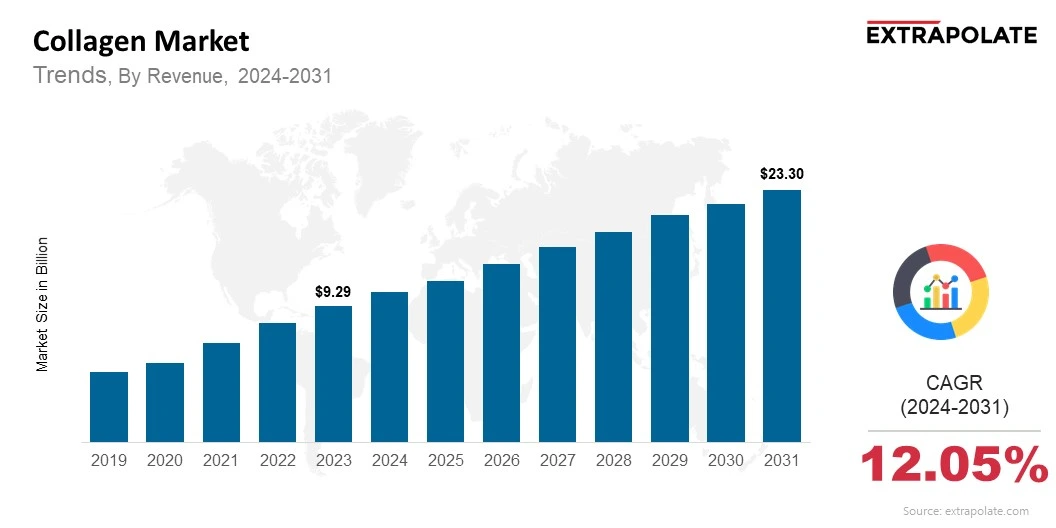
The global Collagen Market size was valued at USD 9.29 billion in 2023 and is projected to grow from USD 10.50 billion in 2024 to USD 23.30 billion by 2031, exhibiting a CAGR of 12.05% during the forecast period.
The global collagen market is experiencing robust growth, driven by increasing demand across industries such as nutraceuticals, food and beverages, cosmetics, and medical applications. Collagen, a key structural protein found in connective tissues, has garnered attention for its wide-ranging health benefits, including enhanced skin elasticity, joint support, wound healing, and tissue regeneration.
In the cosmetics sector, collagen is highly valued for its anti-aging and skin-rejuvenating properties. It is used in both topical formulations and ingestible supplements to improve skin hydration and reduce wrinkles. The growing popularity of "beauty-from-within" products has further fueled demand for collagen-enriched consumables.
Advancements in extraction technologies have enabled manufacturers to develop high-quality collagen from various sources, including bovine, porcine, and marine origins. Marine collagen, in particular, is gaining traction due to its high bioavailability and appeal among consumers seeking clean-label and pescatarian-friendly options. Meanwhile, innovation in recombinant collagen and plant-based alternatives is opening new opportunities, especially in vegan markets.
The collagen market is also making significant strides in biomedical applications. Collagen-based materials are used in wound dressings, tissue engineering, dental implants, and orthopedic procedures due to their biocompatibility and regenerative properties.
Regionally, North America and Europe lead in collagen consumption, while Asia-Pacific is emerging as a high-growth market driven by increasing disposable income and growing health consciousness.
Key Market Trends Driving Product Adoption
Several major trends are contributing to the widespread adoption of collagen:
- Rising Demand for Nutraceuticals and Functional Foods: Consumers are increasingly turning to functional foods and dietary supplements to support healthy aging, skin elasticity, and joint health. Collagen peptides, in particular, are now a popular ingredient in protein powders, drinks, and supplements. This shift in dietary habits is prompting manufacturers to innovate, creating easy-to-consume collagen-enriched formulations that appeal to health-conscious individuals.
- Surge in Cosmetic and Aesthetic Applications: The beauty and personal care industry is leveraging collagen for its proven anti-aging and skin-rejuvenating properties. Collagen-infused creams, serums, and injectables are seeing a surge in demand as consumers seek non-invasive solutions for youthful skin. With growing consumer interest in “beauty from within” concepts, collagen is increasingly formulated into oral supplements aimed at improving skin, hair, and nail health.
- Advancements in Extraction and Sourcing Technologies: Innovations in extraction methods—such as enzymatic hydrolysis and clean-label processing—are making collagen more accessible and affordable. Marine, bovine, and porcine sources continue to dominate, but sustainable and plant-based collagen alternatives are gaining traction. These advances not only improve bioavailability but also cater to ethical, dietary, and environmental concerns.
- Medical and Biomedical Applications: Collagen is widely used in medical products like wound dressings and sutures. Its biocompatibility and healing traits drive this growth. Biomedical researchers are developing collagen scaffolds for use in regenerative medicine, targeting applications in orthopedics, cardiovascular repairs, and dental surgery.
Major Players and their Competitive Positioning
The collagen market is highly competitive, characterized by strong R&D initiatives and strategic collaborations. Key companies are expanding their product portfolios to meet evolving consumer preferences and industry-specific requirements. The major players include- Gelita AG, Rousselot (a Darling Ingredients brand), Nitta Gelatin Inc., Collagen Solutions PLC, Vital Proteins LLC, Tessenderlo Group (PB Leiner), Weishardt Group, Amicogen Inc., ConnOils LLC, Holista CollTech Ltd., Aspen Naturals, BioCell Technology LLC, Regen Biotech, Inc., Titan Biotech Ltd., Gelnex These companies are engaging in product innovation, global expansion, and mergers and acquisitions to strengthen their market positions and respond to surging demand across multiple sectors.
Consumer Behavior Analysis
Consumer preferences in the collagen market are influenced by a combination of health trends, demographic shifts, and ethical considerations:
- Health and Wellness Awareness: Consumers are increasingly educated about the benefits of collagen, particularly for aging skin, joint pain, and overall vitality. As a result, collagen-based products have moved from niche wellness aisles to mainstream supermarket shelves. Transparency and scientific backing are important to these consumers, who look for clinically validated claims and clean labels.
- Preference for Clean and Sustainable Sources: There is a growing preference for sustainably sourced, non-GMO, and allergen-free collagen. Marine collagen, perceived as cleaner and more bioavailable, is especially popular among pescatarians and environmentally conscious consumers. Plant-based collagen boosters, though not true collagen, are emerging to address vegan and vegetarian segments.
- Customization and Convenience: The trend toward personalized nutrition and skincare is pushing companies to offer collagen in diverse formats—powders, capsules, drinks, and topical solutions. Convenient delivery formats and flavor customization improve user experience and drive repeat purchases.
- Rising Demand in Emerging Economies: Middle-class expansion and increased spending on health and beauty products in emerging markets are contributing significantly to collagen adoption. Consumers in Asia-Pacific and Latin America are embracing collagen supplements and skincare, reflecting both traditional beliefs and modern health trends.
Pricing Trends
The price of collagen products varies depending on the source (marine, bovine, porcine), type (hydrolyzed, gelatin, native), and application (nutraceuticals, cosmetics, biomedical). Marine collagen commands a premium due to its perceived purity and higher absorption rates. Bovine and porcine sources are generally more cost-effective and dominate mass-market applications.
Raw material prices are influenced by global livestock supply, fish processing output, and regulatory constraints. While premium collagen products maintain strong margins, price sensitivity is emerging in developing markets. To maintain competitiveness, companies are offering value-added blends and subscription models.
Growth Factors
The collagen market is benefiting from multiple synergistic growth drivers:
- Demographic Shifts: An aging global population is a major growth driver. Collagen loss starts in the mid-20s, fueling demand for anti-aging solutions. This supports sustained growth in both nutraceutical and cosmetic collagen segments.
- Rise of Preventive Healthcare: Preventive wellness is gaining preference over reactive care. Collagen appeals to consumers focused on long-term joint and skin health. This trend is widening the market from older adults to younger, health-conscious individuals.
- Product Innovation: Biotech advances support recombinant collagen development. They also enable new plant-based collagen options. New delivery methods like nano emulsions improve collagen absorption. They also help reach new market segments.
- E-commerce Expansion: Online platforms are growing fast. Direct-to-consumer brands are using digital health trends to boost sales. Influencers and health pros promote collagen products. This boosts brand visibility and educates consumers.
Regulatory Landscape
The collagen industry operates within a complex regulatory environment, especially due to its presence in multiple sectors (food, cosmetics, pharmaceuticals, medical devices). Key regulations include:
- In the U.S., the FDA regulates collagen under various categories—food ingredients, dietary supplements, and medical devices—depending on its intended use.
- In the EU, collagen must comply with EFSA safety assessments, and cosmetics must meet EU Cosmetic Regulation (EC) No 1223/2009.
- ISO standards, such as ISO 10993, guide the use of collagen in biocompatible materials for medical devices.
- Halal and kosher certifications are increasingly important, especially for bovine- and porcine-derived products in global markets.
Recent Developments
The collagen market has seen a series of pivotal developments:
- Vital Proteins’ Expansion: Vital Proteins launched more ready-to-drink collagen drinks. They're targeting health-focused, on-the-go consumers.
- Biotech Breakthroughs: Evonik and Geltor are making lab-grown, animal-free collagen. This could change how collagen is traditionally sourced.
- Marine Collagen Surge: Marine collagen from sustainable fish is growing in use. It's favored for environmental and religious dietary reasons.
- Partnerships and Licensing Deals: Collagen Solutions PLC signed licensing deals for medical-grade collagen. This move expands its role in tissue regeneration and biomedical markets.
These developments demonstrate the market’s growing technological sophistication and global diversification.
Current and Potential Growth Implications
Demand-Supply Analysis
The demand for collagen is outpacing traditional supply chains. Increased production of fish by-products, as well as more efficient bovine hide processing, are helping stabilize supply. However, the need for ethical and clean sourcing continues to challenge manufacturers, especially those targeting premium and pharmaceutical markets.
Gap Analysis
While the collagen market is expanding, significant gaps persist:
- Vegan Market Unmet: Plant-based consumers remain underserved due to the animal origin of traditional collagen. Vegan “collagen boosters” lack the same bioactivity, but innovation in recombinant collagen may address this gap.
- Clinical Validation: More robust clinical evidence is needed to substantiate health claims across all categories. This limits market penetration in regulatory-strict regions.
- Accessibility in Low-Income Regions: Collagen products remain premium-priced in developing countries, limiting widespread adoption despite rising awareness.
Top Companies in the Collagen Market
- Gelita AG
- Rousselot
- Nitta Gelatin Inc.
- Collagen Solutions PLC
- PB Leiner
- Vital Proteins LLC
- Holista CollTech Ltd.
- ConnOils LLC
- Gelnex
- Amicogen Inc.
- Aspen Naturals
- BioCell Technology LLC
- Regen Biotech, Inc.
- Titan Biotech Ltd.
- Gelnex
Collagen Market: Report Snapshot
Segmentation | Details |
By Product Type | Gelatin, Hydrolyzed Collagen (Collagen Peptides), Native Collagen, Others |
By Source | Bovine, Porcine, Marine, Poultry, Others |
By Application | Nutraceuticals, Food & Beverages, Cosmetics, Pharmaceuticals, Medical Devices |
By End-User | Consumers, Food Manufacturers, Pharmaceutical Companies, Cosmetic Brands, Healthcare Providers |
By Region | North America, Europe, Asia-Pacific, Latin America, Middle East & Africa |
Collagen Market: High-Growth Segments
Several segments are expected to exhibit rapid growth in the coming years:
- Hydrolyzed Collagen (Peptides): Collagen peptides are the top supplement choice. Their solubility and bioavailability support joint and skin health.
- Marine Collagen: Marine collagen is gaining popularity. Clean-label and sustainable trends are driving its use in supplements and cosmetics.
- Biomedical Applications: Collagen use is rising in regenerative medicine. It's key in wound healing, orthopedic surgeries, and dental care.
Major Innovations
Key innovations in the collagen market include:
- Recombinant and Fermentation-Derived Collagen: Firms are developing animal-free lab-grown collagen thet mimics natural properties.
- Nanoencapsulation Technology: Better delivery methods boost collagen's bioavailability. They also improve its overall effectiveness.
- Multi-Functional Blends: Collagen is now paired with vitamins, hyaluronic acid, or curcumin to enhance synergistic health benefits.
Collagen Market: Potential Growth Opportunities
Emerging opportunities are shaping the collagen industry:
- Expansion into Asia-Pacific: Collagen supplements are growing fast in China, India, and South Korea. Urbanization and rising incomes are fueling this demand.
- Vegan and Plant-Based Innovations: Demand for cruelty-free products is growing. Plant-based collagen boosters and recombinant options are creating new markets.
- Clinical and Medical Validation: Investment in clinical research can open regulatory doors and expand collagen’s therapeutic use in medical devices and wound care.
Extrapolate Research says:
The collagen market is set for sustained growth, driven by demographic shifts, consumer demand, and biotech advances. As health, beauty, and wellness converge, collagen is gaining traction across sectors. Extrapolate projects strong demand for functional nutrition, clean-abel beauty, regenerative health, and sustainable sourcing. Biotech innovations, including vegan and recombinant collagen, will expand market reach. Backed by scientific validation and product innovation, collagen is becoming central to the wellness economy. Market players can capture growth by aligning with consumer needs and regulatory shifts.
ARE YOU SEEKING COMPREHENSIVE INSIGHT ON VARIOUS
MARKETS?
CONTACT OUR EXPERTS TODAY
Collagen Market Size
- June-2025
- 148
- Global
- food-beverage
Related Research
Adaptogens Market Size, Share, Growth & Industry Analysis, By Source (Ashwagandha, Ginseng, Rhodiola
May-2025
Alginate Market By Product (Potassium Alginate, Calcium Alginate, Propylene Glycol Alginate, Sodium
March-2023
Artificial Sweetener Market By Type (Aspartame, Acesulfame-K, Monosodium Glutamate, Saccharin, and S
March-2023
B2B Food Market Size, Share, Growth & Industry Analysis, By Product Type (Fresh Produce, Dairy Produ
July-2025
Barbecue (BBQ) Sauce Market Insights Aircraft Air Brake Market Insights 2022, Global Analysis and Fo
July-2021
Beverage Cans Market Size, Share, Growth & Industry Analysis, By Material (Aluminium, Steel), By App
June-2025