Anti-Static Flooring Market Size, Share, Growth & Industry Analysis, By Type (Vinyl Flooring, Rubber Flooring, Epoxy Flooring, Tiles, Others), By Application (Electronics, Healthcare, Data Centers, Manufacturing, Automotive, Others), and Regional Analysis, 2024-2031
Anti-Static Flooring Market: Global Trends, Growth Opportunities, and Forecasts
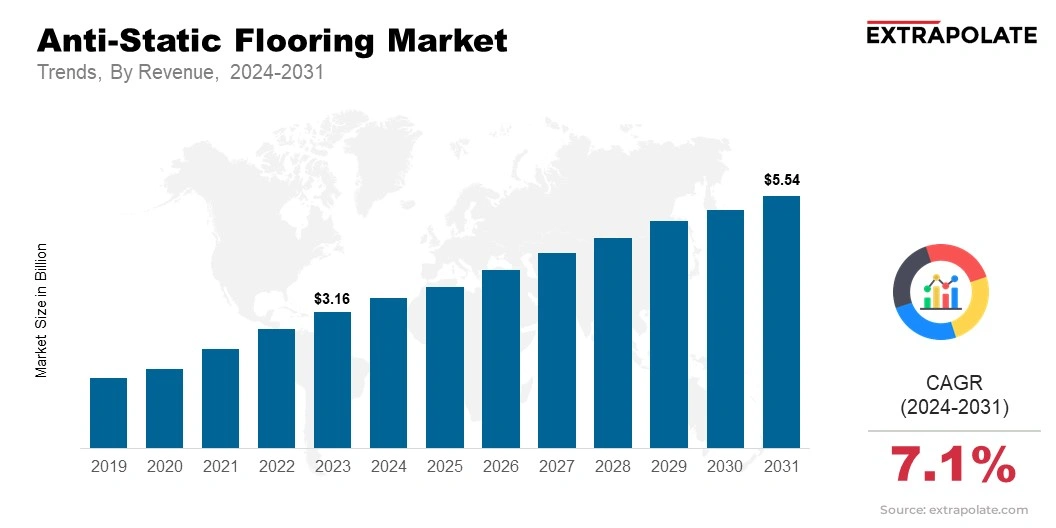
The global Anti-Static Flooring Market size was valued at USD 3.16 billion in 2023 and is projected to grow from USD 3.42 billion in 2024 to USD 5.54 billion by 2031, exhibiting a CAGR of 7.1% during the forecast period.
The global market is experiencing significant growth, driven by the increasing need for static control solutions across industries such as electronics, healthcare, and manufacturing.
Anti-static flooring, designed to prevent the accumulation and discharge of static electricity, is essential for maintaining the safety and efficiency of environments that involve sensitive electronic equipment or where electrostatic discharge (ESD) could lead to operational disruptions or equipment damage.
As technology advances and industries demand higher performance standards, the adoption of anti-static flooring solutions is on the rise, contributing to the expanding market.
Technological advancements in flooring materials and coatings are significantly improving the performance and durability of anti-static flooring systems. The integration of conductive and dissipative materials into flooring products is enhancing their ability to reduce static charges in high-risk environments, making them a preferred choice in sectors such as semiconductor manufacturing, data centers, and clean rooms.
Additionally, the rise of industrial automation and the growth of electronics manufacturing are driving the demand for anti-static flooring, as these industries require effective ESD protection to ensure smooth operations and product integrity.
The market is also benefiting from the increasing focus on workplace safety and regulatory compliance, as industries are under pressure to adhere to stringent safety standards related to electrostatic discharge.
Anti-static flooring helps mitigate risks associated with static buildup, such as fire hazards, equipment malfunctions, and operational inefficiencies, which is further boosting its adoption in critical infrastructure.
With the growing need for clean and controlled environments in sectors like pharmaceuticals and healthcare, anti-static flooring solutions are becoming a critical component of facility design and management.
As the demand for anti-static flooring continues to grow, the market is poised for sustained expansion, driven by innovations in material science and the increasing awareness of the importance of static control in high-tech industries.
The continued adoption of anti-static flooring solutions across various sectors, along with the rising emphasis on sustainability and safety, ensures that the market will remain a key player in the global flooring industry.

Key Market Trends Driving Anti-Static Flooring Adoption
Several key trends are shaping the adoption of anti-static flooring across various sectors:
- Expansion in Electronics and Semiconductor Fields: An increase in electronic devices, semiconductors along with circuit boards has caused a greater need for solutions that offer protection from static electricity. These flooring systems are important; they stop electrostatic discharge. Electrostatic discharge can do damage that cannot be fixed to components when they are being made and put together.
- Rising Needs in Healthcare: Within the field of healthcare, especially in labs and clean rooms, flooring that reduces static assists in the avoidance of electrostatic discharge. Electrostatic discharge may affect sensitive medical tools, gear next to study. This situation helps boost the expansion of anti-static floors in the field of healthcare.
- Expansion of Data Centers: An increased number of data centers across the world has led to a higher demand for flooring which reduces static to keep servers, networking hardware next to storage from static electricity. With a growing dependence on online structures, data centers should be a main factor in market expansion.
- More Attention to Workplace Security: Making sure that the workplace is secure is very important in manufacturing places and warehouses and anti-static flooring is a key part of a comprehensive security plan. This situation is especially important in fields like the car business, planes next to textiles, where static buildup can create dangers and problems with machines.
Competitive Landscape and Key Players
The anti-static flooring market is characterized by the presence of both global and regional players who offer a wide range of solutions tailored to different end-user applications. Companies like Forbo Flooring Systems, Gerflor, Armstrong Flooring, Tarkett, and Mondo are key players in the market, providing innovative anti-static flooring products that cater to the needs of various industries. These companies are focusing on product development, strategic partnerships, and expanding their market presence to strengthen their competitive position.
Consumer Behavior and Adoption Drivers
The adoption of anti-static flooring solutions is driven by several factors:
- Rising Awareness of Static-related Risks: As industries become more aware of the risks associated with electrostatic discharge, there is an increasing push towards implementing anti-static flooring systems. Awareness campaigns and educational initiatives are encouraging businesses to invest in flooring solutions that provide protection against ESD.
- Preference for Durable and Sustainable Solutions: With an increasing focus on sustainability, businesses are looking for flooring solutions that offer long-lasting performance and durability. Anti-static flooring solutions that are environmentally friendly and require minimal maintenance are in high demand.
- Customization and Aesthetic Preferences: Modern anti-static flooring solutions are being designed with aesthetics in mind, offering customization options to suit the aesthetic preferences of various industries. The ability to tailor flooring designs to specific needs, including color and texture, is becoming a significant selling point for consumers.
Pricing Trends
Anti-static flooring prices depend on the material type. Installation costs and the complexity of the flooring system also play a role. The cost of anti-static flooring can vary a lot. It depends on materials like vinyl, rubber, or epoxy. Customization needs and the area to cover also affect the price. High-performance anti-static flooring might cost more upfront. However, its long-term benefits, like lower maintenance costs and better efficiency, should make up for the initial expense.
Growth Factors
Several factors are driving the growth of the anti-static flooring market:
- Technological Advancements: Innovations in flooring materials and technologies, like the creation of better anti-static coatings, improve the performance of anti-static flooring. Businesses introduce new products with good ESD protection, durability next to simple maintenance.
- Expansion of Manufacturing and Industrial Facilities: The increase of manufacturing and industrial sectors across the globe raises the need for anti-static flooring options. The need for protection that safeguards equipment grows as new facilities get built.
- Rapid Expansion of IT Infrastructure: Digitalization and the rise of IT infrastructure have greatly increased the demand for anti-static floors in server rooms. The increase of cloud computing, 5G networks and the Internet of Things should boost expansion in later years.
Regulatory Landscape
The anti-static flooring market is subject to various industry standards and regulations aimed at ensuring the safety and quality of flooring solutions. In regions like North America and Europe, regulatory bodies are setting guidelines for the use of anti-static flooring in industries such as electronics manufacturing and healthcare. Compliance with these standards is driving demand for certified anti-static flooring solutions that meet safety and performance requirements.
Recent Developments
The anti-static flooring market has witnessed several important developments:
- Product Innovation: Businesses seek to offer better anti-static floor options via constant innovation. Recent advances involve new flooring systems. These systems not only stop electrostatic discharge but they also make work areas more durable and visually pleasing.
- Increased Use in New Markets: Industrialization proceeds faster in developing nations, which drives use of anti-static floors. Nations such as those in Asia-Pacific and Latin America show a rise in demand for floors that guard against static electricity. This demand is noted in sectors like electronics, automotive as well as healthcare.
- Sustainability Efforts: Businesses pay attention to sustainability. They bring eco-friendly anti-static floor choices to the market. These options are recyclable. They also contain few VOCs (volatile organic compounds) and they are created from renewable resources. This matches the greater focus on environmental awareness in the industry.
Growth Projections and Market Outlook
The anti-static flooring market is set to keep growing. Big opportunities are emerging in sectors like electronics, healthcare, and industrial manufacturing. The need for advanced flooring systems that protect against electrostatic discharge is rising. This is especially true in areas with a lot of electronics and IT infrastructure.
Top Companies in the Anti-Static Flooring Market
- Forbo Flooring Systems
- Gerflor
- Armstrong Flooring
- Tarkett
- Mondo
- Flowcrete
- ESD Flooring
- LG Hausys
Anti-Static Flooring Market: Snapshot of Market Segmentation
Segmentation | Details |
By Type | Vinyl Flooring, Rubber Flooring, Epoxy Flooring, Tiles, Others |
By Application | Electronics, Healthcare, Data Centers, Manufacturing, Automotive, Others |
By Region | North America, Europe, Asia-Pacific, Middle East & Africa, South America |
High-Growth Segments
Several segments within the market are projected to experience high growth:
- Electronics Manufacturing: A heightened requirement for safeguards against static electricity in electronic production is a key factor that propels the anti-static floor market. Asia-Pacific areas, with their rapidly expanding electronic sector, are especially affected.
- Data Centers: As the requirement for storing data and for technology infrastructure gets larger, there is an expectation for a substantial growth in the requirement for anti-static floor options inside data centers in future years.
Major Innovations
- Smart Flooring Solutions: Smart anti-static flooring is getting an upgrade. Now it comes with built-in sensors that track static levels and send real-time alerts. This clever twist opens doors in places where precision is key—think clean rooms and semiconductor plants. These innovations help meet strict standards while adding a tech-savvy edge to static control.
- Sustainable Flooring Options: Eco-friendly and recyclable anti-static flooring is stepping into the spotlight. This trend syncs with the rising demand for green building materials. Manufacturers leaning into sustainability are tapping into fresh growth paths, as industries seek solutions that are both functional and environmentally conscious.
Potential Growth Opportunities
The market presents several growth opportunities, including:
- Untapped Emerging Markets: With industrialization gaining steam and IT infrastructure spreading fast across Asia-Pacific, Latin America, and the Middle East, demand for anti-static flooring is set to rise. These regions are becoming key growth hubs, driven by expanding facilities that require safe, static-free environments.
- Innovative Product Development: Firms can tap into rising demand for anti-static flooring that’s both functional and easy on the eyes. By crafting solutions tailored to each industry’s quirks and preferences, they stand to gain a solid edge.
Extrapolate Research says:
The market for anti-static flooring is anticipated to keep growing. This is fueled by rising need from sectors such as data centers and electronics. Businesses that place importance on new ideas, eco-friendly options, in addition to widening their presence in different areas, will find themselves in a strong place. They can take advantage of the increasing need for solutions in the category of anti-static flooring.
ARE YOU SEEKING COMPREHENSIVE INSIGHT ON VARIOUS
MARKETS?
CONTACT OUR EXPERTS TODAY
Anti-Static Flooring Market Size
- April-2025
- 148
- Global
- chemicals-and-advanced-materials
Related Research
Carbohydrases Market Size, Share & Trends Analysis Report By Application (Food and beverages, Anima
January-2021
1,2,3,4-Tetrahydroquinaldine Reagent (CAS 1780-19-4) -Global Market Status & Trend Report 2022-2030
August-2021
1,2,3,4-Tetrahydroquinaldine Reagent (CAS 1780-19-4) -Global Market Status and Trend Report 2022-203
August-2021
1,2,3,4-Tetrahydroquinoline Reagent (CAS 635-46-1)-Global Market Status & Trend Report 2022-2030 Top
August-2021
1,2,3,4-Tetrahydroquinoline Reagent (CAS 635-46-1)-Global Market Status and Trend Report 2022-2030
August-2021