Global Pea Protein Market Size, Share, Growth & Industry Analysis, By Type (Isolate, Concentrate, Textured), By Application (Food and Beverages, Pharmaceuticals, Animal Feed, Personal Care and Cosmetics, Others), By End-User Industry (Food Manufacturers, Beverage Manufacturers, Pharmaceutical Companies, Animal Feed Manufacturers), and Regional Analysis, 2024-2031
Pea Protein Market: Global Share and Growth Trajectory
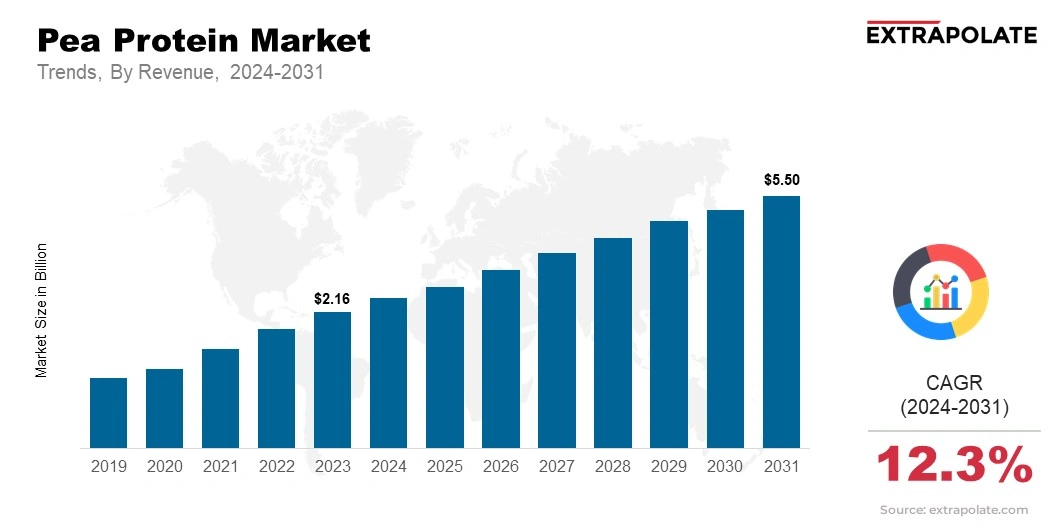
The global pea protein market size was valued at USD 2.16 billion in 2023 and is projected to grow from USD 2.45 billion in 2024 to USD 5.50 billion by 2031, exhibiting a CAGR of 12.3% during the forecast period.
The global market is growing fast. This is due to a rise in demand for plant-based proteins, health awareness, and sustainability concerns. Pea protein comes from yellow peas. It’s a high-quality and hypoallergenic alternative to animal proteins and plant options like soy.
This market has a vast product portfolio. It includes isolates, concentrates, and textured pea protein. These products cater to many uses in food, drinks, supplements, and animal feed.
With a shift to healthier, eco-friendly eating, demand for plant proteins, like pea protein, has surged. Pea protein has essential amino acids and is easy to digest. So, it's a top choice for health fans, vegans, and those with food allergies.
With more people turning to meat alternatives due to health and environmental concerns, the pea protein market is also seeing a boost. Food companies are now using pea protein in veggie burgers, dairy-free foods, and protein bars.
Technological innovations in processes of protein extraction have further upgraded the quality and functioning of pea protein, making it more adaptable and captivating to food manufacturers.
Additionally, pea protein’s ecological advantages, considering its low water and land use in comparison with animal-based proteins, are instrumental in its growing demand as a sustainable substitute for ingredients obtained from animals.
The market for pea protein in North America, Europe, and Asia-Pacific regions is growing immensely; North America remains a leading-edge market, mainly due to increasing demand for plant-based diets. With the plant-powered revolution in full bloom, the market is set to flourish. Innovation in product formulations is propelling growth forward.
The rising tide of pea protein-based products is making them more accessible to a constantly increasing consumer base. The progressing improvements in the plant-based protein industry and continually rising consumer demand for organic, sustainable ingredients are set to turn the future of the market optimistic.

Pea Protein Market Trends Driving Product Adoption
Several key trends are driving the adoption of pea protein in the market:
- Rising Plant-Based Diets: The progressive transformation toward plant-based diets is propelling the demand for plant-based substitutes for protein, with pea protein being a chosen alternative for vegan and vegetarian consumers.
- Health Consciousness: With the rising awareness about health, consumers are opting for organic, hypoallergic, and food high in protein, making pea protein an appealing option.
- Sustainability and Eco-Friendly Practices: Pea protein is identified as an eco-friendlier alternative to protein obtained from animals, as it has a lower environmental impact in terms of usage of water and greenhouse gas emissions.
- Innovative Product Formulations: Pea protein is being integrated into a vast range of food and beverage products, inclusive of meat substitutes, dairy alternatives, protein bars, and beverages, widening its application scope.
- Advancements in Processing Technologies: Technological developments in extraction and operations are enhancing quality of products and making it more easy for manufacturers to access.
Major Players and their Competitive Positioning
The pea protein market is a vibrant mix of global giants and local companies. Key players like Roquette Frères, Cargill, Ingredion, and The Green Lab are leading the charge. These innovators are brewing fresh ideas and forging partnerships. Together, they expand their product ranges, strengthening their foothold in this dynamic arena.
Consumer Behavior Analysis
Major number of consumers in pea protein are found in industries such as food and beverages, pharmaceuticals, personal care, and animal feed. Key adoption factors include:
- Rapid Demand for Plant-Based Products: Plant-based eating is on the rise. This trend creates a new demand for protein products. Pea protein is at the forefront of this movement. Many varieties are gaining popularity.
- Trends Favoring Health and Wellness: As people focus on healthy living, they prefer pea protein for its amino acids and fiber.
- Digestion and Anti-Allergy Benefits: Pea protein is a great choice for the allergy-conscious consumer. Naturally gluten-free and hypoallergenic, it offers a safe haven for those with sensitivities.
- Ethical Considerations: Ethical concerns about animal welfare and the environment are driving a shift to plant-based proteins, like pea protein.
Pricing Trends
Pea protein prices vary by the processing method, quality, and demand. Pea protein is often pricier than animal-based proteins. But, it is cheaper than soy or hemp. So, it is a good alternative. Prices may fluctuate due to production capacity, raw material availability, and transport costs. As demand grows and production tech improves, pea protein prices should stabilize. This may make it cheaper for mass-market products.
Growth Factors
Various factors are instrumental in growth of the pea protein market, including:
- Rising Consumer Preference for Plant-Based Products: The rising user preference towards plant-based diets is one of the most remarkable factors fueling the demand for pea protein.
- Technological Innovations in Protein Extraction: Developments in extraction of proteins and processing technologies are enhancing the yield, quality, and cost-effectiveness of pea protein, further expanding its market potential.
- Health and Wellness Movement: As health-conscious consumers increase in number, plant-based, high-protein, and allergen-free delights gain popularity. Demand is surging for nourishing options that cater to modern appetites. The culinary landscape is evolving, welcoming these wholesome products into the market.
- Sustainability Efforts in the Food Industry: With the food industry looking for sustainable protein options, pea protein is gaining adoption. This green alternative champions environmental friendliness, using minimal resources compared to its animal counterparts. This protein source values both taste and environment health.
Regulatory Landscape
The regulatory requirements of plant-based proteins differ by country. In North America and Europe, pea protein is generally regarded as safe (GRAS) by authorities. As consumers increase demand for plant-based protein products, authorities are likely to make more rigorous labelling, safety standards, and enforcement to inform and protect customers. Additionally, requirements concerning sustainability have an impact on the environment, which states that environmental assessments will continue influencing production and promotion of pea protein.
Recent Developments
Recent developments in the pea protein market include:
- Expansion of Product Applications: Pea protein is finding its way into numerous food and beverage products from hearty meat substitutes to silky dairy-free milks.
- Strategic Partnerships and Investments: Market giants are crafting partnerships with food manufacturers. Together, they are expanding the global reach of a variety of pea protein products. These partnerships blend innovation with nutrition, bringing plant power to shelves everywhere.
- Technological Advancements in Processing: New extraction and processing technologies are letting key players improve the quality of pea proteins and efficiency of their production, consequently lowering its overall markup.
Current and Potential Growth Implications
a. Demand-Supply Analysis
Pea protein is on the rise, popular in food and beverage markets. This growing demand, is set to face a number of challenges. Supply chain management and raw material sourcing pose significant challenges. Scaling production to keep up is another concern. However, increased investment in production capacity is set to bridge the gap.
b. Gap Analysis
As the pea protein market grows, it faces a few challenges. Enhanced processing methods are essential for unlocking its full potential. Additionally, reducing costs is crucial to inviting more consumers and manufacturers into the market.
Regional disparities in supply and demand could impact growth, pricing, and availability. The market offers a number of opportunities, but careful navigation is needed to ensure sustained growth and expansion.
Top Companies in the Pea Protein Market
- Roquette Frères
- Cargill, Inc.
- Ingredion Incorporated
- The Green Lab
- Nutri-Pea Limited
- Axiom Foods, Inc.
- Pea Protein Technologies
- Burcon NutraScience Corporation
Pea Protein Market: Report Snapshot
Segmentation | Details |
By Type | Isolate, Concentrate, Textured |
By Application | Food and Beverages, Pharmaceuticals, Animal Feed, Personal Care and Cosmetics, Others |
By End-User Industry | Food Manufacturers, Beverage Manufacturers, Pharmaceutical Companies, Animal Feed Manufacturers |
By Region | North America, Europe, Asia-Pacific, Middle East & Africa, South America |
Pea Protein Market: High Growth Segments
The following segments are expected to experience significant growth:
- Food and Beverages: The demand for pea protein in plant-based food products such as meat substitutes, dairy alternatives, and protein beverages is growing rapidly, driven by the global shift toward plant-based eating.
- Animal Feed: The use of pea protein as a sustainable and nutritious alternative to animal-based protein in pet food and livestock feed is a key growth driver.
- Pharmaceuticals: With its high protein content and nutritional benefits, pea protein is finding increased application in pharmaceutical formulations, especially in dietary supplements and protein-based medications.
Major Innovations
Innovation in the pea protein market is essential for continued growth. Key innovations include:
- New Product Formulations: As demand for pea protein increases, manufacturers are innovating with new formulations to incorporate pea protein into a wide variety of food, beverage, and dietary supplement products.
- Improved Processing Technologies: Advances in pea protein extraction and processing technologies are enhancing the product's functionality, flavor, and texture, which is helping it gain acceptance across different industries.
- Sustainable Sourcing and Production: Sustainable sourcing practices and eco-friendly production methods are gaining importance, ensuring that pea protein is produced with minimal environmental impact.
Potential Growth Opportunities
Several growth opportunities exist in the pea protein market, including:
- Expansion in Emerging Markets: The increasing demand for plant-based products in regions such as Asia-Pacific and Latin America presents significant opportunities for pea protein manufacturers.
- Diverse Applications: Pea protein's versatility in a range of applications, from meat substitutes to beverages, offers growth potential across various industries.
- Consumer Education and Awareness: As more consumers learn about the benefits of plant-based proteins, including pea protein, manufacturers have the opportunity to educate the market and expand consumer adoption.
Extrapolate Research says:
The pea protein market is poised for robust growth, driven by increasing consumer demand for plant-based protein alternatives, rising health awareness, and sustainability considerations. As product innovation continues and production technologies improve, pea protein is expected to become an even more prominent ingredient in food, beverages, and other industries.
ARE YOU SEEKING COMPREHENSIVE INSIGHT ON VARIOUS
MARKETS?
CONTACT OUR EXPERTS TODAY
Global Pea Protein Market Size
- January-2025
- 148
- Global
- agritech
Related Research
Agricultural Biologicals Market Size, Share, and COVID-19 Impact Analysis, By Function Type (Biopest
July-2022
Agricultural Supply Chain Service Market Size, Share, Growth & Industry Analysis, By Service Type (P
June-2025
Agrigenomics Market Size, Share, Growth & Industry Analysis, By Technology (Gene Editing, Genetic Se
March-2025
Agritourism Market Size, Share, Growth & Industry Analysis, By Activity Type (Farm Stays, Direct Mar
May-2025
Feed Grade Vitamin and Mineral Premixes Market Insights 2022, Global Analysis and Forecast to 2030
July-2021
Global Acid And Nutrient In Animal Nutrition Market Research Report 2022 (Status and Outlook)
June-2022
Global Advanced Herbicides Market Research Report 2022
December-2022