Activewear Market Size, Share, Growth & Industry Analysis, By Product Type (Athletic Shoes, Sports Bras, Leggings, T-shirts, Shorts, Jackets), By Application (Fitness, Sports, Casual Wear, Outdoor Activities), By End User (Men, Women, Children), and Regional Analysis, 2024-2031
Activewear Market: Global Share and Growth Trajectory
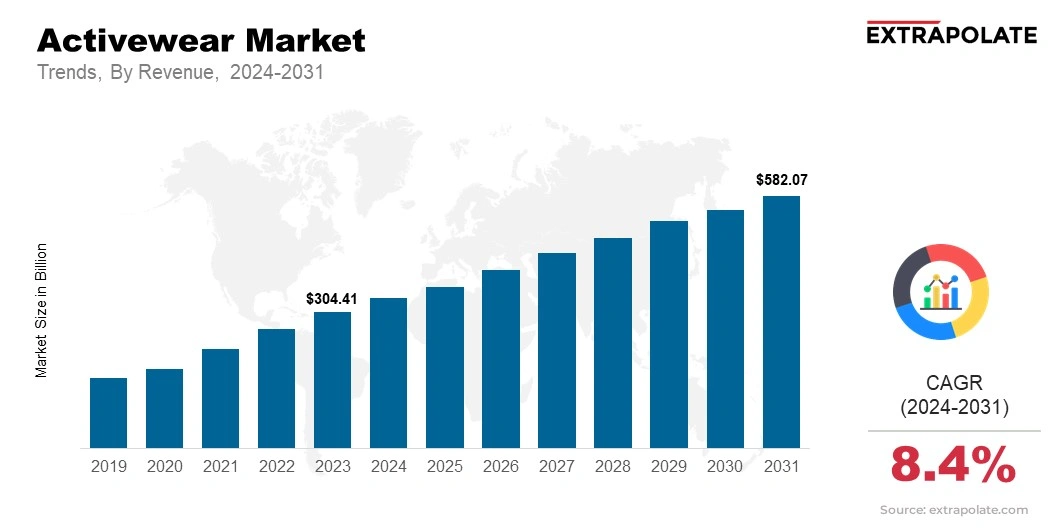
The global Activewear Market size was valued at USD 304.41 billion in 2023 and is projected to grow from USD 330.54 billion in 2024 to USD 582.07 billion by 2031, exhibiting a CAGR of 8.4% during the forecast period.
The global activewear field is expanding. This increase is driven by changing consumer tastes, heightened emphasis on wellness and fitness, and technological advancements. Activewear covers outfits like yoga leggings, running shorts, sports bras, and tight-fitting apparel.
It is favored in athletics but is also widely utilized for informal attire because it is cozy and adaptable. The growing interest in fitness pursuits like yoga, running, and gym workouts is amplifying the demand for premium activewear. Also, the rise of athleisure is fueling this demand.
The market is booming. This growth comes from new technology. It helps manufacturers make materials that are comfortable and high-performance. Top brands now offer advanced features.
These include moisture-wicking fabrics, compression technology, and antimicrobial treatments. These features are now standard. Breathable and stretchy materials are also making waves in smart activewear. Some of these clothes have sensors that track your performance. They give you instant feedback to help improve your workout.
Consumer preferences are changing. Now, there is a bigger focus on sustainability and eco-friendly production. This shift is influencing the market. Shoppers desire activewear labels that utilize repurposed materials and prioritize the planet. Brands are now crafting with environmentally conscious designs. This shift also broadens the market's appeal.
As more people include fitness and wellness in their daily lives, the need for activewear will keep growing. More people can access activewear now. This is due to the rise of online shopping platforms and direct-to-consumer brands. The global market will keep growing. This growth comes from consumer trends, new technology, and an increasing focus on health and wellness.
The activewear market is on the fast track to success. It boasts a plethora of products for every fitness fanatic. This inclusive arena is a sanctuary for enthusiasts, regardless of age, gender, or skill.
North America, Europe, and Asia-Pacific are shining stars in this landscape. Driven by consumers craving vibrant, active lifestyles, the demand is soaring. Amidst rising competition, both established and emerging brands are reinventing their offerings. They’re crafting stylish, high-performance gear tailored for the modern mover.

Key Market Trends Driving Product Adoption
The activewear market is highlighted by considerable trends that are steering customer preferences and enhancing product integration, including:
- Growing Emphasis on Health and Fitness: Activewear is increasingly being opted for not just by gym-goers but by individuals for their daily wear needs as well. Fitness enthusiasts seek clothing that performs well. They want it to be comfortable, supportive, and breathable for their activities.
- Rising Environmental Consciousness: Shoppers are growing increasingly aware of ecological effects, encouraging businesses to develop green products utilizing sustainable resources like repurposed textiles and natural cotton.
- Integration of Advanced Technologies: Various activewear brands are favoring smart technology integration within their offerings. Examples include moisture-wicking fabrics, built-in fitness trackers, and temperature regulating features.
- Stylish Designs: Beyond serving the basic functional purpose, activewear now being adopted as a part of day to day fashion. Designs that focus on style and versatility are attracting a broader consumer base, blending performance with aesthetics.
- Athleisure Trend: The popularity of athleisure is driving demand for activewear that can seamlessly transition from the gym to casual outings, making it a staple in many consumers' wardrobes.
Major Players and Their Competitive Positioning
Major brands such as Nike, Adidas, Under Armour, Puma, and Lululemon lead the activewear market. To keep their advantage, they must steadily create inventive concepts. Through uniting design and tech, they craft premium apparel that buyers cherish. Lesser-known brands are also gaining momentum, providing niche products that attract specific audiences.
Consumer Behavior Analysis
Consumers are increasingly choosing activewear for multiple reasons, including:
- Health and Fitness: The aspiration to elevate physical skills and keep tabs on progress during fitness routines is spurring demand for utility workout gear.
- Comfort and Versatility: Shoppers are looking for activewear that offers all-day ease and can be used for multiple pursuits, from workouts to laid-back outings.
- Sustainability Concerns: An increasing appetite for eco-friendly goods is shaping buying choices, particularly among green-minded shoppers.
- Fashion and Social Influence: Numerous shoppers perceive activewear as a style declaration, shaped by celebs, trendsetters, and athletic figures who promote particular labels.
Pricing Trends
In the activewear arena, pricing is dictated by different parameters. It all hinges on brand prestige, degree of innovation in design, and technical complexity. High-end and established companies aim for a higher pricing structure in return for features, like advanced fabrics offering the right fit. Meanwhile, entry-level offerings appeal to budget-minded buyers, eager to save without sacrificing style.
As the athleisure tide rises, change unfurls on the horizon. Shoppers are embracing premium, sustainable activewear, ready to invest with intention. Eco-friendly choices have evolved into fashion statements that resonate deeply. Insights reveal the global activewear market is gearing up for an exhilarating leap. By 2027, we can expect a vibrant growth surge to unfold. This boom springs from heightened health awareness and evolving lifestyles. North America, Europe, and Asia-Pacific are driving these dynamic shifts.
Growth Factors
Several key factors are contributing to the expansion of the activewear market:
- Health and Fitness Trends: The increasing priority on upholding a fit lifestyle is amplifying the demand for performance apparel tailored for various workout activities, such as running, yoga, and team games.
- Lifestyle Integration: Activewear is no longer confined to the gym; it has evolved into casual and telecommuting wear, thanks to its coziness and flair.
- Technological Advancements: Enhanced fabrics that improve performance, such as moisture-wicking, temperature-regulating, and antibacterial materials, are driving demand.
- E-commerce Growth: The heightened fascination with online shopping is making it more convenient for consumers to explore a broad spectrum of activewear articles, further energizing market growth.
Regulatory Landscape
Activewear companies must follow strict rules for product safety, labeling, and environmental impact. This ensures their products meet tough regulations. Consumers are more aware of their ecological impact. So, these standards will change a lot and become stricter. Yoga pants made from recycled plastic or organic cotton will likely become popular. Companies want to lessen their environmental impact, so they will focus on these materials. Tighter rules will limit harmful chemicals in fabric production. For example, PFAS will be banned in waterproof gear.
Recent Developments
The activewear market has seen several innovations and developments in recent years:
- Sustainable Activewear: Multiple labels are currently providing activewear crafted from environmentally-friendly substances, like repurposed polyester and compostable textiles, to meet buyer interest in eco-conscious goods.
- Smart Activewear: Blend of wearable gadgets such as heart rate detectors, GPS, and exercise trackers into activewear is improving product utility.
- Inclusive Sizing: Labels are progressively providing a broader selection of sizes to accommodate every physique, responding to the rising call for inclusiveness in the sportswear industry.
Current and Potential Growth Implications
Demand-Supply Analysis
Activewear demand is rising fast. More people are adopting healthy lifestyles, and the athleisure trend keeps growing. However, supply chain problems and material shortages may affect how quickly products are available, especially in eco-friendly and performance fabrics.
Gap Analysis
While the market has made considerable progress, some challenges remain:
- Sustainability Concerns: Shoppers are insisting on more environmentally-friendly materials and production methods, but companies must expand these practices efficiently.
- Technological Integration: There is capacity to further upgrade activewear by merging more wearable technology to deliver a smarter, more connected experience for users.
- Affordability: Even though high-end activewear is in vogue, there exists a necessity for economical yet superior alternatives for value-seeking shoppers.
Top Companies in the Activewear Market
Activewear Market: Report Snapshot
Segmentation | Details |
By Product Type | Athletic Shoes, Sports Bras, Leggings, T-shirts, Shorts, Jackets |
By Application | Fitness, Sports, Casual Wear, Outdoor Activities |
By End User | Men, Women, Children |
By Region | North America, Europe, Asia-Pacific, Latin America, Middle East & Africa |
High Growth Segments
The following segments are anticipated to see significant growth in the coming years:
- Smart Activewear: Clothing integrated with technology such as fitness trackers and sensors.
- Sustainable Activewear: Environmentally friendly clothing using organic and recycled materials.
- Athleisure: Activewear designed for both performance and casual everyday wear.
Major Innovations
Innovation in the market continues to drive growth, with recent advancements including:
- Smart Fabrics: Materials that adjust to temperature, wick moisture, and monitor health metrics.
- Eco-Friendly Production: Firms are implementing more eco-conscious manufacturing techniques to cut down on waste and carbon impact.
- Personalization: Adaptable sportswear that permits buyers to opt for shades, patterns, and functionalities tailored to their likings.
Potential Growth Opportunities
Challenges in the market include:
- Intense Competition: Major companies control the market, yet fresh entrants and specialized brands are surfacing with creative solutions.
- Evolving Consumer Preferences: Always shifting customer tastes and needs for eco-friendliness, practicality, and fashion compel businesses to adjust swiftly.
- Technology Integration: The need for linked and intelligent activewear keeps growing, with chances for additional incorporation of technology in items.
Kings Research says:
The activewear market is on an exhilarating upward curve, propelled by groundbreaking technology and evolving lifestyles. The growing love for fitness and wellness is reshaping the landscape. Companies that prioritize sustainability, embrace innovation, and align with consumer trends will thrive in this ever-changing market.
ARE YOU SEEKING COMPREHENSIVE INSIGHT ON VARIOUS
MARKETS?
CONTACT OUR EXPERTS TODAY
Activewear Market Size
- March-2025
- 140
- Global
- Retail
Related Research
Activewear Market Size, Share, Growth & Industry Analysis, By Product Type (Athletic Shoes, Sports B
March-2025
Agrobacterium tumefaciens Competent Cells Market Insights 2022, Global Analysis and Forecast to 2030
July-2021
Aluminium Composite Panels (ACP) Market Insights 2022, Global Analysis and Forecast to 2030
July-2021