Extrapolate Extrapolate
  • 888-328-2189
  • ABOUT US
  • CONTACT US
  • SIGN IN
  • INDUSTRIES
  • BLOGS
  • Home
  • Healthcare, Medical Devices & Biotechnology
  • Bioelectric medicine market

Bioelectric Medicine Market Size, Share, Growth & Industry Analysis, By Product Type (Implantable Devices, Wearable/External Devices), By Application (Neurological Disorders, Cardiovascular Disorders, Chronic Pain, Inflammatory Diseases, Others), By End-User (Hospitals, Specialty Clinics, Homecare Settings, Research Institutions), and Regional Analysis, 2024-2031

  • Description
  • Table Of Content
  • Sample Request

Bioelectric Medicine Market: Global Share and Growth Trajectory

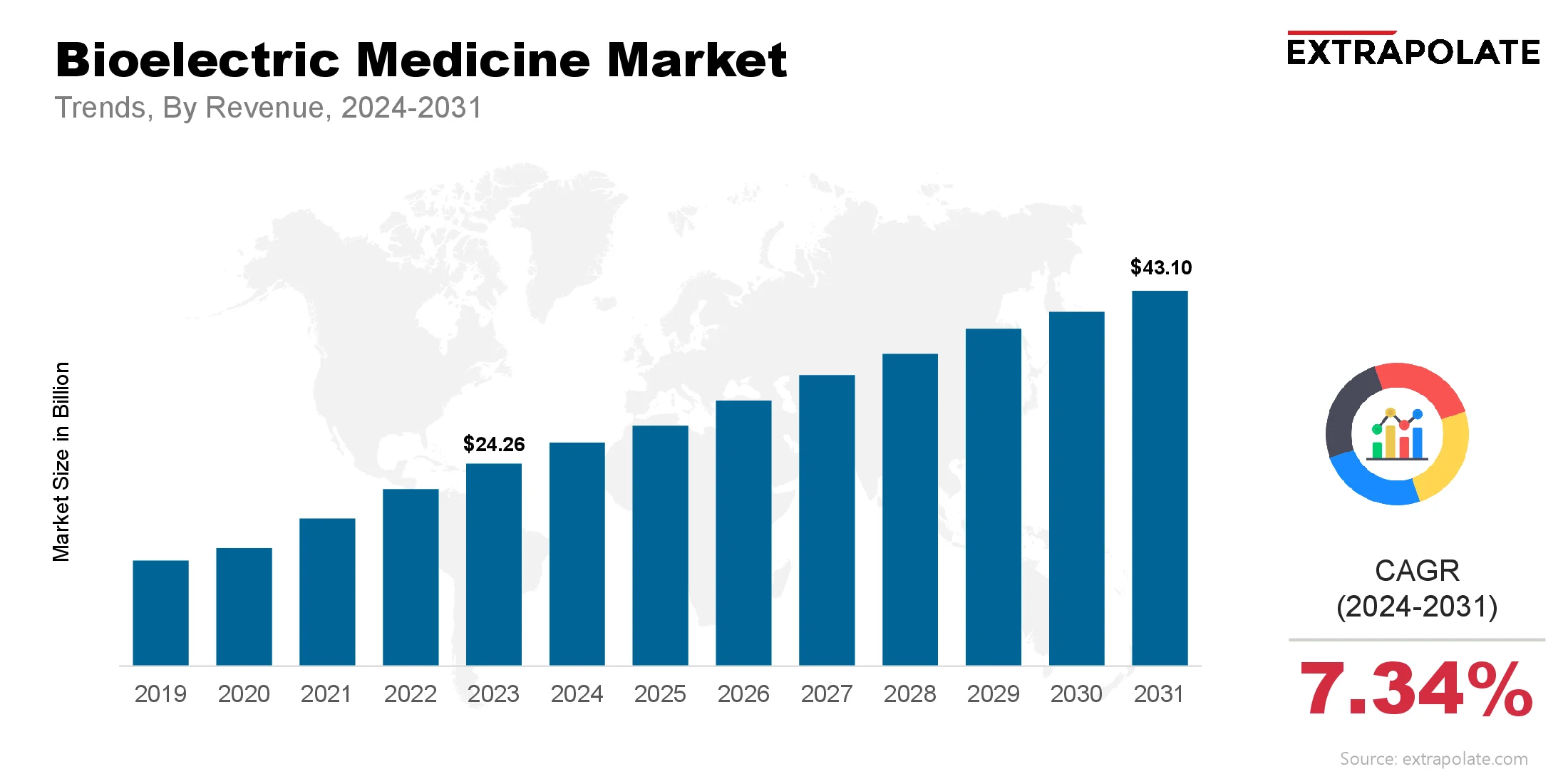
The global Bioelectric Medicine Market size was valued at USD 24.26 billion in 2023 and is projected to grow from USD 26.24 billion in 2024 to USD 43.10 billion by 2031, exhibiting a CAGR of 7.34% during the forecast period.

The global bioelectric medicine market is rapidly making progress, fueled by the convergence of neuroscience, bioengineering, and clinical medicine. This innovative therapeutic field employs electrical impulses to modulate the body's neural circuits for treating a large range of disorders, from chronic inflammatory conditions to neurological and cardiovascular diseases. With rise in demand for non-pharmacological and targeted treatments, bioelectric medicine is emerging as a revolutionary alternative to traditional drug therapies.

As chronic conditions become more widespread and the limitations of conventional pharmaceutical interventions become more apparent, the appeal of bioelectric therapies is escalating. These devices deliver precise electrical stimulation to specific nerves or organs, enabling targeted treatment with only a few side effects. With constant innovations in miniaturization, battery technology, wireless communication, and artificial intelligence integration, the bioelectric medicine market is on a strong upward growth trajectory.

Size & Share, By Revenue, 2024-2031

Key Market Trends Driving Product Adoption

Several key trends are shaping the adoption and expansion of bioelectric medicine technologies:

Demand for Non-Invasive and Targeted Therapies

Bioelectric medicine is transforming healthcare by offering highly targeted, minimally invasive therapeutic alternatives. As patients seek treatments that reduce adverse effects and recovery times, bioelectric devices like vagus nerve stimulators, spinal cord stimulators, and sacral nerve stimulators are becoming increasingly favored. These devices target specific neural circuits responsible for disease symptoms, allowing for precise intervention without systemic drug exposure.

For example, vagus nerve stimulation (VNS) has shown notable effectiveness in managing treatment-resistant depression, epilepsy, and even inflammatory diseases such as rheumatoid arthritis. This patient-focused precision, combined with safety and effectiveness, is accelerating the market’s growth.

Technological Advancements in Neurostimulation Devices

Recent technological developments are revolutionizing the capabilities of bioelectric medical devices. Developments such as closed-loop systems, real-time feedback monitoring, AI-enhanced algorithms, and implantable wireless neurostimulators are improving efficacy, user experience, and treatment personalization.

Closed-loop systems, which adjust stimulation parameters based on real-time physiological feedback, are enhancing therapeutic outcomes in chronic pain management and epilepsy. The integration of machine learning algorithms enables adaptive stimulation, which customizes the therapy based on patient-specific needs and treatment responses. These innovations are broadening the application scope and boosting adoption rates globally.

Increasing Prevalence of Chronic and Neurological Disorders

The rise in incidence of chronic conditions like epilepsy, Parkinson’s disease, depression, heart failure, and inflammatory bowel diseases is a significant factor contributing to market growth. According to the WHO, neurological disorders affect hundreds of millions of people worldwide, many of whom are inadequately managed by current pharmacological therapies.

As the aging population increases, so does the prevalence of neurodegenerative conditions, driving the demand for more effective and safer treatment alternatives. Bioelectric medicine offers a new paradigm leveraging neuromodulation to treat diseases at the neural level without the systemic toxicity of traditional medications.

Expanding Research into Bioelectronic Therapies

Global academic and industry research into bioelectric medicine is expanding rapidly. Multinational collaborative initiatives such as the U.S. NIH's SPARC (Stimulating Peripheral Activity to Relieve Conditions) program are investigating neural circuit control mechanisms to inform new device development. These efforts are uncovering novel neuromodulation targets and promoting innovation across therapeutic areas.

The rise in clinical trials investigating bioelectronic devices for conditions such as atrial fibrillation, diabetes, migraines, and inflammatory disorders signifies a promising future for market growth.

Major Players and Their Competitive Positioning

The bioelectric medicine market is highly competitive, with a mix of well-established medtech giants and emerging innovators. Key players are constantly engaged in research collaborations, product launches, and strategic acquisitions to bolster their market position.

Major companies included are Medtronic PLC, Boston Scientific Corporation, Abbott Laboratories, LivaNova PLC, ElectroCore, Inc., Nevro Corp., Biotronik SE & Co. KG, Axonics, Inc., BioWave Corporation, SetPoint Medical Corporation and others. These companies lead in innovation, regulatory approvals, and global market penetration. Their focus is on broadening product portfolios to address diverse neurological, cardiovascular, and inflammatory conditions. For instance, Medtronic and Abbott dominate the spinal cord stimulation and cardiac rhythm management device sectors, while newer entrants like ElectroCore and SetPoint are exploring non-invasive bioelectronic therapies.

In April 2024, Medtronic received FDA approval for its Inceptiv closed-loop spinal cord stimulator. The device is designed to treat chronic pain by automatically adjusting stimulation based on the patient’s body response.

Consumer Behavior Analysis

Consumer behavior in the bioelectric medicine market reflects a growing interest in safe, efficient, and long-term treatment solutions for chronic illnesses. Several dynamics are influencing end-user adoption:

  • Preference for Drug-Free Alternatives: Patients increasingly prefer treatment options that minimize dependence on long-term pharmaceuticals due to concerns about side effects, tolerance, and addiction. Bioelectric devices offer an attractive alternative with durable efficacy and minimal systemic impact.
  • Growing Acceptance of Implantable Devices: Although some patients initially express concern about invasive procedures, growing clinical evidence and physician endorsement are improving perceptions of implantable neuromodulation technologies. Additionally, the availability of minimally invasive or external (transcutaneous) stimulators is easing the adoption curve for new users.
  • Economic Considerations: While initial device costs may be high, the long-term reduction in healthcare expenditure—through fewer hospitalizations, reduced drug use, and improved disease management—makes bioelectric medicine a cost-effective option. Increasingly, health systems and insurers recognize these benefits and are beginning to support reimbursement, encouraging broader market access.
  • Rise in Digital Health Literacy: Patients and caregivers are more informed about medical innovations thanks to growing digital health literacy. Awareness of neuromodulation therapies is expanding through social media, telemedicine consultations, and direct-to-consumer educational campaigns by device manufacturers.

Pricing Trends

Bioelectric device costs vary by design and use. Treating different health issues affects the overall price. Implantable devices, such as spinal cord stimulators or vagus nerve stimulators, can range between $20,000 and $50,000, including surgical costs. Compared to implanted devices, non-invasive tools are cheaper. They offer a more accessible entry point for therapy.

Complex design and premium materials make devices costly. Upkeep and programming needs increase long-term expenses. More efficient production and tech advances are driving prices lower. This trend is making devices easier to afford. More providers now offer leasing and value-based pricing. Such models improve access for patients in low- and middle-income areas.

Growth Factors

Multiple driving forces driving the robust expansion of the bioelectric medicine market:

  • Innovation in Neural Engineering and Electroceuticals: Scientists are refining how bioelectric devices connect, power, and perform. These innovations support next-gen therapies. New technologies improve how devices interact with the nervous system. They make therapies more targeted and reduce risks.
  • Expansion of Approved Indications: With new approvals, bioelectronic tech is diversifying. It now treats both neurological and inflammatory conditions. As use cases grow, more patients qualify for treatment. This shift also speeds up adoption in clinical settings.
  • Aging Population and Rise in Chronic Conditions: Older adults now make up a growing share of the global population. This shift boosts the need for ongoing treatment of chronic diseases. This approach gives lasting support for chronic disorders. It works well for nerve pain, joint issues, and heart problems.
  • Favorable Regulatory and Reimbursement Frameworks: Support for bioelectronic devices is growing among regulators. Accelerated reviews and updated payment models are helping adoption. Innovation-friendly policies target non-pharmaceutical care. They make it easier for new therapies to reach patients.

Regulatory Landscape

As the field evolves, regulators are stepping up reviews. They focus on patient safety and proven results. Regulatory requirements vary by region but commonly include:

  • United States (FDA): Some devices need FDA clearance, others require full premarket approval. Guidance is growing around AI use and digital health systems.
  • European Union (CE Marking under MDR): Under MDR, devices need solid clinical proof before approval. Post-market checks are also required to ensure safety over time.
  • ISO Standards: Design and production must follow international guidelines. These also cover quality control to ensure product safety. Following regulations ensures safety and reliable performance. It allows products to meet expectations worldwide.

Manufacturers seek quicker approvals through regulatory collaboration. They adjust designs to meet updated compliance needs.

Recent Developments/Market Highlights

Recent advancements and strategic moves in the bioelectric medicine market illustrate the industry’s momentum:

  • ElectroCore’s GammaCore Device: FDA authorization was given for nerve-based migraine treatment. The device works without surgery and treats cluster headaches too.
  • SetPoint Medical: Trials are underway to explore vagus nerve stimulation. This approach targets rheumatoid arthritis and Crohn’s disease without heavy medication.
  • Medtronic: The latest system offers closed-loop spinal cord stimulation. It helps deliver tailored relief to those with chronic pain.
  • Strategic Partnerships: Companies such as LivaNova and Verily are exploring joint bioelectronic solutions. These efforts blend neuromodulation and digital biomarkers for tailored treatment.
  • Medtronic has launched the Percept™ RC neurostimulator, a rechargeable deep brain stimulation (DBS) system equipped with BrainSense™ tech that records brain activity to inform real-time therapy adjustments. It’s designed for Parkinson’s and movement disorders, reflecting the move toward adaptive, personalized neuromodulation.

The market is proving to be highly dynamic. It can address multiple chronic health conditions at the same time.

Current and Potential Growth Implications

Demand-Supply Analysis

Supply of bioelectric therapies can’t keep up with rising demand. This is a major issue in emerging economies lacking advanced treatment centers. Manufacturers are expanding output to serve more users. Still, making devices affordable is key to broad accessibility.

Gap Analysis

Despite developments, gaps remain in:

  • Accessibility: Costly medical devices and surgeries prevent many from getting care. This problem is particularly common in resource-limited areas.
  • Clinical Awareness: Some healthcare workers are not well-versed in bioelectric medicine. This causes potential underutilization in clinical settings.
  • Long-Term Data: Short-term results show encouraging progress in treatment impact. Broader, long-term data covering safety and effectiveness remain under review.

Bridging these gaps will drive sustained and equal market expansion. This helps create a balanced and lasting growth.

Top Companies in the Bioelectric Medicine Market

  • Medtronic PLC
  • Boston Scientific Corporation
  • Abbott Laboratories
  • LivaNova PLC
  • Nevro Corp.
  • ElectroCore, Inc.
  • Biotronik SE & Co. KG
  • Axonics, Inc.
  • SetPoint Medical
  • BioWave Corporation

Innovation and market leadership in electroceuticals belong to these organizations. They are shaping the path of future healthcare solutions.

Bioelectric Medicine Market: Report Snapshot

Segmentation

Details

By Product Type

Implantable Devices, Wearable/External Devices

By Application

Neurological Disorders, Cardiovascular Disorders, Chronic Pain, Inflammatory Diseases, Others

By End-User

Hospitals, Specialty Clinics, Homecare Settings, Research Institutions

By Region

North America, Europe, Asia-Pacific, Latin America, Middle East & Africa

High Growth Segments

  • Neurological Disorders: Bioelectric therapy adoption in treating epilepsy, Parkinson’s disease, and depression is rapidly increasing, representing the largest application segment by revenue share.
  • Wearable Neurostimulation Devices: The emergence of non-invasive devices, particularly for migraine and chronic pain, is expanding the market into consumer health and at-home treatment domains.

Major Innovations

  • Closed-Loop Stimulation Systems: Delivering therapy through biofeedback increases success. Refining treatment using feedback leads to improved results.
  • AI-Powered Neuromodulation: Using predictive analytics allows for personalized therapies. It guides healthcare providers with patient-specific insights.
  • Miniaturized, Rechargeable Implants: Extended device durability helps cut down on surgery frequency. Patients benefit from fewer invasive procedures.

Potential Growth Opportunities:

  • Expansion into Emerging Markets: With better health systems, bioelectric devices become practical solutions. They help manage chronic illnesses cost-effectively.
  • Telehealth and Remote Programming: Digital health platform integration supports remote device control and monitoring. This boosts adoption and helps maintain steady care over time.

Extrapolates Research says

The global bioelectric medicine market is poised for significant expansion, driven by technological innovation, growing prevalence of chronic and neurological diseases, and increasing patient preference for non-pharmacological treatments. As the market evolves, advancements in AI-powered neuromodulation, closed-loop systems, and miniaturized implantable devices will enhance treatment personalization and efficacy, creating new therapeutic possibilities. However, challenges such as high costs, limited accessibility in emerging regions, and the need for broader clinical awareness must be addressed to unlock the market’s full potential. Regulatory support and reimbursement reforms are critical enablers for widespread adoption. Overall, bioelectric medicine represents a transformative shift in healthcare, offering safer, targeted, and cost-effective alternatives to traditional drug therapies—making it a compelling opportunity for investors, manufacturers, and healthcare providers aiming to lead in next-generation medical solutions.

FAQ

The global market is projected to reach USD 43.10 billion by 2031, growing at a CAGR of 7.34% from 2024 to 2031.
The global market was valued at USD 26.24 billion in 2024.
Key factors that are driving the Bioelectric medicine is transforming healthcare by offering highly targeted, minimally invasive therapeutic alternatives.
Key players in the market are Medtronic PLC, Boston Scientific Corporation, Abbott Laboratories, LivaNova PLC, ElectroCore, Inc., Nevro Corp., Biotronik SE & Co. KG, Axonics, Inc., BioWave Corporation, SetPoint Medical Corporation and others.

ARE YOU SEEKING COMPREHENSIVE INSIGHT ON VARIOUS MARKETS?
CONTACT OUR EXPERTS TODAY

Speak to an Expert
Bioelectric medicine market

Bioelectric Medicine Market Size

  • July-2025
  • 140
  • Global
  • Healthcare-Medical-Devices-Biotechnology
3499

SELECT AN OPTION

  • 1 User Access
  • PDF Report View
  • Non-Printable
  • 32 Man-hours Analyst Support
  • Post-Sale Support 48 Hours
  • Access upto 5 users
  • PDF Report View
  • Print Available
  • Access to Data Sheet
  • Up to 10% Customization
  • 40 Man-hours Analyst Support
  • Post-Sale Support 72 Hours
  • Annual Update
  • Unlimited User Access
  • Downloadable PDF Report. Data Sheet, Power Point Presentation
  • Print Available
  • Up to 20% Customization
  • 72 Man-hours Analyst Support
  • Post-Sale Support 120 Hours
  • Bi-Annual Update

ENQUIRE NOW REQUEST SAMPLE
Dale Byrne

HAVE A QUESTION?
Samuel will help you find what you are looking for.


Call: 888-328-2189


Related Research

2022-2030 Global and Regional B-Cell Non-Hodgkin`s Lymphoma (NHL) Treatment Industry Production, Sa

February-2021


2022-2030 Global and Regional Organ Transplant Diagnostics Industry Production, Sales and Consumpti

February-2021


2022-2030 Global and Regional Prostacyclin Drug Industry Production, Sales and Consumption Status a

February-2021


2022-2030 Global and Regional Spinal and Bulbar Muscular Atrophy Treatment Industry Production, Sal

February-2021


2% Chlorhexidine Gluconate (CHG) Cloths-Global Market Status & Trend Report 2022-2030 Top 20 Countri

April-2021


2% Chlorhexidine Gluconate (CHG) Cloths-Global Market Status and Trend Report 2022-2030

April-2021


2021-2027 Global and RegioAnal Nasal Gels Industry Production, Sales and Consumption Status and Pros

February-2021


2021-2027 Global and Regional 2019-nCoV Detection Server Industry Production, Sales and Consumption

February-2021


2021-2027 Global and Regional ? Collagen Quantitative Determination Kit Industry Production, Sales a

February-2021


2021-2027 Global and Regional Anti-TNF Monoclonal Antibody Industry Production, Sales and Consumptio

February-2021


Sample Request

Bioelectric Medicine Market Size, Share, Growth & Industry Analysis, By Product Type (Implantable Devices, Wearable/External Devices), By Application (Neurological Disorders, Cardiovascular Disorders, Chronic Pain, Inflammatory Diseases, Others), By End-User (Hospitals, Specialty Clinics, Homecare Settings, Research Institutions), and Regional Analysis, 2024-2031

Publisher: Kings Research   |   Date: 2025-07-22   |   No. Of Pages: 140

Send Your Query

Bioelectric Medicine Market Size, Share, Growth & Industry Analysis, By Product Type (Implantable Devices, Wearable/External Devices), By Application (Neurological Disorders, Cardiovascular Disorders, Chronic Pain, Inflammatory Diseases, Others), By End-User (Hospitals, Specialty Clinics, Homecare Settings, Research Institutions), and Regional Analysis, 2024-2031

Publisher: Kings Research   |   Date: 2025-07-22   |   No. Of Pages: 140
Extrapolate

Extrapolate has a refined network of top publishers across the globe covering markets and micro markets who bring in the power of decision making. Our network of publishers is ranked based on the quality of reports produced along with customer feedback Indexing.

 talk@extrapolate.com

888-328-2189


Connect With Us

twitter logo

Industry

Quick Links

  • About Us
  • Contact Us
  • FAQ
  • Privacy Policy
  • Disclaimer
  • Refund Policy
  • Sitemap


Payment Gateway
Sign up for newsletter and updates


Powered By

Kings Research
© 2025 Kingsresearch. All Rights Reserved.