Butyric Acid Derivatives Market Size, Share, Growth & Industry Analysis, By Type (Sodium Butyrate, Calcium Butyrate, Potassium Butyrate, Magnesium Butyrate, Tributyrin), By Application (Animal Feed, Human Dietary Supplements, Pharmaceuticals, Food & Beverages), By End-User (Livestock Producers, Nutraceutical Companies, Pharmaceutical Companies, Food Manufacturers), and Regional Analysis, 2024-2031
Butyric Acid Derivatives Market: Global Share and Growth Trajectory
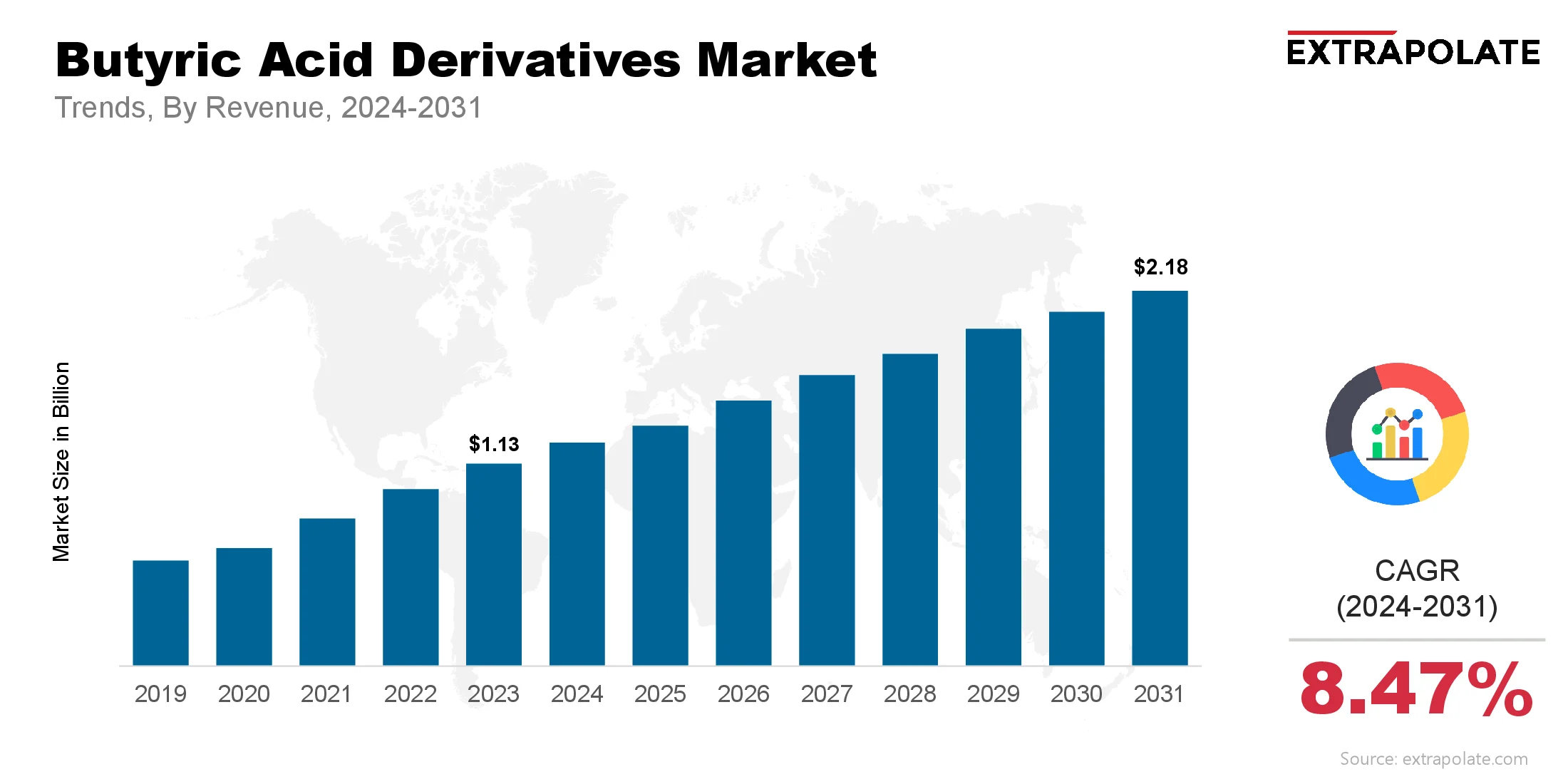
The global Butyric Acid Derivatives Market size was valued at USD 1.13 billion in 2023 and is projected to grow from USD 1.23 billion in 2024 to USD 2.18 billion by 2031, exhibiting a CAGR of 8.47% during the forecast period.
The butyric acid derivatives market is growing steadily due to increasing demand in animal nutrition, pharmaceuticals and food and beverage sectors. Butyric acid derivatives, sodium butyrate, calcium butyrate and tributyrin offer many functional benefits. They improve gut health, anti-inflammatory responses and nutrient absorption making them essential in modern feed formulations and functional foods.
One of the key applications driving the market is animal nutrition. With the phasing out of antibiotic growth promoters (AGPs) due to regulatory restrictions and consumer pressure, livestock producers are looking for alternatives that support animal health and performance. Butyric acid derivatives fit the bill effectively, improving gastrointestinal health and immunity in poultry, swine and ruminants. They are included in feed to improve feed conversion ratios and reduce pathogen loads resulting in higher productivity and animal welfare.
At the same time, interest in gut microbiota modulation in human health has led to the inclusion of butyric acid derivatives in dietary supplements and functional foods. Their role in mitigating gastrointestinal disorders and colon health is gaining scientific backing. The pharmaceutical industry is also exploring their use in therapies for inflammatory bowel disease, colorectal cancer and metabolic disorders.
Geographically the market is growing in Asia-Pacific due to growing livestock population and awareness of feed efficiency. North America and Europe are leading in pharmaceutical and food-grade applications due to strong regulatory framework and consumer preference for health focused products.
Key Market Trends Driving Product Adoption
Several key trends are driving the adoption and growth of butyric acid derivatives:
- Shift from Antibiotics to Functional Feed Additives: Prohibition of antibiotics as growth promoters in EU and restricted use in US and APAC has triggered demand for non-antibiotic alternatives. Butyric acid derivatives have emerged as key solutions as they improve gut integrity, reduce inflammation and combat pathogenic bacteria.
- Rising Interest in Gut Health: Across animal and human health, gut microbiota is now recognized as a key influencer of overall wellness. Butyric acid derivatives are substrates for beneficial bacteria, maintaining intestinal homeostasis. Their increasing use in nutraceuticals, probiotics and prebiotic formulations is a testament to this trend.
- Sustainable Production: Manufacturers are moving towards renewable sources and fermentation based production of butyric acid derivatives. This aligns with environmental sustainability goals and consumer demand for clean-label, eco-friendly ingredients.
- Microencapsulation Advancements: One of the challenges in delivering butyric acid derivatives is their odor and volatility. Innovations in microencapsulation technologies have enabled better stability, targeted release and improved palatability in feed and food applications, driving wider adoption.
Key Players and their Positioning
Butyric acid derivatives market is a mix of global chemical manufacturers and specialized feed additive producers. Companies are investing in capacity expansion, odor-free formulations and product efficacy.
Key players included are Perstorp Holding AB, Eastman Chemical Company, Nutreco N.V., BASF SE, Royal DSM N.V., Novus International, Kemin Industries, Zhejiang Realsun Chemical Co., Ltd., Huachang Chemical Co., Ltd., Hangzhou Qianyang Technology Co., Ltd. and others.
These players are merging, launching products and expanding globally to increase their market presence. Bio-based production and custom solutions for different livestock species are key to their competitive strategy.
In October 2023, Kemin Industries launched ButiShield, a micro-encapsulated calcium butyrate product for human gut health. Using Kemin’s proprietary MicroPEARLS technology, it delivers sustained release along the gastrointestinal tract and eliminates the odor of butyric acid making it suitable for dietary supplements and functional foods.
In July 2025, DSM-Firmenich’s Synbiotics Health introduced a synbiotic capsule with microencapsulated sodium butyrate combined with pre- and probiotics to alleviate IBS symptoms. Clinical trials showed significant relief in 4 weeks, one of the first human-health applications of butyric acid with synbiotics for symptom management.
Consumer Behavior
Consumer behavior in this market is driven by three sectors: livestock producers, food and supplement companies and pharmaceutical manufacturers.
- Health and Performance Orientation: Livestock producers want products that improve feed efficiency, animal health and farm profitability. Butyric acid derivatives meet these expectations so they are being adopted in formulated feed products.
- Clean-Label and Natural Preferences: In the food and nutraceuticals sector, consumers are moving towards products with functional benefits and natural origin. Butyric acid derivatives derived from fermentation fit these preferences so they are more attractive to supplement brands and health-conscious consumers.
- Cost vs Efficacy: While butyric acid derivatives can be more expensive than traditional feed ingredients, their efficacy in improving animal performance and health outcomes justifies the investment for many producers especially in regions with advanced animal husbandry systems.
- Regulatory Confidence: Butyric acid and its derivatives are recognized as safe by major regulatory bodies like EFSA (European Food Safety Authority) and FDA (U.S. Food and Drug Administration) so manufacturers and end-users have more confidence to adopt.
Pricing Analysis
Pricing in the butyric acid derivatives market is driven by raw material costs, production method, purity and delivery format (coated vs uncoated). Fermentation-based butyric acid production is gaining popularity for being more sustainable although it is still more expensive than petrochemical route.
- Feed Grade: Feed grade butyric acid derivatives prices are stable but can fluctuate due to supply chain and regional feed demand. Coated variants are more expensive due to better performance and handling.
- Pharmaceutical and Food Grade: These are sold at premium prices due to stricter quality control, higher purity and regulatory compliance costs. They are used in supplements and functional foods which requires odor masking and taste-neutralizing technology, adding to the cost.
- Regional Variation: Prices vary greatly by region. In emerging markets like India, China and Southeast Asia, cost-conscious buyers look for cost-effective alternatives or blends while in Europe and North America, value-added formulations are preferred even at a higher cost.
Growth Factors
Several fundamental growth drivers are propelling the global butyric acid derivatives market forward:
- Antibiotic Replacement in Animal Nutrition: Antibiotic use in animals is facing more rules and pushback. Additives like butyric acid are now safe and popular swaps.
- Expanding Livestock Industry: More people want meat, milk, and poultry worldwide. This lifts livestock growth and feed additive use, especially in Asia-Pacific.
- Nutraceutical Market Boom: Consumers want natural help for gut and metabolism health. Makers now add butyric acid to pills and health foods, creating fresh demand.
- Supportive Research and Clinical Evidence: Studies show health benefits of butyric acid compounds. This backs their use in people and animals, boosting future demand.
Regulatory Landscape
The butyric acid derivatives market operates within a robust regulatory framework designed to ensure product safety, quality, and efficacy. Regulatory compliance is crucial, especially in applications related to food and pharmaceuticals.
- Animal Feed Regulations: In the EU, butyric acid derivatives are classified under feed additives and must comply with Regulation (EC) No. 1831/2003. The EFSA regularly evaluates their safety and efficacy. Similar regulatory oversight is provided by the FDA in the U.S.
- GRAS Status: Many butyric acid derivatives used in human food applications are designated as Generally Recognized as Safe (GRAS) by the FDA, facilitating their use in functional foods and dietary supplements.
- Codex Alimentarius Guidelines: Codex rules control food-grade butyric acid use worldwide. Only approved types can reach global markets.
- Environmental Regulations: Growing emphasis on green chemistry and sustainable manufacturing practices requires companies to adhere to environmental protection laws and obtain certifications for eco-friendly operations.
Recent Developments
Several significant developments have marked the evolution of the butyric acid derivatives market:
- Launch of Coated and Odorless Products: Firms like Perstorp and Kemin now offer coated, smell-free versions. These make butyric acid easier to use and taste.
- Joint Ventures in Asia-Pacific: Global firms now team up with local feed makers in Asia. These deals help them enter fast-growing livestock markets.
- Increased R&D Investments: Leading firms are putting more money into research. They aim to find new uses for butyric acid in health and disease care.
- Fermentation-Based Production Scale-up: Firms are moving to fermentation to make butyric acid. This bio-based method supports global green efforts.
Current and Potential Growth Implications
a. Demand-Supply Analysis: Demand is outstripping supply in high growth areas like Southeast Asia and Latin America. Local production facilities and efficient supply chains will fill this gap.
b. Gap Analysis: Despite interest growing, adoption in small farms and price sensitive markets is low due to cost. Low cost, high efficacy formulations for these markets is a big opportunity.
c. Innovation Potential: Encapsulation technologies, blends with other feed additives, therapeutic delivery in human health applications.
Top Companies in the Butyric Acid Derivatives Market
- Perstorp Holding AB
- Eastman Chemical Company
- BASF SE
- Royal DSM N.V.
- Kemin Industries
- Nutreco N.V.
- Novus International
- Zhejiang Realsun Chemical Co., Ltd.
- Huachang Chemical Co., Ltd.
- Hangzhou Qianyang Technology Co., Ltd.
Butyric Acid Derivatives Market: Report Snapshot
Segmentation | Details |
By Type | Sodium Butyrate, Calcium Butyrate, Potassium Butyrate, Magnesium Butyrate, Tributyrin |
By Application | Animal Feed, Human Dietary Supplements, Pharmaceuticals, Food & Beverages |
By End-User | Livestock Producers, Nutraceutical Companies, Pharmaceutical Companies, Food Manufacturers |
By Region | North America, Europe, Asia-Pacific, Latin America, Middle East & Africa |
High Growth Segments
The segments expected to grow are:
- Animal Feed: Increasing meat consumption and restrictions on antibiotics are driving demand for butyric acid derivatives in feed for poultry and swine.
- Nutraceuticals: Rising health awareness and demand for digestive health supplements are opening up opportunities for sodium and calcium butyrate in capsule and powder form.
- Asia-Pacific Region: The region’s growing livestock base and increasing per capita meat consumption is driving adoption of functional feed additives.
Major Developments
The market is seeing several breakthroughs:
- Encapsulation Technologies: Advanced coating technology has improved stability and delivery of butyric acid in feed formulations.
- Hybrid Additive Blends: Combination with enzymes, probiotics and organic acids has amplified the effectiveness of butyric acid derivatives, offering synergistic benefits.
- Therapeutic Applications: New drug delivery systems are being explored to administer butyric acid for ulcerative colitis and colorectal cancer.
Growth Opportunities
- Emerging Economies: Rapid urbanization, changing dietary patterns and rising disposable income is creating huge opportunity for butyric acid derivatives in Asia, Africa and Latin America.
- Sustainable Solutions: Bio-based derivatives and green production methods are aligning with corporate sustainability commitments, giving an edge to eco-friendly players.
- Precision Nutrition: Customised feed solutions that combine butyric acid with other health boosting additives can unlock new levels of productivity and profitability for livestock producers.
Extrapolate Research Says:
The global butyric acid derivatives market is growing driven by demand in animal nutrition, pharma and health food segments. As global agriculture moves towards sustainable and antibiotic free practices, these derivatives are gaining importance. Innovation, regulation and rising health awareness is driving adoption across various end use applications. The market is looking up with huge opportunity in emerging economies and speciality health segments, creating value across the supply chain.
ARE YOU SEEKING COMPREHENSIVE INSIGHT ON VARIOUS
MARKETS?
CONTACT OUR EXPERTS TODAY
Butyric Acid Derivatives Market Size
- August-2025
- 140
- Global
- Chemicals-and-Advanced-Materials
Related Research
Carbohydrases Market Size, Share & Trends Analysis Report By Application (Food and beverages, Anima
January-2021
1,2,3,4-Tetrahydroquinaldine Reagent (CAS 1780-19-4) -Global Market Status & Trend Report 2022-2030
August-2021
1,2,3,4-Tetrahydroquinaldine Reagent (CAS 1780-19-4) -Global Market Status and Trend Report 2022-203
August-2021
1,2,3,4-Tetrahydroquinoline Reagent (CAS 635-46-1)-Global Market Status & Trend Report 2022-2030 Top
August-2021
1,2,3,4-Tetrahydroquinoline Reagent (CAS 635-46-1)-Global Market Status and Trend Report 2022-2030
August-2021