Extrapolate Extrapolate
  • 888-328-2189
  • ABOUT US
  • CONTACT US
  • SIGN IN
  • INDUSTRIES
  • BLOGS
  • Home
  • Agritech
  • Vegetable seeds market

Vegetable Seeds Market Size, Share, Growth & Industry Analysis, By Product Type (Hybrid Seeds, Organic Seeds, Genetically Modified (GM) Seeds, Conventional Seeds), By Crop Type (Tomatoes, Peppers, Cucumbers, Onions, Leafy Greens, Others), By Technology (Seed Coating, Gene Editing, Precision Agriculture, Others), By End-User (Farmers, Agricultural Businesses, Home Gardeners, Others), and Regional Analysis, 2024-2031

  • Description
  • Table Of Content
  • Sample Request

Vegetable Seeds Market: Global Share and Growth Trajectory

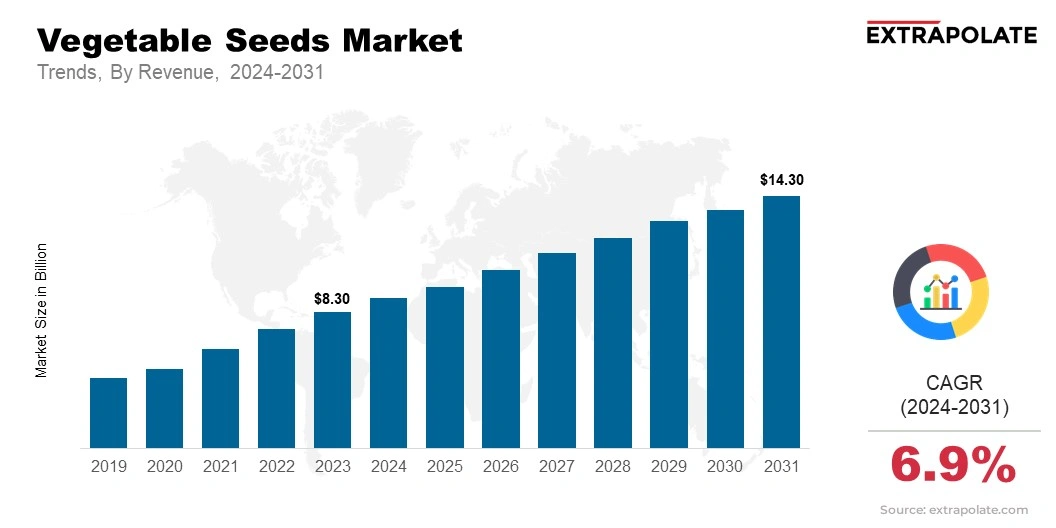
The global Vegetable Seeds Market size was valued at USD 8.30 billion in 2023 and is projected to grow from USD 8.95 billion in 2024 to USD 14.30 billion by 2031, exhibiting a CAGR of 6.9% during the forecast period.

The global vegetable seeds market is witnessing substantial growth, driven by an increasing demand for fresh and healthy produce, advancements in agricultural technology, and changing consumer preferences towards sustainable farming practices.

This market includes a variety of seeds for vegetables such as tomatoes, cucumbers, peppers, lettuce, and carrots. As agriculture becomes more advanced and efficient, vegetable seeds are evolving to meet the needs of modern farming, with innovations in hybrid and genetically modified seeds offering improved yield, pest resistance, and environmental adaptability.

In recent years, there has been a significant shift towards organic farming, and consumers are becoming more conscious of the origins of their food. This has led to an increased demand for non-GMO and organic vegetable seeds.

With growing environmental concerns, farmers are adopting seeds that are better suited for climate resilience, drought resistance, and reduced water dependency. As a result, the vegetable seed industry is focusing on developing products that can thrive under varying environmental conditions while maintaining high nutritional value.

Technological advancements are playing a crucial role in shaping the vegetable seeds market. Precision farming, the use of drones, and data analytics are helping farmers optimize the planting and harvesting processes.

Additionally, biotechnology has contributed to the development of seeds that are resistant to diseases, pests, and adverse weather conditions, enabling farmers to achieve higher yields with fewer resources.

Geographically, the demand for vegetable seeds is expanding rapidly in regions like North America, Europe, and Asia-Pacific, where urbanization and changes in lifestyle are influencing consumption patterns. The growth of urban farming, including vertical farming and hydroponics, has also contributed to the increasing use of vegetable seeds in non-traditional agricultural settings.

As the market continues to evolve, the future looks promising, with further innovations in seed technology expected to drive market growth. The focus on sustainability, the development of climate-resilient crops, and increasing awareness of the health benefits of fresh produce are all factors contributing to the expansion of the market globally.

Vegetable Seeds Market Size & Share, By Revenue, 2024-2031

Key Market Trends Driving Product Adoption

The vegetable seeds market is evolving with the introduction of innovative technologies and changing consumer preferences. Key trends driving market growth include:

  • Hybrid Seeds: More people want hybrid vegetable seeds. They give bigger crops, fight sickness better, and look nicer, so farmers grab them fast.
  • Genetically Modified (GM) Seeds: GM vegetable seeds are getting liked more. They stand strong against bad weather, pesky bugs, and diseases, keeping crops steady.
  • Organic and Non-GMO Seeds: People think more about health now. They chase organic and non-GMO seeds because they want food that’s pure and not soaked in chemicals.
  • Advanced Seed Coating Technologies: New seed coatings give seeds a boost. They sprout better, fight harsh weather, and pump out bigger, tastier veggies.
  • Precision Agriculture: Farmers now use fancy tools like drones and sensors. This makes farming sharper and pushes them to grab top-notch, special seeds.

Major Players and their Competitive Positioning

The vegetable seeds market is led by big players pushing new products and growing worldwide. Preeminent companies such as Monsanto (Bayer), Syngenta, DowDuPont, and BASF are working on making top-quality vegetable seeds, with focus on hybrid, GMO, and organic choices. Smaller companies are also carving out a niche by offering specialty seed varieties catering to organic farming and regional crop preferences.

Consumer Behavior Analysis

Farmers and agricultural businesses are increasingly adopting advanced vegetable seed varieties due to the following reasons:

  • Higher Yields: Farmers seek high-yield seeds to boost production. Growing urban food demand drives this trend.
  • Disease Resistance: Vegetable growers prioritize disease-resistant seeds. These reduce pesticide use and improve harvests.
  • Sustainability: Growing awareness of sustainable farming boosts demand for organic and non-GMO seeds. Consumers seek eco-friendly options.
  • Adaptability to Climate Conditions: Climate-resilient seeds are in high demand. They thrive in drought-prone and extreme weather regions.

Pricing Trends

Pricing in the vegetable seeds market varies significantly depending on the seed type, technology, and the region. Hybrid and GMO seeds cost more because they offer pest fight, better growth, and bigger harvests. Organic and non-GMO seeds can cost more since people want chemical-free crops. Also, seed prices can shift due to making costs, government rules, and rare seed types.

Growth Factors

Several factors are fueling the growth of the market, including:

  • Technological Advancements: Gene editing and seed coating enhance seed quality. These innovations drive market growth.
  • Population Growth and Urbanization: Population growth and urbanization push demand for efficient farming. Advanced vegetable seeds help boost yields.
  • Sustainability Initiatives: Sustainable farming boosts demand for organic and non-GMO seeds. This trend drives market growth.
  • Rising Consumer Demand for Fresh Produce: Rising demand for fresh, nutritious vegetables drives the need for premium vegetable seeds.

Regulatory Landscape

Rules for vegetable seeds differ by region, covering certification, quality checks, and GMO approvals. In lots of countries, rule makers check seeds for quality and safety, shaping market flow. GMO use sparks debate on safety and labeling. Regulations vary by region, influencing adoption.

Recent Developments

Key developments in the market include:

  • Innovation in Seed Varieties: Firms are working on making vegetable seeds that resist drought and disease to tackle climate change issues.
  • Investment in R&D: Top companies are putting more money into R&D to make better seeds with bigger harvests, stronger disease fight, and richer taste.
  • Strategic Acquisitions and Partnerships: Big firms are teaming up and buying smaller ones to boost their product lists and grow in the market.
  • Rise of Urban Farming: City farming projects are growing popular, sparking new need for vegetable seeds fit for tiny and indoor farms.

Current and Potential Growth Implications

Demand-Supply Analysis
Need for vegetable seeds is rising worldwide, mainly in growing markets of Asia-Pacific, Latin America, and Africa. But supply limits, like scarce top-quality seeds and climate change hitting seed making, might shake market flow.

Gap Analysis
The vegetable seeds market faces several challenges:

  • High Initial Costs: Expensive hybrid and GM seeds pose challenges. Small-scale farmers may struggle with affordability.
  • Climate Change: Unpredictable climates challenge seed performance. Conventional varieties struggle against environmental stressors.
  • Regulatory Challenges: GMO regulations and seed patent laws can restrict adoption. Regional policies impact seed technology expansion.

Top Companies in the Vegetable Seeds Market

  • Monsanto (Bayer)
  • Syngenta
  • DowDuPont
  • BASF
  • Limagrain
  • Sakata Seed Corporation
  • Bejo Zaden
  • Rijk Zwaan
  • East-West Seed
  • Namdhari Seeds

Vegetable Seeds Market: Report Snapshot

Segmentation

Details

By Product Type

Hybrid Seeds, Organic Seeds, Genetically Modified (GM) Seeds, Conventional Seeds

By Crop Type

Tomatoes, Peppers, Cucumbers, Onions, Leafy Greens, Others

By Technology

Seed Coating, Gene Editing, Precision Agriculture, Others

By End-User

Farmers, Agricultural Businesses, Home Gardeners, Others

By Region

North America, Europe, Asia-Pacific, Latin America, Middle East & Africa

High Growth Segments

The following segments are expected to experience significant growth:

  • Hybrid Seeds: Hybrid vegetable seeds are in high demand. Their superior yields and disease resistance drive growth.
  • Organic Seeds: Growing demand for organic and non-GMO produce fuels organic seed market expansion.
  • Genetically Modified (GM) Seeds: GM vegetable seeds are gaining traction. They enhance resilience and boost crop yields in tough conditions.

Major Innovations

Innovation plays a key role in the market, with advancements such as:

  • Disease-Resistant Varieties: Disease-resistant vegetable seeds are on the rise. They combat pests and plant diseases, improving crop resilience.
  • Drought-Tolerant Varieties: Climate change threatens agriculture. Tough seeds that drink less water keep food growing in dry lands.
  • Smart Farming Technologies: Drones and sensors make seed use sharper. They crank up farming speed and output.

Potential Growth Opportunities

The market offers significant prospects to grow in many areas:

  • Emerging Markets: Precision farming tools like sensors and drones enhance seed use. They boost productivity and efficiency in agriculture.
  • Sustainability Trends: Eco-farming and the need for organic, non-GMO food are climbing. Seed makers going green have a big chance to boom.
  • Urban Farming: Urban farming and home gardening are expanding. Seed companies catering to small-scale and indoor farming will benefit.

Extrapolate Research says:

The vegetable seeds market is set for strong growth. The vegetable seed market is gearing up to grow big. New tech, picky buyers, and eco-farming push the demand. Smart companies adapting to fit farmers and shoppers need will thrive.

FAQ

The most popular method for growing fruits and vegetables is from seeds. With their help, fruit and vegetable plants are multiplied. To increase total yields, seed producers work with farmers by offering weed- and disease-free fruit and vegetable seeds.
The global vegetable seeds market size was worth around USD 8.72 billion in 2022 and is predicted to grow to around USD 16.38 billion by 2032 with a compound annual growth rate of roughly 6.51% between 2023 and 2032.
Asia Pacific presently holds the largest market share for vegetable seeds, and it is expected that this trend will continue throughout the period of the forecast. The market in this area is primarily influenced by the expanding agricultural industry, growing public awareness of the health benefits of vegetables, and an increase in the area covered by horticulture crops
BASF SE, Syngenta Crop Protection AG, Limagrain, Rijk Zwaan Zaadteelt en Zaadhandel B.V., SAKATA SEED AMERICA, Bejo Zaden B.V., Enza Zaden Beheer B.V., Advantaseeds, Bayer Group, Mahyco, amongst others
The global market is projected to reach USD 14.30 billion by 2031, growing at a CAGR of 6.9% from 2024 to 2031.
The global market was valued at USD 8.95 billion in 2024.
Sustainable farming boosts demand for organic and non-GMO seeds. This trend drives market growth.
Key players in the market are Monsanto (Bayer), Syngenta, DowDuPont, BASF, Limagrain, Sakata Seed Corporation, Bejo Zaden, Rijk Zwaan, East-West Seed, Namdhari Seeds

ARE YOU SEEKING COMPREHENSIVE INSIGHT ON VARIOUS MARKETS?
CONTACT OUR EXPERTS TODAY

Speak to an Expert
Vegetable seeds market

Vegetable Seeds Market Size

  • March-2025
  • 148
  • Global
  • agritech
3499

SELECT AN OPTION

  • 1 User Access
  • PDF Report View
  • Non-Printable
  • 32 Man-hours Analyst Support
  • Post-Sale Support 48 Hours
  • Access upto 5 users
  • PDF Report View
  • Print Available
  • Access to Data Sheet
  • Up to 10% Customization
  • 40 Man-hours Analyst Support
  • Post-Sale Support 72 Hours
  • Annual Update
  • Unlimited User Access
  • Downloadable PDF Report. Data Sheet, Power Point Presentation
  • Print Available
  • Up to 20% Customization
  • 72 Man-hours Analyst Support
  • Post-Sale Support 120 Hours
  • Bi-Annual Update

ENQUIRE NOW REQUEST SAMPLE
Dale Byrne

HAVE A QUESTION?
Samuel will help you find what you are looking for.


Call: 888-328-2189


Related Research

Agricultural Biologicals Market Size, Share, and COVID-19 Impact Analysis, By Function Type (Biopest

July-2022


Agricultural Supply Chain Service Market Size, Share, Growth & Industry Analysis, By Service Type (P

June-2025


Agriculture Drippers Market Insights 2022, Global Analysis and Forecast to 2030

July-2021


Agrigenomics Market Size, Share, Growth & Industry Analysis, By Technology (Gene Editing, Genetic Se

March-2025


Agritourism Market Size, Share, Growth & Industry Analysis, By Activity Type (Farm Stays, Direct Mar

May-2025


Birch Wood Product Market Insights 2022, Global Analysis and Forecast to 2030

July-2021


Feed Grade Vitamin and Mineral Premixes Market Insights 2022, Global Analysis and Forecast to 2030

July-2021


Feed Grade Vitamin Premixes Market Insights 2022, Global Analysis and Forecast to 2030

July-2021


Global Acid And Nutrient In Animal Nutrition Market Research Report 2022 (Status and Outlook)

June-2022


Global Advanced Herbicides Market Research Report 2022

December-2022


Sample Request

Vegetable Seeds Market Size, Share, Growth & Industry Analysis, By Product Type (Hybrid Seeds, Organic Seeds, Genetically Modified (GM) Seeds, Conventional Seeds), By Crop Type (Tomatoes, Peppers, Cucumbers, Onions, Leafy Greens, Others), By Technology (Seed Coating, Gene Editing, Precision Agriculture, Others), By End-User (Farmers, Agricultural Businesses, Home Gardeners, Others), and Regional Analysis, 2024-2031

Publisher: Kings Research   |   Date: 2025-03-19   |   No. Of Pages: 148

Send Your Query

Vegetable Seeds Market Size, Share, Growth & Industry Analysis, By Product Type (Hybrid Seeds, Organic Seeds, Genetically Modified (GM) Seeds, Conventional Seeds), By Crop Type (Tomatoes, Peppers, Cucumbers, Onions, Leafy Greens, Others), By Technology (Seed Coating, Gene Editing, Precision Agriculture, Others), By End-User (Farmers, Agricultural Businesses, Home Gardeners, Others), and Regional Analysis, 2024-2031

Publisher: Kings Research   |   Date: 2025-03-19   |   No. Of Pages: 148
Extrapolate

Extrapolate has a refined network of top publishers across the globe covering markets and micro markets who bring in the power of decision making. Our network of publishers is ranked based on the quality of reports produced along with customer feedback Indexing.

 talk@extrapolate.com

888-328-2189


Connect With Us

twitter logo

Industry

Quick Links

  • About Us
  • Contact Us
  • FAQ
  • Privacy Policy
  • Disclaimer
  • Refund Policy
  • Sitemap


Payment Gateway
Sign up for newsletter and updates


Powered By

Kings Research
© 2025 Kingsresearch. All Rights Reserved.